A Step Up Transformer increases voltage between its input and output, supporting applications such as generator connections, renewable energy systems, and long-distance power transmission. The right choice depends on more than the voltage ratio. Engineers also assess rated power, frequency, load behavior, insulation level, cooling method, and the installation environment. A unit beside a solar inverter may face different heat and dust conditions from one installed inside a controlled electrical room. Small details matter.
This guide examines common transformer types, including single-phase and three-phase designs, as well as oil-immersed and dry-type units. It explains how construction affects cooling, maintenance, footprint, and suitability for different sites. It also considers core design, tap settings, efficiency, impedance, protective devices, and applicable equipment standards. No type is best in every situation. A compact dry-type model may suit an indoor facility, while another application may call for a different configuration. Those assumptions should be checked against actual site data.
Before comparing products, confirm the source and required output voltages, expected load, operating conditions, and available space. Review manufacturer documentation and consult a qualified electrical professional when system details are uncertain. That step can prevent a mismatch that looks minor on paper but causes excessive heating or poor performance in service. The sections ahead offer a practical framework for comparing options and asking better questions. Specifications help, but they do not replace a careful review of the real installation.
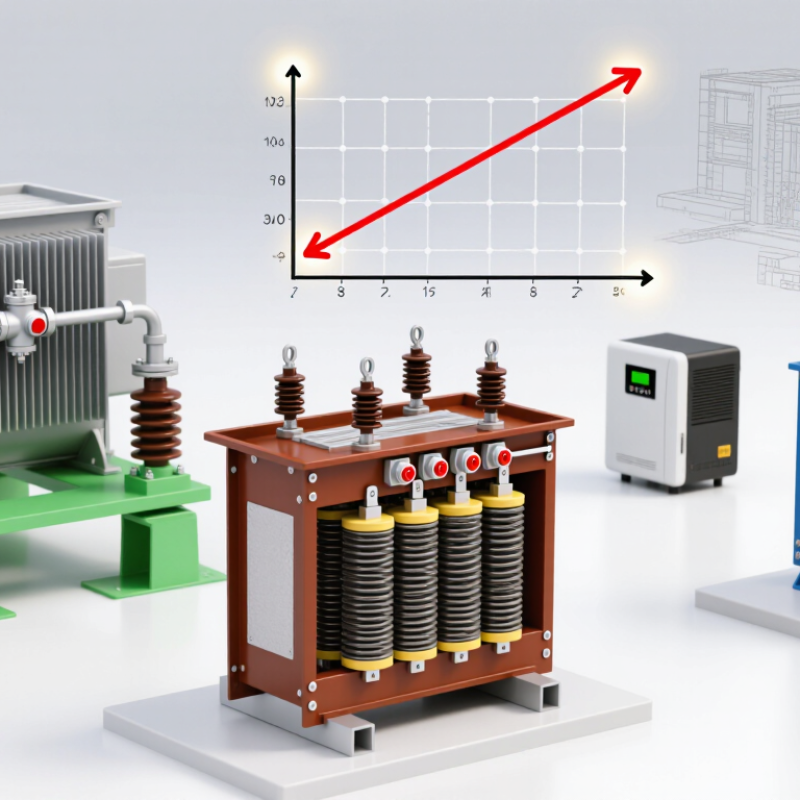
A step-up transformer increases alternating-current voltage between its windings. At a power station, the generator feeds the primary winding; the secondary has more turns, producing higher voltage. The magnetic core carries changing flux between the windings. No direct electrical connection is needed. Neat, but not magic.
For roughly the same transmitted power, higher voltage means lower current. That cuts resistive line losses, which rise with the square of current. In practice, the transformer also warms up: winding resistance and core losses turn some energy into heat. Engineers check load, cooling, insulation, and voltage ratio before selecting a unit. A field detail matters: a transformer rated for one load profile may run inefficiently when lightly loaded. The picture is less tidy than the textbook version.
Efficiency is not a minor concern across the wider transformer sector. The U.S. Department of Energy’s 2024 distribution-transformer standards analysis projects savings of 10.3 quadrillion British thermal units over 30 years. That analysis concerns distribution transformers, not specifically grid step-up units, so the figure should not be applied directly. Still, it shows why core materials and operating losses deserve attention. A sound selection starts with measured system conditions, not voltage alone.

Step-up transformers increase voltage while reducing current for a given power level. In 2026, the main types are best understood by winding design, phase arrangement, and insulation method. A conventional two-winding unit uses separate primary and secondary coils. It provides electrical isolation and suits many power-generation and industrial applications. A small unit may sit inside a test cabinet; a larger one can connect to a generator system.
An autotransformer uses a shared winding with electrical taps. It is often smaller and more efficient for modest voltage changes, but it does not provide the same isolation as a two-winding design. That difference matters. Three-phase transformers serve facilities and grid connections carrying three-phase power, while single-phase models are common in smaller equipment and specific loads. Dry-type models use air and solid insulation, making them useful indoors where fluid containment is undesirable. Liquid-filled units can manage heat effectively in larger installations, but need suitable containment and maintenance.
Selection starts with the required input and output voltage, frequency, load, and duty cycle. Check inrush current, insulation rating, cooling, available space, and installation conditions too. A transformer that matches the voltage alone may still run hot or perform poorly under fluctuating loads. Ratings and wiring should be reviewed by a qualified electrical professional. Real installations are rarely as tidy as a specification sheet suggests.
| Type | How It Works | Common Applications | Key Advantages | Important Selection Considerations |
|---|---|---|---|---|
| Two-Winding Step-Up Transformer | Uses separate primary and secondary windings. The secondary has more turns than the primary to produce a higher voltage. | Power systems, industrial installations, test equipment, and renewable-energy systems. | Provides electrical isolation between the input and output circuits and supports a wide range of voltage ratios. | Confirm the required input and output voltages, kVA rating, insulation level, cooling method, and load characteristics. |
| Step-Up Autotransformer | Uses one continuous winding with a shared portion between the input and output circuits. | Applications needing a relatively small voltage increase, voltage adjustment, or interconnection between nearby voltage levels. | Can be smaller and use less winding material than a comparable two-winding transformer, particularly when the voltage ratio is close to 1:1. | Does not provide galvanic isolation. Check the voltage ratio, grounding and protection scheme, fault-current implications, and applicable electrical codes. |
| Generator Step-Up Transformer | Typically a two-winding power transformer that raises a generator’s output voltage to a level suitable for connection to a transmission or sub-transmission system. | Power stations, hydroelectric plants, and utility-scale wind or solar projects. | Designed for high power levels and integration with the generator and grid connection. | Coordinate generator voltage, grid voltage, rated power, impedance, winding connection, cooling, protection, and expected operating conditions. |
| Dry-Type Step-Up Transformer | Uses air and solid insulation rather than liquid dielectric insulation; may use natural or forced air cooling. | Indoor facilities, commercial buildings, industrial sites, and installations where liquid containment is undesirable. | Avoids insulating-liquid leakage and liquid containment requirements. | Assess ventilation, ambient temperature, dust or moisture exposure, sound limits, enclosure, fire requirements, and available installation space. |
| Liquid-Immersed Step-Up Transformer | Windings and core are immersed in an insulating liquid that provides electrical insulation and helps remove heat. | Outdoor substations, utility networks, and many high-capacity power applications. | Liquid-based insulation and cooling can support designs for substantial power ratings. | Review cooling requirements, fluid type, leak prevention, fire protection, spill containment, inspection access, and environmental rules. |
| Single-Phase Step-Up Transformer | Transforms voltage in a single-phase AC circuit. | Single-phase equipment, laboratories, and smaller or distributed loads where the supply is single-phase. | Matches single-phase systems and can be selected for a specific individual load. | Match the supply phase, voltage, frequency, rated VA or kVA, duty cycle, and load type. |
| Three-Phase Step-Up Transformer | Transforms voltage in a three-phase AC system, using a three-phase core or an appropriately connected bank of single-phase units. | Industrial power systems, substations, and utility-scale generation and transmission connections. | Suitable for three-phase loads and power networks; winding connections can be selected to suit system requirements. | Specify phase, voltage ratio, winding connection, vector group where applicable, neutral and grounding needs, rating, and protection. |
Selection note: These types describe different design or application categories and can overlap. For example, a generator step-up transformer may also be three-phase and liquid-immersed. A transformer changes voltage and current; it does not create power, and actual performance depends on its rating, losses, and operating conditions.
Step-up transformers raise voltage while reducing current for a given power transfer, but their designs serve different conditions. A single-phase unit may suit a small workshop load; three-phase designs are common where motors and balanced power demand dominate. Core-type and shell-type construction describe how windings and magnetic paths are arranged, while dry-type and liquid-filled units differ in cooling and installation needs. An autotransformer can be compact and efficient, but it does not provide the same electrical isolation as a two-winding transformer. That distinction is easy to overlook.
Ratings matter as much as construction. Compare the primary and secondary voltages with the actual supply and load, then check kVA capacity, frequency, impedance, insulation, and cooling limits. A 10 kVA label alone does not confirm suitability if a motor draws heavy starting current. Allow for expected load growth, but avoid oversizing without reason; it can increase cost and operating losses. Check the installation environment, too. Dust, heat, moisture, and limited ventilation affect performance and service life. A careful specification review is unglamorous. Still, it can prevent a mismatch that only becomes obvious after the unit is energized.
Example nominal voltage pairs for common step-up applications. Actual system voltages and transformer ratings vary by project.
Industrial and distribution units commonly raise low-voltage power to 6.6–33 kV. Generator step-up transformers can raise generator voltage to transmission levels such as 400 kV. Choose a design based on the required voltage ratio, MVA rating, insulation level, cooling method, and operating conditions.
Choosing a step-up transformer starts with the supply and the equipment it must serve. Single-phase units suit many small loads, while three-phase types are common for larger motors and industrial equipment. Match the input and output voltages, phase, frequency, and required capacity. Check the load’s nameplate, not just its normal running wattage.
A two-winding transformer provides electrical isolation between input and output. An autotransformer is often smaller and lighter, but it does not provide that isolation. That trade-off is easy to overlook. For motor-driven equipment, allow for the brief surge at startup; a unit sized only for steady running demand may struggle. Small details matter.
Installation conditions also influence the choice. A dry-type unit may suit an indoor electrical room, while an oil-filled design may fit some outdoor or higher-capacity installations. Compare ventilation, ambient temperature, noise, enclosure rating, and maintenance needs. Check voltage regulation and expected efficiency at the actual load, rather than relying only on headline ratings. Measure before buying. A tidy calculation still may not capture every startup pattern, so have a qualified electrical professional verify the sizing and protection requirements.
Matching a step-up transformer to your power system starts with the load, not a catalog label. Confirm the incoming and required output voltages, phase arrangement, frequency, and total demand. Then check both continuous load and short-duration peaks, such as motor starts. A unit sized only for average demand may overheat during repeated surges. Leave suitable capacity for growth, but avoid oversizing without a clear reason.
Installation conditions help narrow the transformer type. Dry-type units can suit indoor spaces where containing liquid is a concern, while liquid-immersed designs may fit outdoor or higher-capacity installations. Compare cooling needs, available clearance, ventilation, noise limits, and exposure to dust or moisture. These details are easy to miss on a spreadsheet. They matter on a hot plant floor.
Review load characteristics before settling on a rating. Variable-speed drives, rectifiers, and other nonlinear loads can increase harmonics and heating. Ask a qualified electrical engineer to check impedance, inrush, protection coordination, grounding, and fault levels against the system design. Use verified nameplate and test data, not assumptions based on a similar installation. There is rarely one perfect choice; a careful site review may reveal that the original plan needs revision.