China Best ABC Cable Manufacturers and Suppliers?
Choosing among China’s best ABC cable manufacturers and suppliers begins with understanding what the network needs. Abc Cable, commonly referring to aerial bundled cable, is used in overhead electricity distribution. Its suitability depends on voltage rating, conductor material, insulation, climate, and installation conditions. The details matter.
The International Energy Agency’s 2023 Electricity Grids and Secure Energy Transitions report estimates that annual grid investment must exceed US$600 billion by 2030 in its net-zero emissions pathway. This is a scenario, not a guarantee of demand for any particular cable or supplier. Still, it highlights the importance of reliable grid components and careful procurement. Buyers should compare technical datasheets, documented testing, production controls, and after-sales support—not just quoted prices. Ask for traceable test records. Check the specifications.
A useful supplier review also considers whether stated standards match the project’s requirements and destination market. Request clear information on conductor construction, insulation, routine inspection, packaging, and delivery lead times. Where available, verify certificates with the issuing body. Claims alone are not proof. A shortlist can still miss practical issues, such as communication delays or inconsistent documentation; these deserve attention before an order is placed. Publicly available supplier information varies, so comparisons may not be perfectly complete. The strongest choice is usually the manufacturer that can explain its evidence clearly and respond consistently to technical questions.
What Are Aerial Bundled Cables (ABC)?
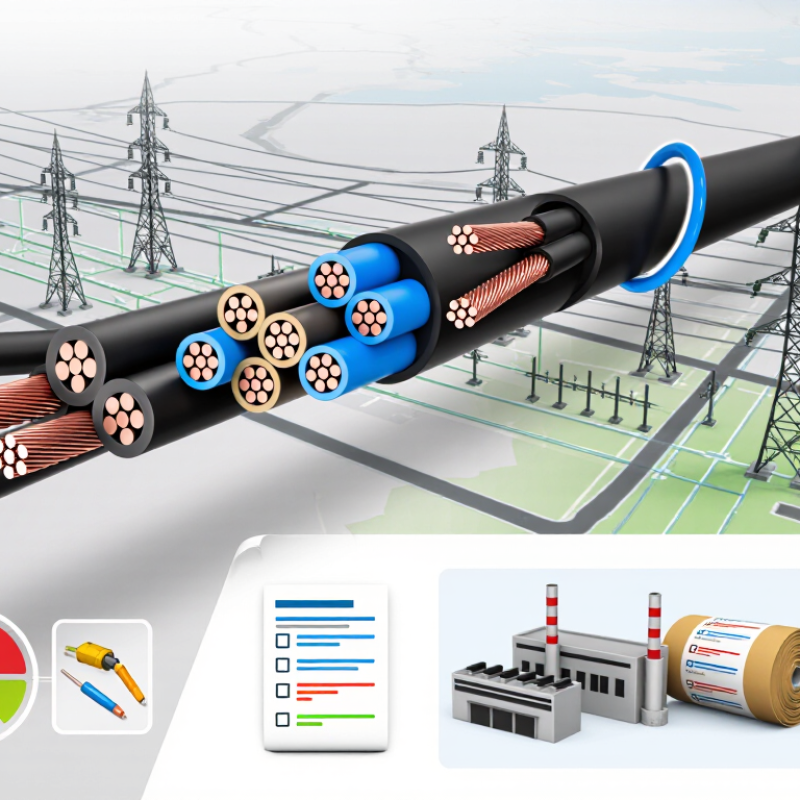
Aerial bundled cable, commonly called ABC, is an overhead power cable made from several insulated conductors grouped into one compact assembly. Depending on the design, it may include a separate supporting messenger or a conductor that also serves as the support. The conductors are often twisted together, helping keep the line organized along poles and across streets.
Unlike traditional bare overhead conductors, ABC has insulation around each phase conductor. This can reduce accidental contact between conductors and nearby branches, though it does not make a line harmless or remove the need for safe clearances. The insulation also helps limit some weather-related interruptions. It is not a guarantee against outages.
That sounds simple. It isn't. Cable designs differ in voltage rating, conductor material, cross-section, insulation, and support arrangement. Engineers and utilities should match these details to expected load, span length, local weather, and installation conditions. A cable that looks suitable on a specification sheet may still be wrong for a long, windy span. Check the applicable technical requirements, and inspect fittings and terminations as carefully as the cable itself. Small details matter.
China Best ABC Cable Manufacturers and Suppliers? — What Are Aerial Bundled Cables (ABC)?
Aerial bundled cables are insulated conductors bundled together for overhead power distribution. The chart shows examples of nominal voltage classes used in ABC systems; actual ratings vary by product and applicable standard.
Values represent nominal system voltage in kilovolts (kV), not a ranking of manufacturers or cable performance. Common low-voltage ABC ratings include 0.6/1 kV; medium-voltage designs are available for systems such as 11 kV, 20 kV, and 30 kV.
How ABC Cables Are Designed and Classified
Aerial bundled conductor cables, or ABC cables, place insulated conductors together in a compact overhead assembly. Most designs use aluminum conductors because they are light and conduct electricity efficiently. Insulation, often cross-linked polyethylene, helps protect conductors from weather and accidental contact. Some assemblies include a separate messenger; others use a load-bearing neutral conductor to support the bundle. The distinction matters. It affects mechanical loading, fittings, and installation details.
ABC cables are commonly classified by voltage level, conductor arrangement, insulation material, and intended use. Low-voltage systems may serve streets or connect local distribution lines to buildings, while medium-voltage designs require insulation suited to higher electrical stress. Classification can also describe whether the cable is self-supporting or carried by a messenger. In practice, a short product label may hide important differences. I would check conductor size, rated voltage, temperature limits, and support method against the project conditions, not rely on the label alone. Span length, wind exposure, and connection hardware all matter. One detail is easy to miss: similar-looking bundles may need different accessories. Specifications can vary by region, so confirming the applicable technical requirements is part of sound selection.
China’s ABC Cable Manufacturing Landscape
China’s ABC cable manufacturing landscape includes factories serving utility projects, rural electrification, and building connections. Aerial bundled cable generally uses insulated conductors grouped together, but designs differ by voltage, conductor material, and installation conditions. Production may involve conductor stranding, insulation extrusion, cooling, and routine electrical and dimensional checks. These steps sound straightforward. Consistency is harder.
For buyers, useful questions concern conductor resistance, insulation thickness, weathering performance, and batch traceability. Ask how samples are tested and whether production records identify the cable lot. A supplier should explain its inspection process in clear terms, not only provide a polished catalog. That distinction is easy to miss when comparing quotations. A lower price alone reveals little about process control.
China’s broad manufacturing base can support varied specifications and delivery needs, yet capability differs between factories. Review technical documents against the actual project conditions, including span, climate, and installation method. Check packaging details too: sealed ends and readable labels help protect and identify cable during transport. A site visit or independent inspection may offer added confidence, though it cannot replace careful specification review. Some buyers focus heavily on conductor data and overlook installation compatibility. That deserves a second look.
How to Evaluate Chinese ABC Cable Manufacturers and Suppliers
Evaluating Chinese ABC Cable Manufacturers and Suppliers
Choosing an ABC cable supplier takes more than comparing prices. Start with the cable’s intended voltage, conductor material, insulation, and installation environment. Ask for a clear datasheet that matches your project specification. Check whether stated test methods and standards fit the destination market.
Details matter. A mismatch in insulation thickness or conductor size can affect performance and installation.
Review how the supplier controls production. Request recent test records, sample labels, and an explanation of how batches are traced. If possible, inspect the production area or arrange an independent factory audit.
Look for calibrated testing equipment, orderly material storage, and consistent markings on finished cable. Confirm production capacity, packaging, delivery estimates, and how defects are handled.
A polished sample alone proves little. No checklist is perfect, and paperwork can miss shop-floor problems.
Tips: Send the same written specification to each candidate. Compare responses line by line, not just quoted prices. Ask for a sample from a regular production run, then verify its dimensions and markings. Keep questions specific, and record any changes to the agreed specification.
ABC Cable Applications, Standards, and Procurement Considerations
Aerial bundled conductor (ABC) cable is used in overhead low-voltage distribution, especially on rural feeders and crowded streets. Insulated conductors are twisted together, helping reduce contact risks and simplify installation where space is limited. They do not remove the need for correct clearances, sound supports, and careful jointing. Spacing matters. The International Energy Agency’s 2023 report, Electricity Grids and Secure Energy Transitions, says annual grid investment needs to rise from about US$300 billion to more than US$600 billion by 2030. That expansion makes reliable cable selection important, but local network conditions still decide what works.
Procurement should state rated voltage, conductor material and cross-section, insulation type, span length, expected loading, and exposure to sunlight, heat, and pollution. Check conductor requirements against IEC 60228, then confirm the applicable national ABC cable and accessory standards; requirements differ by market. Ask for routine and type-test records, traceable material data, and clear evidence that connectors match the selected conductor. Not glamorous. I would also compare installation instructions and warranty terms, not just price per kilometre. A low quote can omit fittings, testing, or suitable suspension hardware. One detail is easy to miss: actual route length and pole spacing may differ from drawings, so verify them before ordering.