Choosing the right Cnc Cutting Tools can shape a project’s accuracy, surface finish, and production cost. A clean edge matters. Yet no single cutter performs well on every machine or material. A carbide end mill may suit precise aluminum parts, while an indexable insert can make more sense for heavier steel cutting. The best choice depends on the job.
This guide introduces ten CNC cutting tool types that global buyers commonly compare. It looks at practical details, including workpiece material, cutting diameter, flute design, coating, tool life, and machine compatibility. These factors affect how a tool behaves under real cutting conditions, not just how it looks in a catalog. A sharp tool can still disappoint if its holder runs out of alignment or its cutting speed is poorly matched.
Buyers also need to assess supplier information carefully. Check published specifications, material recommendations, quality documentation, and availability of replacement parts. When possible, ask for sample testing or technical support before placing a large order. Shipping time and regional service can matter as much as the listed price. There is no perfect ranking for every workshop. Some recommendations may need adjustment after a trial cut, and that is worth admitting. This overview offers a grounded starting point for comparing options, asking better questions, and selecting tools that fit your machine, material, and production goals.
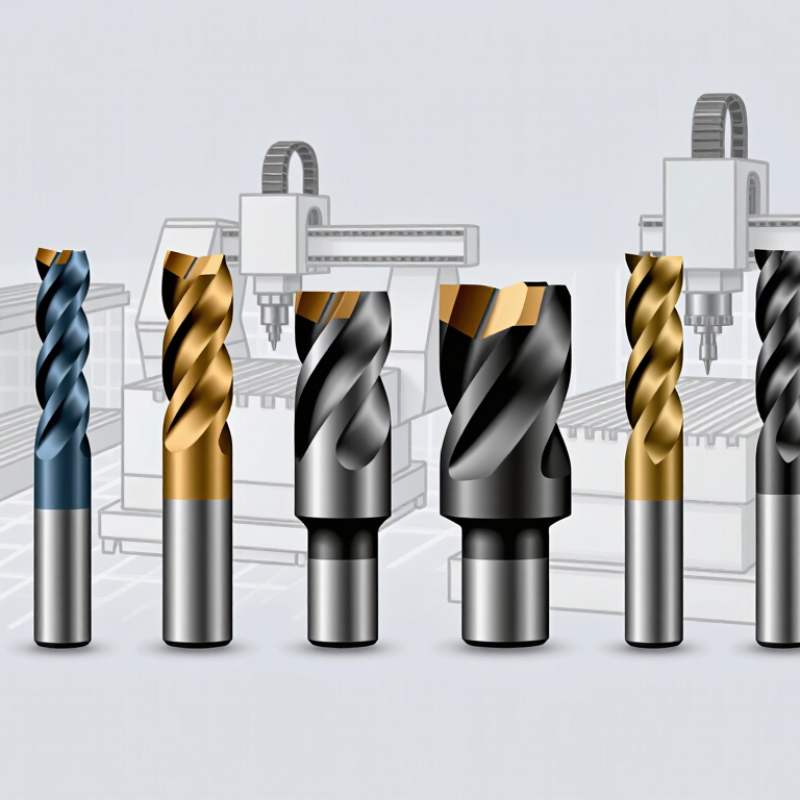
CNC cutting tools remove material through controlled contact between a cutting edge and a rotating or moving workpiece. Their geometry determines how they cut. Rake angle helps guide chips; flute shape clears them from the cut. A drill makes holes, an end mill produces slots or profiles, and a turning insert shapes rotating stock. Small details matter. A dull edge can leave burrs, rough walls, or excess heat on a steel part.
Tool choice depends on the material, machine rigidity, cutting speed, and coolant strategy. Carbide tolerates higher cutting speeds than high-speed steel, but it can chip if the setup vibrates. Match the tool’s coating and edge geometry to the workpiece, then check chip shape and surface finish during a test cut. Deloitte’s 2024 Smart Manufacturing Survey found that 86% of manufacturers expect smart manufacturing to drive competitiveness within five years. That supports monitoring tool wear and cutting conditions, not blindly trusting automated alerts. The report concerns manufacturing broadly, not cutting tools specifically. A real setup still needs careful testing.

Selecting CNC cutting tools starts with the workpiece, not the catalogue. Match tool material, edge geometry, and coating to the alloy, hardness, and operation. A sharp-looking end mill can still fail when a long overhang causes chatter. Check spindle taper, holder compatibility, runout, coolant access, and chip evacuation before comparing cutting speeds. Small setup details matter.
Automation raises the cost of inconsistency. The International Federation of Robotics’ World Robotics 2024 report counted 4,281,585 industrial robots operating worldwide in 2023, up 10% from 2022. For buyers supplying automated cells, repeatable tool dimensions and dependable tool-life data help reduce unscheduled changes. Ask suppliers for cutting recommendations tied to the actual material and machine conditions, then validate them with controlled test cuts. Record wear, surface finish, and cycle time.
Compare total cost per acceptable part, not just purchase price. Include tool life, regrinding options, changeover time, and replacement lead times across your regions. Confirm that local distributors can provide matching grades and technical support. A spreadsheet helps, but it cannot capture every vibration or chip shape. And one test may not be enough. Keep a modest trial budget; the “best” tool can change with batch size, fixture rigidity, or coolant delivery.
CNC cutting tools serve distinct purposes, and matching the tool to the operation helps control finish, accuracy, and cycle time. End mills cut slots, pockets, and profiles; their flute count and geometry affect chip removal and surface quality. Face mills remove material across broad, flat surfaces, such as a plate’s top face. For holes, twist drills create openings, while reamers refine an existing hole to a closer size and smoother finish. Small differences matter.
Taps cut internal threads, but thread mills offer a useful alternative when one tool must handle different thread diameters. Turning inserts shape rotating workpieces, including shafts and shoulders. Grooving tools make narrow channels or parting cuts, so their rigidity and alignment deserve attention. Boring bars enlarge and finish existing holes, especially inside components where access is limited. Thin workpieces can chatter. Setup matters.
CNC saw blades cut stock into shorter blanks before later machining. Selection depends on the workpiece material, machine rigidity, tool reach, and required tolerance. A tool that performs well in one setup may vibrate or wear quickly in another. Check manufacturer cutting data, then adjust cautiously with test cuts and measured results. Shop experience helps, but it does not replace inspection; even a sensible choice may need revision after the first part.
Ten essential CNC cutting tools and their common applications
Bars count the typical application types listed for each tool; they do not indicate sales, performance, or a ranking. End mills are commonly used for slotting, pocketing, profiling, and contouring. Face mills cut flat surfaces and square shoulders; drills create holes; reamers bring holes to a more accurate size and finish; and taps cut internal threads. Boring bars enlarge or finish existing holes, turning inserts perform external turning, facing, and grooving, parting tools separate workpieces, thread mills machine threads, and chamfer mills create bevels and deburred edges. The right tool depends on the workpiece material, machine, and operation.
CNC cutting performance starts with the tool material. High-speed steel is tough and forgiving, making it useful for lower-speed work or machines with less rigidity. Cemented carbide generally supports higher cutting speeds and holds an edge longer, but it can chip when the setup vibrates. Small details matter. A thin, stable chip and a firmly clamped workpiece often matter as much as the material itself.
Coatings change how tools handle heat, friction, and wear. Titanium nitride can reduce friction in many general-purpose applications, while aluminum-titanium nitride is often chosen for hotter, dry cutting conditions. Diamond coatings suit abrasive nonferrous materials, such as graphite, but are not a universal choice for steel. Heat changes everything. Even a premium coating may fail early if feed, speed, or coolant delivery is poorly matched.
Compare tools using the actual workpiece, machine, and operation—not a specification sheet alone. For example, a carbide end mill cutting stainless steel may need a sharp edge and reliable chip evacuation to limit heat buildup. A tougher geometry can help with interrupted cuts, though it may leave a less refined finish. A common mistake is treating coating as a cure-all; it is not. Record tool life, surface quality, and cutting conditions during trials, then adjust one variable at a time.
Matching a CNC cutting tool to its machine is more useful than choosing by tool name alone. Check spindle speed, holder type, available power, and coolant delivery before selecting an end mill, drill, or insert. A tool that runs well in a rigid machining center may chatter on a lighter router. Small details matter. Confirm the machine’s limits in its manual, then compare them with the tool maker’s recommended cutting range.
Workpiece material changes the choice. Aluminum often benefits from sharp edges and space for chips to clear, while stainless steel usually needs a tougher edge and steady feed. Wood and plastics call for attention to heat, chip removal, and edge finish. For small batches, a versatile tool can reduce setup changes. Long production runs may justify a more specialized cutter that holds size and finish over time. The trade-off is real: a faster cut is not always a cheaper one if scrap rises.
Tips: Start with a stable toolholder and a moderate cutting speed. Make a short test cut, then inspect chips, sound, and surface finish. Record the settings that work for each machine and material. If the result seems rough, check tool runout and workholding before changing several settings at once. Test before scaling.
| CNC Cutting Tool | Compatible Machines | Suitable Workpiece Materials | Typical Applications | Best Fit for Production Needs | Key Selection Considerations |
|---|---|---|---|---|---|
| Solid Carbide End Mill | CNC machining centers and high-speed milling machines | Carbon and alloy steels, stainless steel, cast iron, aluminum, and some plastics; select the geometry and coating for the material | Slotting, profiling, pocketing, contouring, and shoulder milling | Precision parts, complex profiles, and shops seeking high rigidity and repeatable tool paths | Match flute count, helix, corner style, reach, and coating to the material and operation. Check spindle rigidity and tool runout, especially with small diameters. |
| Indexable Face Mill | CNC vertical or horizontal machining centers | Steels, cast iron, and aluminum, with insert grade and geometry chosen for the workpiece | Facing and producing flat surfaces over relatively wide areas | Higher-volume milling where replaceable inserts can reduce the cost and time of edge changes | Confirm cutter diameter, insert availability, machine power, and the number of effective teeth. Use a suitable insert geometry to control cutting forces and surface finish. |
| Indexable Turning Tool with Inserts | CNC lathes and turning centers | Steel, stainless steel, cast iron, and non-ferrous metals, subject to insert-grade selection | External and internal turning, facing, grooving, and profiling | Production turning that benefits from quick, consistent cutting-edge changes | Choose insert shape, nose radius, chipbreaker, grade, and holder orientation for the operation. Confirm the insert is suited to continuous or interrupted cuts. |
| CNC Drill | Machining centers and CNC drilling machines | Metal, with high-speed steel commonly used for general-purpose work and solid carbide often used for higher-speed production in rigid setups | Producing straight holes, including through-holes and blind holes | Repeatable holemaking across a range of hole sizes and production volumes | Check hole depth, coolant delivery, chip evacuation, and machine rigidity. Deep holes may require a specialized drilling strategy or tool design. |
| Thread Mill | CNC milling machines and machining centers with coordinated milling capability | Steels, stainless steel, aluminum, and other machinable metals, using an appropriate tool material and geometry | Internal and external threads, including threads in larger holes | Flexible production of different thread sizes or parts where broken taps would be costly | Confirm thread standard, pitch, diameter, and toolpath capability. Thread milling generally requires a pre-drilled hole and correct interpolation programming. |
| CNC Tap | CNC machining centers and tapping machines | Common metals, with tap design selected for the workpiece and whether the hole is blind or through | Cutting internal threads in pre-drilled holes | Efficient, standardized threading in repetitive production | Match tap type to hole type and material. Verify the pre-drill diameter, thread pitch, spindle synchronization, and lubrication or coolant requirements. |
| Machine Reamer | CNC machining centers, drilling machines, and suitable lathes | Steels, cast iron, aluminum, and other materials, depending on reamer design | Finishing a previously drilled or bored hole to improve size consistency and surface finish | Parts requiring closer hole-size control than drilling alone typically provides | A reamer is a finishing tool, not a substitute for drilling. Leave appropriate stock, maintain alignment, and select cutting direction and coolant for the application. |
| Boring Tool | CNC lathes, turning centers, and machining centers | Steels, cast iron, aluminum, and other machinable materials | Enlarging or finishing existing holes and correcting hole alignment | Accurate internal features, especially when diameter adjustment or fine finishing is required | Choose a rigid bar with suitable reach and diameter. Long overhangs can cause vibration; consider tool clearance, setup stiffness, and chip evacuation. |
| CNC Slitting Saw | Machining centers and milling machines with appropriate arbor and clearance | Metals and some engineering materials, depending on blade material and tooth geometry | Narrow slots, cutoffs, and separation cuts | Applications where a narrow kerf is important or a slot cannot be made efficiently with an end mill | Check blade diameter, thickness, arbor fit, tooth pitch, and workholding. Use a stable setup and ensure the blade has enough clearance to avoid rubbing. |
| Compression Router Bit | CNC routers and suitable CNC machining centers | Plywood, laminates, MDF, and other panel materials, subject to bit design and workpiece construction | Through-cutting and profiling panels while helping limit edge breakout on both faces | Nested-based manufacturing and sheet processing where clean top and bottom edges are important | Match the compression section to panel thickness and cutting depth. Use effective dust extraction, secure the sheet, and select cutting parameters for the material. |