Choosing the best Natural Gas Generator for 2026 starts with a practical question: what must stay powered when the grid goes down? A refrigerator, furnace controls, and a few lights need far less capacity than a whole home or a busy workshop. The right choice depends on actual starting loads, expected outage length, available space, and the gas service at the property. Bigger is not automatically better.
This guide compares common types, including fixed standby units, portable natural-gas models, and dual-fuel generators that can use another fuel when suitable. Each has trade-offs. Standby systems can provide automatic backup, but installation and maintenance require careful planning. Portable units offer flexibility, yet they still need safe outdoor placement and proper connections. Dual-fuel designs add options, although switching fuels does not remove the need to check capacity and operating instructions. Small details matter.
Natural gas can be convenient because it connects to an existing supply, but that supply may not remain available during every emergency. A realistic comparison should consider local service conditions, noise, routine testing, warranty support, and the appliances you truly need to run. Manufacturer specifications are useful, but they cannot replace a qualified assessment of the site and electrical setup. Some advice sounds simple on paper. Real homes are messier. The sections ahead explain which generator types may fit different needs, what to verify before buying, and where expectations should stay cautious.
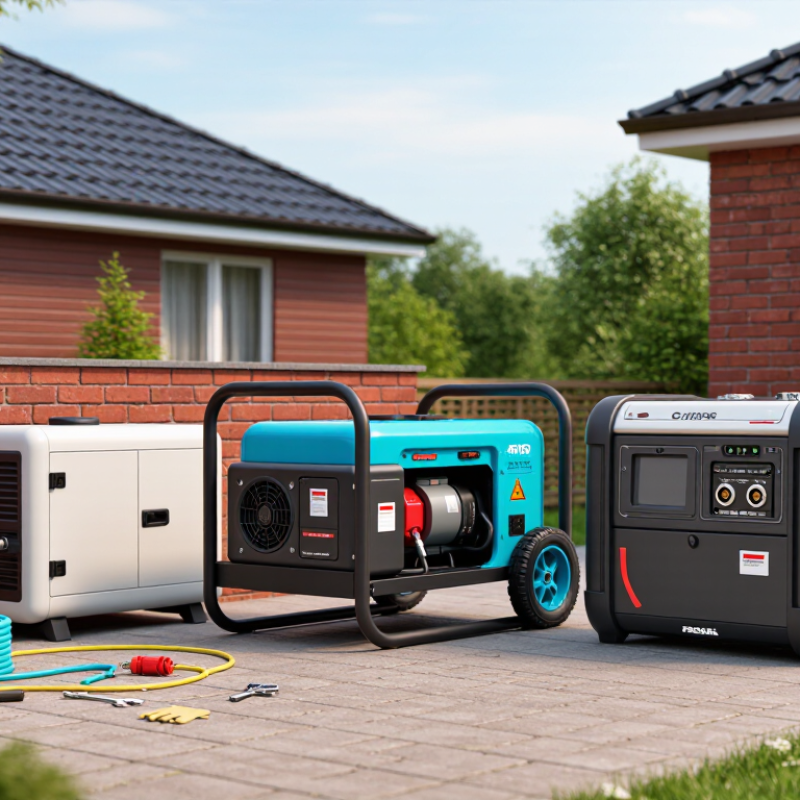
Natural gas generators turn fuel energy into electricity through a combustion engine and an alternator. In a common spark-ignited design, gas mixes with air, a spark starts combustion, and moving pistons rotate the alternator. Sensors monitor speed, temperature, and electrical output. Not glamorous, but essential.
Generators are often classified by prime mover. Reciprocating engines suit many homes, buildings, and smaller facilities because they respond quickly to changing loads. Microturbines use high-speed rotating components and may fit sites with steady, modest demand. Larger gas turbines typically serve higher-capacity applications. Each type has different maintenance needs, efficiency ranges, and sound levels; actual performance depends on the model and operating conditions.
They can also be grouped by use: standby units operate during utility outages, while prime-power units supply electricity for longer periods. A natural gas connection can support extended operation, but supply pressure and fuel availability still matter. Installation type matters, too. Most larger units are stationary, with ventilation, exhaust routing, and clearance planned around the site. A technician should match capacity to measured loads, including motor-starting surges. Estimates can miss real-world peaks. That deserves a second look. A refrigerator cycling beside a pump may create a brief demand a simple average conceals.

Portable natural gas generators suit small jobs and backup power where a compatible gas connection is available. Some portable models accept natural gas through an approved hose and fitting, but portability has limits. You still need a dependable fuel source. A unit may move easily across a yard, yet offer little help at a remote campsite. That distinction matters.
Before choosing a generator, list the devices you expect to run. A refrigerator, a few lights, and a small pump need different starting power. Check both running watts and surge watts on the appliance labels. Leave some capacity in reserve; motors can draw extra power when they start. Keep the generator outdoors, well away from doors and windows, and follow its manual for connection and ventilation requirements. Carbon monoxide is invisible.
Think about the connection point, too. A long hose can restrict placement, and an interrupted gas supply can stop the generator. I would not call every portable unit truly mobile. Some are better understood as movable backup equipment for a home, workshop, or food stall with suitable gas access. Check the required pressure, hose type, and output rating before relying on one. Small details count.
For homeowners seeking backup electricity in 2026, a natural gas standby generator can restore power automatically. Unlike portable units, it stays installed outdoors and connects to a home’s electrical system. When utility power fails, an automatic transfer switch moves selected circuits—or the full service panel—to generator power. That matters. Lights, refrigeration, and essential equipment can keep running with little intervention.
Whole-house coverage depends on the home’s electrical load, not just the generator’s label. Central air conditioning, an electric range, a well pump, and a clothes dryer can all raise demand. A qualified electrician can calculate starting and running loads, then help determine whether the system can support everything at once. It is easy to overestimate what “whole-house” means; some homes need circuits prioritized to avoid overload.
Natural gas supplies fuel through a connected gas line, so check that the line can meet the generator’s demand during operation. Have the installation site assessed for safe clearances, ventilation, and maintenance access. Schedule routine service, and test the system as its instructions recommend. One detail is easy to miss: a generator relying on gas service may not help if that supply is interrupted. Planning for that possibility makes a backup-power decision more realistic.
Approximate electrical output ranges by generator type (kilowatts). Actual natural-gas output varies by model and may be lower than output on other fuels.
Portable units can support selected appliances, while standby systems are permanently installed and can supply selected circuits or, when correctly sized, most household loads. Have a qualified professional size the generator to the home’s electrical demand.
For 2026, industrial natural gas generators for prime power generally fall into two categories: reciprocating engines and gas turbines. Reciprocating units suit facilities with changing loads, frequent starts, or several smaller generator sets. They can be arranged in parallel, so maintenance on one unit does not necessarily stop the entire plant. Gas turbines often fit larger sites with steady, high demand and space for centralized equipment. Their efficiency depends on operating conditions, including ambient temperature and exhaust-heat recovery.
Continuous operation is more than choosing a generator type. Engineers need to match capacity to the actual load profile, account for motor-starting surges, and verify that gas pressure and supply remain dependable. Cooling systems, ventilation, exhaust routing, and scheduled service also affect uptime. Keep critical components accessible; a small sensor can halt a large installation. Not always obvious. A generator sized only for peak demand may run inefficiently during ordinary hours, while undersizing can leave little room for growth.
Tips: Record hourly demand before comparing equipment. Ask for performance data at your expected load, not just rated output. Check how the system responds to sudden load changes, and plan redundancy around critical processes. Confirm site-specific emissions and interconnection requirements with qualified professionals. I would still leave a little uncertainty in the forecast: production schedules and utility conditions can change, and that affects the best configuration.
Compare common natural-gas generation technologies for facilities that require dependable prime power or continuous operation. The best choice depends on site load, fuel quality, emissions limits, maintenance capability, and whether useful heat can be recovered.
| Generator Type | Typical Electrical Output | Typical Electrical Efficiency | Best Fit for Continuous Operation | Key Advantages | Planning Considerations |
|---|---|---|---|---|---|
| Lean-burn reciprocating engine | Approximately 0.5–5 MW per engine; larger installations can combine multiple units | About 38–45% on a lower-heating-value basis for many larger, modern engines | Industrial plants, campuses, data centers, and distributed-power sites with steady loads | Good part-load performance; modular capacity; engines can be scheduled individually for load changes or maintenance | Requires regular engine maintenance and suitable gas pressure and quality. Confirm emissions compliance for the specific engine and site. |
| Rich-burn reciprocating engine | Approximately 50 kW–2 MW per engine, depending on design | About 30–38% on a lower-heating-value basis | Smaller commercial and industrial facilities, especially where exhaust heat can be used | Compact, established technology; can suit smaller loads; can support combined heat and power (CHP) | Electrical efficiency is generally lower than that of large lean-burn engines. Emissions controls and fuel specifications must be evaluated for the application. |
| Microturbine | Approximately 30–500 kW per unit; multiple units can be installed together | About 25–33% on a lower-heating-value basis | Small distributed-power systems with consistent demand, limited space, or useful hot-water and process-heat loads | Compact package; relatively few moving parts; multiple units provide modular capacity; exhaust heat can be recovered | Electrical efficiency is typically lower than that of larger engines. Economics improve when recovered heat is used or when low-emission operation is important. |
| Industrial gas turbine — simple cycle | Approximately 1–50 MW per unit for many industrial applications | About 25–40% on a lower-heating-value basis, varying substantially with size and ambient conditions | Large facilities, pipeline and process sites, and operations needing high output from a compact prime mover | High power density; well suited to large, steady loads; can provide useful exhaust heat for CHP | Efficiency and output can fall at high ambient temperatures and part load. Assess fuel-pressure requirements, exhaust treatment, and service arrangements. |
| Combined-cycle gas turbine | Typically tens to hundreds of megawatts per plant; large plants can exceed this range | Roughly 55–62% net efficiency on a lower-heating-value basis for many modern combined-cycle plants | Utility-scale or very large industrial power demand with long annual operating hours | High fuel efficiency at sustained, high output; the steam cycle recovers energy from gas-turbine exhaust | Higher project complexity and capital requirements than modular engine systems. Startup and load-following characteristics depend on plant design. |
How to use these figures: Output and efficiency ranges are indicative, not guaranteed ratings; actual performance varies by model, installation, fuel composition, altitude, ambient temperature, and operating load. Efficiency figures are electrical-only and use a lower-heating-value (LHV) basis. CHP total efficiency can be higher when recovered heat is productively used. Confirm continuous-duty ratings, emissions permits, gas supply capacity, and maintenance requirements with a qualified project engineer.
Compare natural gas generator types by the job they must perform, not by advertised peak output. Fixed standby units can power selected home circuits or larger loads during an outage. They connect to a permanent fuel supply and need suitable outdoor placement. Portable models are easier to move, but natural-gas compatibility varies. Check the exact fuel configuration before comparing prices. Inverter generators may suit lighter, sensitive loads, though natural-gas options and output levels differ. That matters.
Tips: List the appliances you expect to run together. Add their starting watts, especially for refrigerators, pumps, and air conditioners. Then compare continuous output, not just a brief surge rating. Ask an installer to verify gas pressure, connection sizing, ventilation, and transfer equipment. Local requirements vary. Don’t assume an existing gas line can support the generator.
For 2026, consider outage length, noise, service access, and installation cost alongside capacity. A standby unit may be convenient, yet costly for occasional, small outages. A portable unit may save money, but setup takes time and weather protection needs planning. I’d also leave some capacity margin; household demand can change. The trade-off is easy to miss. Review the manual’s maintenance schedule and confirm that qualified local service is available before choosing.