10 Cable Harness Buying Tips for Global Buyers?
Buying a cable harness across borders involves more than comparing unit prices. A reliable decision connects engineering accuracy, supplier capability, inspection discipline, and delivery planning. One missing terminal specification can delay an entire production line. Small details matter.
This guide presents ten practical buying tips for global purchasers. It explains how to verify drawings, materials, connector brands, wire gauges, and production tolerances before placing an order. It also considers supplier audits, sample approval, testing records, packaging, lead times, and communication across time zones. Experienced buyers should request traceability from incoming materials through final inspection. Clear documentation reduces assumptions and makes quality issues easier to investigate.
Cost deserves careful attention. The cheapest quotation may exclude testing, tooling, packaging, or replacement support. Ask what the price actually covers. A capable manufacturer should explain its process, equipment, inspection methods, and corrective-action procedure without vague promises. Certifications can support confidence, but they should be checked against the actual factory and product scope. Paperwork alone proves little.
Some purchasing teams focus heavily on specifications and overlook service after delivery. That is a mistake. Harnesses installed in vibrating equipment, vehicles, control cabinets, or medical systems may require different protection and validation. Installation samples can reveal routing problems that drawings miss. Even experienced teams get this wrong. The aim is not merely to find a low-cost supplier, but to build a dependable supply relationship. These tips help global buyers ask sharper questions, identify hidden risks, and choose cable harness partners with evidence rather than optimism.

Define Your Cable Harness Requirements and Application Conditions
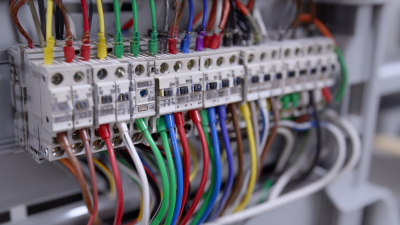
When global buyers define a cable harness, the application should guide every specification. Describe the equipment, installation space, circuit function, and expected service life. A control cabinet needs different routing flexibility than a moving robotic joint. Record voltage, current, signal type, connector positions, and available bend radius. Small omissions become costly changes later. I have seen drawings show connector locations but omit the cable exit direction. That gap can create sharp bends during assembly. Use photographs, marked-up sketches, or a three-dimensional layout when possible.
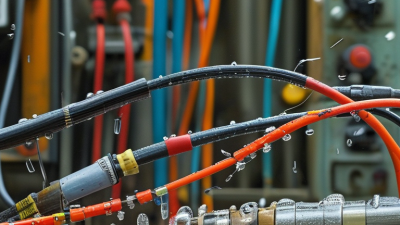
Application conditions deserve equal attention. State ambient temperature, humidity, dust, vibration, chemical exposure, and outdoor sunlight. For moving assemblies, specify cycle count, travel distance, speed, and minimum bend radius. For fixed installations, include pulling force, clamping points, and maintenance access. Select conductor size from measured load and allowable voltage drop, not habit. Shielding also depends on noise sources and grounding practice. A harness may pass a bench test yet fail after repeated flexing. That possibility is easy to underestimate.
Request material details, terminal retention data, crimp dimensions, and inspection criteria. Require sample builds before approving volume production. Test fit, continuity, insulation resistance, polarity, and mechanical strain relief. Keep revision-controlled drawings and clear acceptance records. Do not hide uncertainty. If the duty cycle is unknown, state the assumption and test it. Reliable purchasing begins with honest operating conditions, not a perfect-looking specification.
10 Cable Harness Buying Tips for Global Buyers
Define Your Cable Harness Requirements and Application Conditions
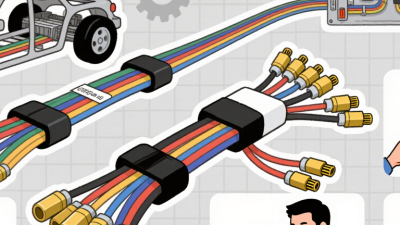
This engineering priority model ranks the key requirements buyers should define before requesting quotations.
Electrical ratings, environmental conditions, mechanical stress, connector compatibility, compliance, testing,
documentation, and supply planning should be confirmed for every application.
Assess Supplier Capabilities, Certifications, and Production Quality
A reliable cable harness supplier should prove capability before quoting volume. Ask for process maps, equipment lists, operator training records, and recent first-pass yield data. A polished factory tour is not enough. Request traceability from terminal lot to final inspection.
Certifications help, but they are not automatic proof of quality. The ISO Survey 2022 recorded 1,265,216 ISO 9001 certificates worldwide, showing how common quality certification has become. Check the certificate scope, issuing body, expiry date, and audited production site. For automotive harnesses, verify IATF 16949 alignment and controlled special processes. IPC/WHMA-A-620 is also useful for workmanship criteria, especially crimp height, pull force, routing, and connector damage.
Inspect the details.
Ask for capability studies on crimp force and electrical continuity. A supplier should explain sampling plans, gauge calibration, nonconformance handling, and corrective-action timing. Deloitte’s 2023 Global Chief Procurement Officer Survey reported that supply disruption remains a major procurement concern, so evaluate backup materials and capacity planning, not only unit price. Request evidence of supplier audits and production trials. I would also compare promised output with actual monthly records; estimates can be optimistic. One overlooked weakness is engineering change control. A small terminal substitution can affect fit, heat resistance, or field reliability.
Compare Materials, Specifications, Pricing, and Total Import Costs
10 Cable Harness Buying Tips for Global Buyers
Compare materials before comparing prices. Copper offers strong conductivity and flexible routing, while aluminum can reduce weight and material cost. Check insulation carefully: PVC suits many general applications, but TPE may perform better under repeated bending. Confirm conductor gauge, strand count, voltage rating, temperature range, shielding, connector type, and cable length against the equipment design. Small specification gaps can cause expensive redesigns.
Ask for drawings, sample approval records, and electrical test reports. Continuity, insulation resistance, pull-force, and crimp-height checks reveal more than a polished quotation. Clarify tolerance limits, labeling, packaging, minimum order quantity, tooling charges, and production lead time. A dependable supplier should explain how defects are traced and corrected. Do not accept “standard quality” as a complete specification.
Compare landed cost, not unit price. Add tooling, sample freight, ocean or air shipping, insurance, customs duties, import taxes, broker fees, warehouse handling, and possible inspection charges. Request pricing under the same delivery term and currency. A cheaper harness may use thinner insulation or exclude testing. That comparison is often misleading. Recheck tariff classifications with a qualified customs professional, because rates and documentation rules vary by destination. Leave room for currency movement and delays. I would also review the first shipment closely; assumptions that look reasonable on paper can fail at the receiving dock.
Verify Samples, Testing Procedures, Packaging, and Delivery Reliability
10 Cable Harness Buying Tips for Global Buyers
A cable harness can pass visual inspection and still fail after installation. Request production samples, not showroom pieces. Confirm wire gauge, terminal plating, connector keying, bend radius, labels, and pull-out strength. Ask for a drawing with revision control. The World Bank’s 2023 Logistics Performance Index gathered responses from 4,090 supply-chain professionals across 139 economies. It identifies shipment timeliness as a critical logistics measure, so sample approval should include delivery conditions.
Tip: Define testing before placing an order. Require continuity, insulation resistance, hipot, crimp-height, and terminal-retention tests. For high-vibration applications, add flexing and temperature-cycle testing. Ask for test equipment calibration records and a sample test report. IPC/WHMA-A-620 is widely used for cable and wire harness workmanship requirements. Still, it does not replace a buyer’s own acceptance criteria. That distinction is easy to miss.
Tip: Inspect packaging with the same care as the harness. Specify sealed bags, connector caps, moisture control, carton limits, and lot labels. Photograph the packed cartons before shipment. Check whether terminals can bend under stacking pressure. The packaging may look neat but fail during unloading. Ask for drop-test evidence when routes include multiple transfers. Also verify Incoterms, buffer stock, tracking, customs documents, and escalation contacts. I would not rely on a promised delivery percentage without reviewing late-shipment records, corrective actions, and actual transit data.