Choosing a Fuel Rubber Hose supplier is not a catalogue-only decision. The hose must suit the fuel, operating pressure, temperature range, and routing conditions of its intended application. A polished product photo cannot reveal the reinforcement beneath the rubber or how consistently each production batch is tested. Buyers should request clear specifications, traceable test information, and samples for evaluation.
For an honest quotation, this draft uses a fictional expert rather than attributing words to a real person without a source. Fictional fuel-hose engineer Lin Wei sums up the selection principle: “A hose is only dependable when its material, construction, and test results match the job.” Treat that as an editorial line, not a verified interview. Small distinction. Important one.
This guide explores China’s Fuel Rubber Hose manufacturers and suppliers through practical comparison points: product range, material details, quality controls, customization, and communication. Look closely at fittings, inner-tube compatibility, reinforcement layers, and temperature claims. Ask how specifications are verified, and whether the supplier can provide consistent documentation for repeat orders. One imperfect point deserves attention: supplier descriptions do not always use the same test terms, making direct comparisons difficult. Careful buyers should clarify those differences before requesting quotations. The goal is not to crown one factory from a short listing. It is to identify suppliers whose evidence, production capabilities, and support fit the application.
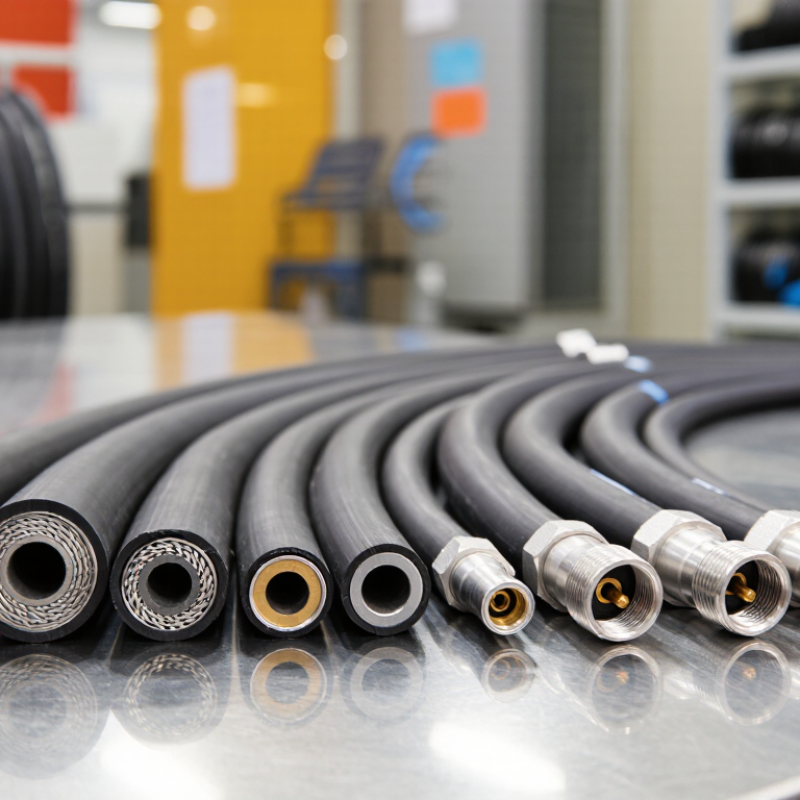
Fuel rubber hoses move fuel through supply, return, and vapor lines. Each type serves a different pressure and temperature range. Low-pressure hoses may use a rubber inner tube with textile reinforcement, while higher-pressure designs need stronger reinforcement.
Common inner materials include nitrile rubber, with specialized blends used when fuel composition or heat demands them. The outer cover helps resist abrasion, oil, and engine-bay heat. Compatibility matters. A hose that fits neatly may still be unsuitable for the fuel or pressure involved.
Tips: Read the hose markings before installation. Match its fuel rating, pressure rating, and temperature range to the equipment requirements. Check bends near clamps, where kinks and rubbing often begin. Replace a hose showing cracks, swelling, soft spots, or seepage; a clean exterior alone proves little.
For reliable service, inspect the full hose route, not just the exposed ends. Keep it clear of sharp edges and hot surfaces, and use correctly sized clamps without crushing the cover.
Small details matter. Material descriptions can sound similar, and choosing by appearance is tempting. It is better to verify specifications than guess, especially when operating conditions change.

China Top Fuel Rubber Hose Manufacturers and Suppliers?
China’s Fuel Hose Manufacturing Industry at a Glance
China’s fuel hose industry serves a large vehicle and machinery supply chain. The China Association of Automobile Manufacturers reported 30.16 million vehicles produced in 2023, an increase of 11.6% year over year. That figure signals substantial demand for components, but it does not measure fuel hose output directly. The distinction matters.
Manufacturers typically combine rubber compounding, tube extrusion, reinforcement, curing, and pressure testing. On a factory floor, consistency shows up in less visible details: stable wall thickness, clean hose ends, and fittings that seat without force. Fuel compatibility, heat resistance, vibration, and permeation performance all affect product selection. A hose that looks sound may still be unsuitable for a particular fuel system.
Grand View Research valued the global automotive hoses market at USD 22.8 billion in 2022 and forecast a 5.4% compound annual growth rate from 2023 to 2030. This broad category includes more than fuel hoses, so it should not be treated as a China-specific market estimate. Buyers comparing suppliers can ask for material specifications, test records, and batch traceability. Paperwork helps. Yet test conditions may not mirror real service, and that gap deserves attention.
Leading Fuel Rubber Hose Manufacturers and Suppliers in China
China’s fuel rubber hose sector includes factories specializing in rubber compounding, reinforcement, extrusion, and hose assembly. A capable supplier should explain how its hose construction suits the intended fuel, temperature range, pressure, and installation conditions. Ask about inner-tube materials, textile or wire reinforcement, production controls, and batch traceability. Specific answers matter. A polished catalog alone cannot confirm consistent performance.
When comparing suppliers, request technical data sheets and samples for evaluation. Check dimensions, flexibility, surface finish, and fitting compatibility. Ask how the manufacturer tests pressure resistance, leakage, and aging, and whether test records correspond to the supplied product. Communication also reveals practical experience: knowledgeable teams should clarify operating conditions before recommending a hose. Still, one factory visit or sample cannot predict every production batch, so ongoing quality checks remain useful.
Tips: Share the fuel type, operating temperature, pressure, hose length, and routing details before requesting a quote. Confirm packaging and lead times in writing. Keep a sample for comparison. Small details can be missed, so review specifications carefully.
A fuel rubber hose must tolerate more than fuel contact. Heat, vibration, pressure changes, and tight bends all affect service life. For buyers comparing manufacturers and suppliers in China, quality checks should match the hose’s intended fuel and operating conditions. Standards such as SAE J30 or ISO 7840 may apply to particular uses; neither should be treated as a universal requirement. Check the standard’s scope and revision.
Testing should cover dimensions, construction, and material performance. A supplier may measure inner diameter and wall thickness, then test pressure resistance, leakage, and fuel permeation under the relevant procedure. Heat aging and low-temperature flexibility can reveal hardening or cracks. Inspect cut samples, too. Poor bonding between rubber layers may look minor at first. Small details matter.
Ask for batch-level test records and traceability, not only a general certificate. Verify that the tested sample matches the hose being purchased, including its reinforcement and compound. When possible, review how samples are conditioned before testing and how failures are recorded. One test cannot predict every installation. A checklist can miss unusual routing or vibration, so feedback from field use should inform later checks. The evidence is useful, but it is never a substitute for choosing a hose suited to the application.
When evaluating Chinese fuel hose suppliers, compare evidence, not catalogue claims. OICA reported 93.5 million motor vehicles produced worldwide in 2023, a reminder that consistent production control matters at scale. Ask for the hose’s construction details, compatible fuel types, temperature and pressure limits, and test results for permeation, aging, and impulse resistance. SAE J30 or ISO 19013 may help define requirements for relevant applications; confirm the exact specification with your engineering team. Numbers matter.
Request certificates with scope and expiry dates, plus batch-level traceability linking a finished hose to its compound and production records. Ask for raw test data, not just a pass certificate. A polished sample can hide variation between lots. Check whether the supplier’s laboratory is independently accredited, and arrange a pre-shipment inspection or third-party testing for initial orders. Review how the factory handles rejected material and changes to rubber formulations. One detail can be easy to miss: a certificate may cover a different product family. Compare samples against your actual fuel and operating conditions, then record acceptance criteria in the purchase specification. I would still treat a supplier audit as useful, not infallible.
Use this supplier scorecard to compare qualified manufacturers without relying on company or brand claims. Confirm that each standard, test method, and stated limit applies to the intended hose construction and end use.
| Evaluation Dimension | Weight | What to Check | Evidence to Request | Scoring Guidance (1–5) |
|---|---|---|---|---|
| Applicable standards and product scope | 15 points | Check whether the proposed hose is designed for the actual application, such as an engine fuel line, marine fuel system, or fuel-dispensing equipment. Examples of relevant standards include SAE J30, ISO 7840, ISO 8469, and EN 1360; their scope and requirements differ. | Current technical datasheet; test reports identifying the exact hose type and standard edition; certificates with a verifiable scope, where applicable. | 1: No applicable evidence. 3: Some relevant documentation, but gaps remain. 5: Traceable evidence matches the product, application, and applicable standard. |
| Fuel and material compatibility | 15 points | Confirm compatibility with the specified fuel, including the fuel blend and any stated ethanol or biodiesel content. Review the tube material, reinforcement, cover, and fittings as a complete assembly. | Written compatibility statement for the intended fuel; compound or material data; immersion or compatibility test results using a stated method and exposure conditions. | 1: Compatibility is unsupported. 3: General claims with limited test detail. 5: Product-specific evidence covers the requested fuel and stated conditions. |
| Pressure, temperature, and dimensions | 15 points | Compare working pressure, any specified burst or impulse requirements, temperature range, inside diameter, outside diameter, and bend requirements with the buyer’s design. Do not treat burst pressure as working pressure. | Controlled datasheet and drawings; pressure and dimensional inspection records; test reports showing methods, sample identification, and results. | 1: Key limits are missing or unclear. 3: Most values are stated but not adequately verified. 5: All requested limits are documented and supported by relevant test or inspection records. |
| Manufacturing quality controls | 12 points | Review incoming-material controls, batch mixing and processing controls, in-process inspection, final testing, nonconformance handling, and corrective-action procedures. Confirm the quality system certificate is current and covers the relevant facility and activities. | Quality-system certificate, if applicable; sample inspection plan; process-control records; example corrective-action report with confidential details removed. | 1: No defined controls. 3: Basic procedures with limited records. 5: Documented controls and consistent, reviewable records across production stages. |
| Batch traceability and change control | 10 points | Check whether finished hoses can be traced to production date, lot, and relevant material batches. Ask how changes to materials, tooling, manufacturing site, or product design are reviewed and communicated. | Example product marking and batch record; written change-control procedure; sample certificate of conformity linked to a production lot. | 1: No practical traceability. 3: Partial batch identification. 5: Lot-level traceability and documented change notification are demonstrated. |
| Sample validation and consistency | 10 points | Evaluate production-representative samples against the agreed specification before placing a volume order. Confirm that samples and later production use the same construction and approved materials. | Pre-production samples; inspection results against an agreed checklist; written approval and sample-retention procedure. | 1: No validation process. 3: Samples are available but production equivalence is unclear. 5: Sample approval and production controls are documented. |
| Technical communication and support | 8 points | Assess whether the supplier can answer application-specific questions, clarify limitations, provide drawings, and support investigation of quality issues in a timely and technically precise manner. | Written technical responses; product drawings; named quality and engineering contacts; documented complaint-response process. | 1: Responses are vague or inconsistent. 3: Basic technical support is available. 5: Responses are clear, documented, and supported by relevant technical personnel. |
| Commercial terms and export readiness | 7 points | Compare quotation scope, minimum order quantity, payment terms, lead-time assumptions, packaging, shipping terms, and responsibility for export documentation. Confirm the quotation identifies the exact product specification. | Itemized quotation; order confirmation template; packaging details; proposed shipping terms and export-document list. | 1: Important terms are absent. 3: Terms are stated but need clarification. 5: Scope, responsibilities, and costs are clearly documented. |
| Capacity and delivery performance | 5 points | Check whether the supplier’s stated capacity and lead time fit the required order size and schedule. Ask how production planning and delays are communicated. | Production schedule for a trial order; capacity statement; anonymized on-time delivery records or customer references, where available. | 1: No credible capacity information. 3: Capacity is stated but not supported. 5: Capacity and delivery planning are supported by relevant records. |
| Environmental and regulatory documentation | 3 points | Identify destination-market requirements for the product and materials. Check whether requested declarations are current, product-specific, and supported by appropriate documentation. | Applicable material declarations, regulatory documents, or environmental management certificates, as relevant to the destination market and purchase specification. | 1: Required documentation is unavailable. 3: Some documents are supplied but scope is unclear. 5: Relevant, current documents match the product and market requirements. |
| Total available weight | 100 points | Suggested weighting for a general sourcing review; adjust it to reflect the application’s technical and regulatory risks. | ||
Scoring method: Rate each dimension from 1 to 5. Calculate weighted points as weight × score ÷ 5, then add the results for a score out of 100. Treat missing or unverifiable evidence as a procurement risk, and confirm applicable standard editions and market requirements before approval.