Choosing the Best Ultrasonic Cell Disruptor Manufacturer in China? Start with the work the instrument must perform, not a bold claim on a product page. A wet laboratory processing small bacterial samples has different needs from a pilot facility running repeated batches. Probe diameter, adjustable amplitude, pulse control, and cooling all affect the result. So does the sample itself. Heat-sensitive cells may need short pulses and an ice bath, while tougher materials can require a different setup. Small details matter.
Sonochemistry researcher Kenneth S. Suslick described the mechanism this way: “The chemical effects of ultrasound arise from acoustic cavitation: the formation, growth, and implosive collapse of bubbles in a liquid.” That principle helps explain why wattage alone cannot establish performance. Ask manufacturers for usable operating ranges, probe material specifications, service arrangements, and application guidance. Request a demonstration or sample-processing data relevant to your own materials, then check how temperature and repeatability were measured. No brochure answers every question. A comparison can still miss something.
This guide looks at Chinese manufacturers through practical criteria: build quality, control features, documentation, support, and suitability for the intended workflow. It does not assume one supplier is best for every laboratory. A clear answer depends on the sample, the daily workload, and the support available after purchase. That deserves careful thought.
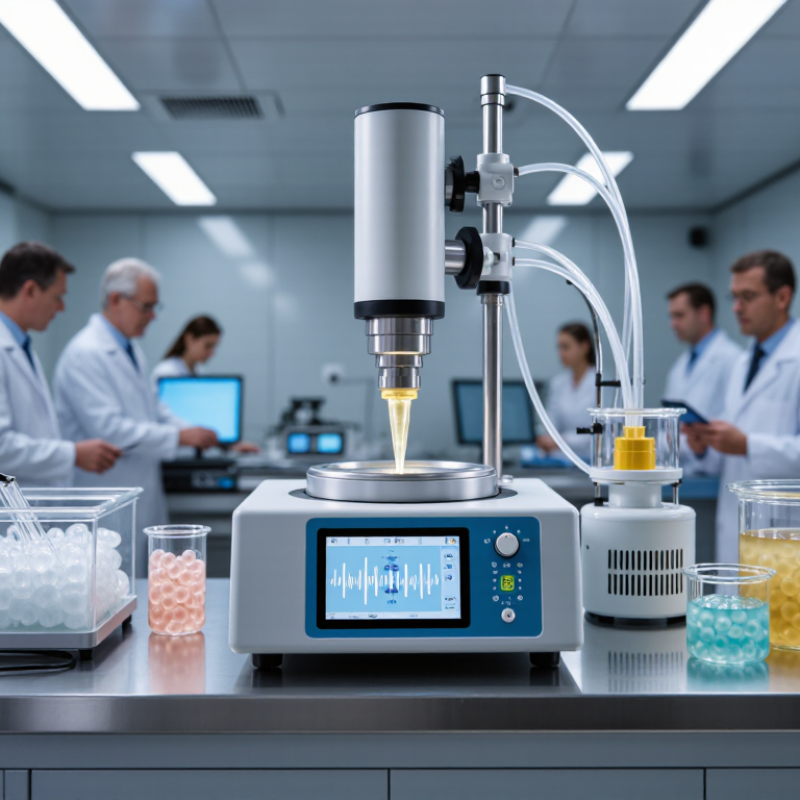
An ultrasonic cell disruptor is a laboratory instrument that uses high-frequency sound to break open cells in a liquid sample. A generator sends electrical energy to a probe, which vibrates rapidly in the solution. These vibrations create tiny bubbles that form and collapse, producing localized forces that can disrupt cell walls and membranes.
The probe is placed directly into a tube or vessel, with its tip submerged but not touching the bottom. Researchers adjust the amplitude and pulse cycle to suit the sample. Pulsed operation can limit heat buildup, which matters when working with temperature-sensitive proteins or enzymes. Keep the sample cold. A bath sonicator distributes energy through the vessel, while a probe disruptor delivers it more directly to the liquid.
It is easy to assume that more power means better results. That is not always true. Excessive energy may heat a sample, create foam, or affect sensitive molecules. Sample volume, viscosity, cell type, and probe size all influence performance, so settings often need careful testing. Record the conditions used, including pulse timing and temperature. Reproducibility can still be imperfect, especially when samples vary from batch to batch.

An ultrasonic cell disruptor converts electrical energy into rapid mechanical vibrations. A probe transfers those vibrations into a liquid sample, creating alternating high- and low-pressure cycles. During low-pressure cycles, tiny bubbles form. They then collapse during compression, producing shear forces and microjets that can break cell walls and membranes. This is acoustic cavitation, not simple heating.
The forces are intense. Suslick’s review in Science (1990) describes estimated bubble-collapse conditions near 5,000 K and 1,000 atmospheres. These are localized, momentary conditions, not the temperature or pressure of the whole sample. In practical work, probe depth, sample volume, pulse timing, and cooling all affect disruption. An ice bath helps, but it does not guarantee an even temperature. Results can vary.
For a small tube, a probe placed too near the surface may cause splashing and foaming. Too much sonication can heat sensitive proteins or shear long DNA fragments. The process is not perfectly uniform. A useful setup records amplitude, pulse duration, total sonication time, and sample temperature, then checks disruption with microscopy or a suitable assay.
Suslick and Flannigan’s review in the Annual Review of Physical Chemistry (2008) discusses cavitation’s physical effects; it also reminds operators that local conditions are difficult to measure directly. That uncertainty matters when comparing protocols.
Chinese ultrasonic cell disruptor manufacturers can offer flexible configurations, from compact bench units to larger production systems. The OECD’s 2023 Main Science and Technology Indicators reported China’s research and development spending at about 2.4% of GDP in 2021. This shows a substantial research base, but it does not prove any supplier’s equipment quality. Check the manufacturer’s own test records.
Key capabilities include stable amplitude control, pulse settings, temperature management, and probes suited to different sample volumes. Ask for documented output power, operating frequency, and repeatability results—not just nominal specifications. A useful factory test records sample temperature and processing time across repeated runs. Small details matter. Some brochures make performance look more consistent than real samples allow; viscous or heat-sensitive materials can behave differently.
Tips: Request a demonstration using a sample similar to yours. Review maintenance instructions, probe replacement procedures, and service response times. Compare measured results across batches, not only the displayed power setting. Then assess whether the supplier can explain any variation clearly.
Commercial product specifications commonly include nominal power classes such as these. Actual output, probe selection, pulse control, cooling, and supported sample volume vary by model; compare specifications and verify performance for your application.
A reliable ultrasonic cell disruptor manufacturer should explain how its equipment performs with your sample type, not just quote maximum power. Ask for test data showing amplitude stability, processing time, and temperature rise. A useful demonstration uses a similar vessel and sample volume to yours. Small details matter.
Check the probe material, available tip sizes, and the method for controlling pulse duration. Confirm that the generator can maintain consistent output during repeated runs. Request written quality-control records, warranty terms, and details about calibration and replacement parts. Clear answers are a good sign. Vague promises are not.
I would not treat a polished brochure as proof of performance. Ask how the supplier handles overheating, probe wear, and service requests, and speak with users who run comparable workloads. A short trial can reveal practical issues, though it may not predict every batch. That limitation is easy to miss. Compare the results against your own acceptance criteria before choosing a manufacturer.
Ultrasonic cell disruptors are used to release proteins, enzymes, and nucleic acids from microbial and cultured cells. They also support tissue homogenization and sample preparation. The right system depends on the sample, not just the advertised power. Suslick’s 1990 Science review describes cavitation hot spots reaching roughly 5,000 K and 1,000 atmospheres. These are microscopic, short-lived conditions, not the temperature of the whole sample.
For equipment selection, match probe size and output to sample volume, cell type, and viscosity. Compare amplitude, pulse control, and energy delivered per millilitre; a high-wattage unit alone does not guarantee efficient lysis. Small tubes may need a narrow probe, while larger batches require consistent mixing and heat removal. Record the sample temperature, processing time, and energy input during trials. Cooling matters: repeated pulses can warm a tube and damage heat-sensitive proteins. Results can still vary between sample batches, so validate the method before scaling up.
Tips: Begin with short pulses and check the temperature between cycles. Keep a non-sonicated control. It is easy to overlook foaming, and that can make results less repeatable.