China Top 10 Capacitors And Capacitance Manufacturers?
China has become a major production base for capacitors used in vehicles, power supplies, smartphones, renewable energy systems, and industrial controls. The country’s manufacturing depth covers aluminum electrolytic, ceramic, film, tantalum, supercapacitor, and high-voltage products. This article examines China’s Top 10 Capacitors And Capacitance manufacturers through practical industry criteria, rather than brand visibility alone.
Market data supports this focus. Fortune Business Insights projects steady global capacitor-market growth through 2032, driven by electrification, consumer electronics, and energy infrastructure. Mordor Intelligence also identifies electric vehicles, 5G equipment, and renewable-power systems as important demand engines. Meanwhile, Techno Systems Research has repeatedly highlighted strong multilayer ceramic capacitor demand from automotive and communication applications. These reports indicate opportunity, but they do not prove every supplier’s reliability.
No ranking is perfect.
A credible comparison should examine production scale, dielectric technology, voltage ranges, capacitance stability, temperature performance, and service life. It should also review ISO systems, IATF 16949 capability, laboratory testing, export experience, and documented customer support. In real purchasing work, a capacitor may look excellent on paper yet fail during humidity testing or repeated thermal cycling. That detail matters. Certifications help, but traceability and consistent batch performance matter more.
The companies discussed here are selected for their technical capabilities, market presence, product breadth, and relevance to demanding applications. Some manufacturers excel in automotive electronics. Others focus on power conversion, industrial equipment, or compact consumer devices. Readers should still verify current certifications, factory capacity, datasheets, and sample-test results before making a sourcing decision. Market positions change, and supplier claims require careful checking.
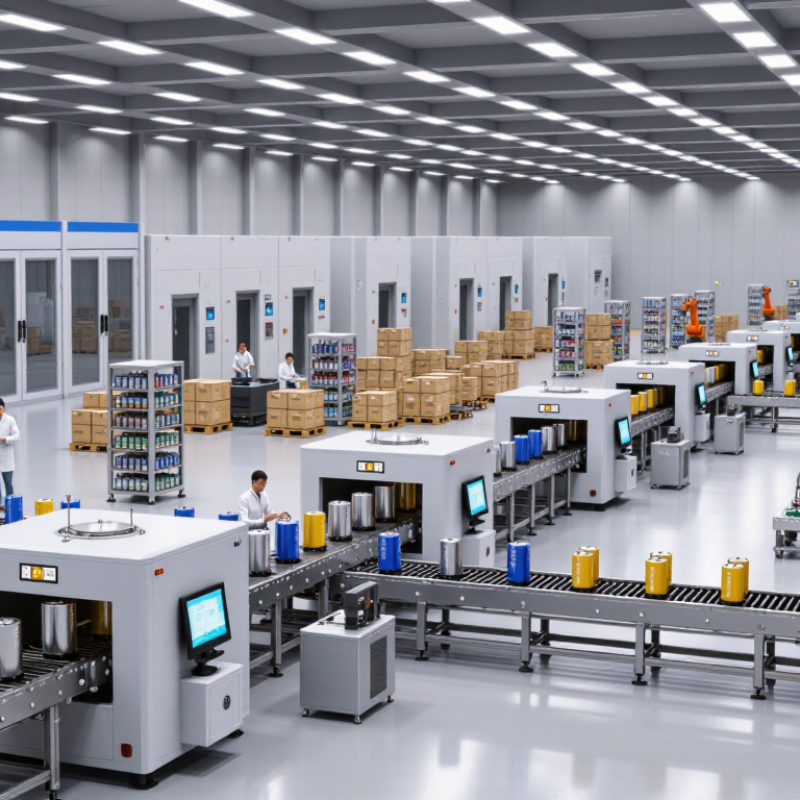
Ranking China’s Top 10 Capacitor Makers by Revenue, Capacity, and Certifications
China’s capacitor sector combines large-scale production with highly specialized engineering. This ranking evaluates ten leading manufacturers by revenue, annual capacity, and relevant certifications. Public financial reports, factory disclosures, and audited supplier information provide the main evidence.
Revenue receives the strongest commercial weight. However, revenue alone misleads. A supplier may report impressive sales while depending heavily on one market. Capacity is examined through monthly output, production lines, automation, and lead-time stability. I also check whether facilities can produce aluminum electrolytic, ceramic, film, or power capacitors consistently. Factory visits often reveal more than brochures. Clean rooms, aging racks, and traceability records matter.
Certifications form the reliability filter. ISO 9001 supports quality management, while IATF 16949 indicates stronger automotive process control. IEC testing, UL recognition, RoHS compliance, and environmental certifications add practical value. The highest-ranked companies usually combine broad capacity with documented process discipline. Still, certification dates and product scopes require careful verification. Some public data remains incomplete or difficult to compare. That is the weak point.
A stronger ranking also considers failure rates, warranty response, research investment, and export experience. Price is useful, but unstable quality becomes expensive quickly. Buyers should request recent test reports, production samples, and capacity evidence before making a final decision.
Mapping Product Categories: MLCC, Aluminum, Film, Tantalum, and Supercapacitors
China’s top ten capacitor manufacturers should be mapped by product category, not revenue alone. MLCC production focuses on ultra-small 0201 and 0402 packages, high-layer counts, and stable dielectric performance. According to Yole Group’s electronic components research, MLCC demand remains strongly linked to smartphones, vehicles, and industrial electronics. Small is not simple.
Aluminum electrolytic capacitors serve power supplies, inverters, and charging equipment. Engineers usually compare ripple-current capacity, lifetime at 105°C or 125°C, ESR, and failure controls. Film capacitors require different evidence, including self-healing behavior, pulse endurance, insulation strength, and winding quality. A 2024 Fortune Business Insights report placed the global capacitor market above USD 20 billion, while regional growth rates varied considerably. Data can disagree.
Tantalum capacitors offer high capacitance in compact spaces, but voltage derating and surge protection deserve close examination. Supercapacitors belong to another performance group, supporting short-duration power delivery and frequent cycling. IDTechEx reports continued growth in supercapacitor applications across transport and backup power systems. A practical Chinese supplier review should therefore separate laboratory samples from mass-production capability. It should verify factory audits, defect rates, traceability, and test standards. Rankings can mislead. A manufacturer may lead in MLCC volume but lack strong film or supercapacitor engineering. That distinction is often missed.
Typical Capacitance Ranges by Capacitor Technology
Representative market ranges for MLCC, aluminum electrolytic, film, tantalum, and supercapacitors. Values are shown in microfarads (µF) on a logarithmic scale.
MLCCs typically provide compact, low-to-medium capacitance for high-frequency decoupling. Aluminum electrolytic capacitors offer very high capacitance for power smoothing, while film and tantalum capacitors are used where stability, reliability, or low leakage is important. Supercapacitors operate at far higher capacitance levels and are designed for short-term energy storage.
Comparing 1 pF–100,000 μF Capacitance and 6.3–1,000 V Ratings
China’s capacitor sector covers an unusually wide electrical range: 1 pF for radio-frequency tuning to 100,000 μF for power smoothing. Rated voltage commonly spans 6.3 V in compact digital circuits to 1,000 V in industrial converters. This range is not a simple ranking exercise. Ceramic parts usually serve low-capacitance, high-frequency positions, while aluminum electrolytics provide high capacitance at lower frequencies. Film capacitors often support pulse loads and demanding insulation requirements.
The International Energy Agency reported nearly 14 million electric car sales worldwide in 2023. That growth increases demand for ripple-current control, DC-link filtering, and compact thermal designs. A manufacturer claiming broad capability should disclose capacitance tolerance, leakage current, equivalent series resistance, ripple-current ratings, and lifetime at temperature. IEC 60384 testing principles help buyers compare these details consistently. Numbers matter.
In practical sourcing, a 1,000 μF, 16 V component and a 1,000 μF, 450 V component are not interchangeable. Their size, dielectric system, safety margin, and failure behavior differ sharply. I would also question catalogue-only comparisons. Actual performance can change after humidity exposure, soldering, vibration, or prolonged operation near the voltage limit. Some published ranges look impressive but hide narrow production yields. A factory audit, sample testing, and accelerated-life evidence remain necessary before selecting among China’s top ten capacitor manufacturers.
Evaluating ESR, Ripple Current, Lifetime, and Operating Temperature
When comparing China’s leading capacitor manufacturers, engineers should look beyond capacitance and voltage ratings. ESR strongly affects heat generation, especially in switching power supplies. A capacitor with lower ESR usually handles ripple current more efficiently. However, the lowest ESR is not always the best choice for every circuit.
During bench testing, measure ripple temperature after several hours, not only during startup. A warm enclosure can shorten capacitor life significantly. Lifetime ratings often assume specific ambient temperatures and ripple conditions. At higher temperatures, expected life may fall quickly. Operating temperature matters.
Tips: Request test data for ESR, ripple current, impedance, and endurance. Check whether measurements follow recognized industry standards. Ask for samples from different production batches. One sample proves very little.
Electrolytic capacitors need careful lifetime evaluation. Film and ceramic types behave differently under vibration, frequency changes, and DC bias. Experienced buyers should also inspect sealing quality, lead formation, storage conditions, and traceability records. These details can reveal manufacturing discipline. A datasheet is useful, but it is not the whole truth. I would avoid judging suppliers by price alone. That approach seems efficient, yet it can hide unstable materials or incomplete testing. Independent verification remains worthwhile, particularly for high-temperature or high-ripple applications.
Checking IEC 60384, AEC-Q200, ISO 9001, and RoHS Compliance
When evaluating China’s capacitor and capacitance manufacturers, compliance documents deserve close attention. IEC 60384 is important because it defines testing and quality requirements for many fixed capacitor types. However, not every section applies to every component. The exact series, dielectric material, voltage rating, and test category must match the product under review.
AEC-Q200 matters for automotive applications. It checks stress resistance through temperature cycling, humidity exposure, mechanical vibration, and electrical endurance tests. Ask for test conditions, sample quantities, failure limits, and recent reports. A certificate alone can mislead. Production traceability matters too, including lot codes, inspection records, and corrective-action history.
ISO 9001 can show that a factory controls purchasing, process changes, calibration, and customer complaints. Still, a valid certificate does not guarantee stable capacitance or low failure rates. RoHS documentation should identify restricted substances and reference suitable material declarations or laboratory results. Check whether the report covers the exact series, not only a similar model.
Small details reveal maturity. Look for controlled storage, sealed moisture protection, and clear acceptance limits. Some suppliers provide excellent paperwork but weak technical answers. That deserves caution. A careful audit may expose gaps in sampling or aging data, and those gaps should be recorded rather than ignored.