Choosing Rubber Bushes for global sourcing is not a simple price exercise. A bush that looks identical on a supplier’s drawing can behave differently after heat, road salt, oil, vibration, and repeated compression. The buyer must examine compound formulation, hardness tolerance, bonding quality, dimensional control, and test evidence. A low unit price can become expensive when vehicles return with noise, vibration, or premature cracking.
Industry data supports this caution. The International Rubber Study Group’s World Rubber Industry Outlook highlights continuing demand from automotive and industrial applications, while Grand View Research identifies automotive molded rubber components as a growing global market. These reports show opportunity, but they do not remove supplier risk. A sourcing team still needs traceable material certificates, production samples, aging tests, and a clear inspection plan. ISO 1629 can help standardize rubber terminology, yet terminology alone cannot prove field performance.
Dr. James E. Mark, a respected polymer scientist, stated, “The properties of rubber are determined by its molecular structure and its network structure.” That principle matters during supplier selection. A rubber bush is not merely a black cylindrical part. Its performance depends on the polymer, fillers, curing system, metal preparation, and installation conditions. I have seen buyers focus heavily on hardness and overlook bonding strength. That is a mistake. Hardness is useful, but incomplete. Global sourcing also requires honest review of freight exposure, tooling ownership, capacity, change-control discipline, and communication quality. No supplier is perfect. The strongest decision usually comes from verified evidence, not confident promises.
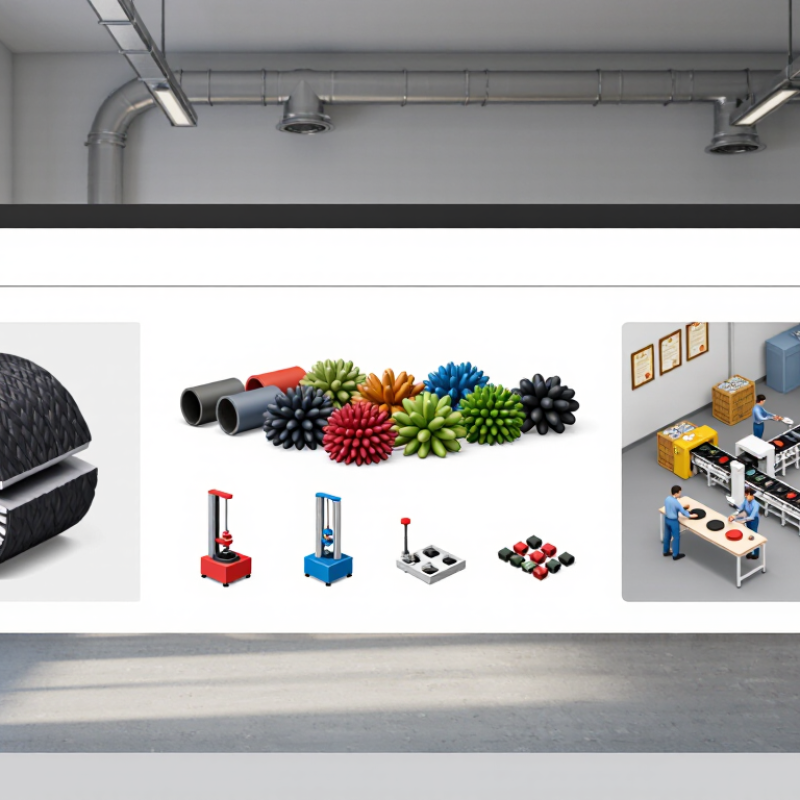
Choosing rubber bushes for global sourcing starts with the application, not the catalogue. Define the joint’s function, mounting position, and movement direction. Is the bush carrying constant weight, absorbing vibration, or controlling suspension movement? Record static load, peak load, movement angle, and operating frequency. Small differences can change the required design.
Temperature deserves careful attention. Measure normal heat, cold starts, and short exposure peaks near engines or exhaust systems. List contact with oil, water, cleaning fluids, salt, and dust. Rubber hardness alone is not enough. The compound must retain elasticity under the actual conditions. A harder bush may reduce movement, but it can transfer more noise and stress.
Installation details also matter. Specify the housing diameter, sleeve size, press fit, tolerance, and available assembly force. Check whether the bush works in compression, shear, or torsion. Ask suppliers for material data, load-deflection curves, ageing results, and dimensional inspection records. Independent testing can confirm performance under realistic temperature and chemical exposure.
I have seen projects fail because designers tested only room-temperature samples. That assumption is easy to make, and often wrong.
Prototype testing should copy the real duty cycle, including pauses, impact loads, and misalignment. Keep the results with the drawing and revision history, so each global supplier works from the same requirements.

How to Choose Rubber Bushes for Global Sourcing
Rubber bushes must match the working environment, not only the drawing. Natural rubber offers strong elasticity and good fatigue resistance. SBR provides economical wear performance for general applications. NBR suits oil exposure, but it may harden in ozone and sunlight. EPDM performs well against weather, water, and heat. Silicone handles wide temperatures, although its tear strength can be limited. Material choice changes service life significantly.
Grade selection needs measurable evidence. Check Shore A hardness, tensile strength, elongation, compression set, and operating temperature. A harder bush may control movement better, but it can transmit more vibration. A softer compound absorbs vibration effectively, yet may deform under heavy loads. In practical sourcing, I have seen identical hardness values hide different compound quality. That assumption needs review. Request batch test reports, dimensional records, and aging results from qualified suppliers. Confirm test methods before comparing documents.
Tips: Define the load, frequency, temperature, fluids, and expected service life. Ask for samples before approving mass production. Test bushes after heat, oil, and ozone exposure when relevant. Inspect bonding between rubber and metal carefully. Small surface cracks matter. Do not rely on one laboratory result. Manufacturing variation can affect fit, noise, and long-term reliability. Recheck tolerances during incoming inspection, especially when production crosses borders.
| Rubber Material | Common Bush Grade or Formulation | Typical Service Temperature | Typical Hardness | Typical Tensile Strength | Typical Elongation | Compression Set Resistance | Oil and Fuel Resistance | Ozone and Weather Resistance | Typical Uses and Sourcing Considerations |
|---|---|---|---|---|---|---|---|---|---|
| Natural Rubber (NR) | General-purpose natural rubber; carbon-black reinforced grades; bonded or unbonded bush compounds | Approximately −50 to +80 °C | 40–80 Shore A | 15–30 MPa | 300–700% | Excellent dynamic fatigue resistance | Poor resistance to mineral oils, fuels, and solvents | Limited unless protected with suitable additives or a cover | Suitable for suspension, vibration isolation, and high-flexing applications where low cost, resilience, and tear strength are priorities. Avoid continuous exposure to petroleum fluids and outdoor ozone. |
| Styrene-Butadiene Rubber (SBR) | General-purpose SBR; abrasion-resistant and carbon-black-filled grades | Approximately −45 to +100 °C | 40–85 Shore A | 10–25 MPa | 250–600% | Good for general static service; moderate for continuous dynamic loading | Poor resistance to mineral oils and fuels | Fair to poor without protective formulation | Economical option for general-purpose bushings, seals, and vibration mounts. Usually selected when requirements are less demanding than those for natural rubber. |
| Nitrile Rubber (NBR) | Low-, medium-, or high-acrylonitrile grades; hydrogenated NBR for higher temperature and wear demands | Approximately −40 to +120 °C Higher for selected HNBR grades | 40–90 Shore A | 10–25 MPa | 200–600% | Good in oil-exposed static applications; moderate to good depending on compound | Excellent resistance to mineral oils, hydraulic oils, and many fuels | Poor to fair; protect from ozone and direct sunlight | Recommended for oil-lubricated machinery, hydraulic systems, and automotive components. Higher acrylonitrile content improves oil resistance but generally reduces low-temperature flexibility. |
| Ethylene Propylene Diene Rubber (EPDM) | Sulfur-cured or peroxide-cured EPDM; low-compression-set grades | Approximately −50 to +150 °C | 40–90 Shore A | 10–25 MPa | 200–600% | Very good, particularly with peroxide-cured formulations | Poor resistance to petroleum oils and hydrocarbon fuels | Excellent ozone, weathering, water, and steam resistance | Strong choice for outdoor bushings, water systems, brake-fluid exposure, and hot-air environments. Do not specify for contact with mineral oil or fuel unless a compatible barrier is provided. |
| Chloroprene Rubber (CR) | General-purpose neoprene-type formulations; flame-resistant and weather-resistant grades | Approximately −40 to +120 °C | 40–90 Shore A | 10–25 MPa | 200–500% | Good for many static and moderate dynamic applications | Good resistance to moderate oil exposure and many refrigerants | Good ozone, weathering, and flame resistance | Balanced material for outdoor mounts, mechanical equipment, and moderate oil exposure. Often costs more than NR, SBR, or standard EPDM. |
| Silicone Rubber (VMQ) | General-purpose silicone; high-consistency rubber; low-compression-set grades | Approximately −60 to +200 °C | 30–80 Shore A | 5–12 MPa | 150–700% | Excellent at high and low temperatures | Poor resistance to fuels, aromatic oils, and abrasive wear | Excellent resistance to ozone, UV, and weathering | Suitable for wide-temperature-range isolation and sealing. Select only when lower tear strength and abrasion resistance are acceptable. |
| Fluorocarbon Rubber (FKM) | Standard, low-temperature, and chemical-resistant fluorocarbon grades | Approximately −20 to +200 °C Special grades extend the range | 60–90 Shore A | 10–20 MPa | 100–300% | Good to excellent at elevated temperatures | Excellent resistance to fuels, mineral oils, and many chemicals | Excellent resistance to ozone and weathering | Used for severe heat, fuel, and chemical environments. Higher material cost makes it unsuitable for routine bushings unless the service conditions justify it. |
| Thermoplastic Polyurethane (TPU) | Polyether-based or polyester-based TPU; ester and ether grades selected by hydrolysis and wear requirements | Approximately −40 to +100 °C | 70 Shore A–60 Shore D | 25–60 MPa | 300–700% | Very good under compression when correctly designed | Good resistance to oils and abrasion; grade dependent | Good, but UV stability depends on formulation and color | Useful where high load capacity, abrasion resistance, and low wear are required. Check hydrolysis resistance for humid or hot-water service and confirm processing tolerances. |
| Selection note: The values above are typical engineering ranges for commonly available compounds, not guaranteed specifications. Actual performance depends on polymer grade, cure system, fillers, plasticizers, bonding method, geometry, preload, frequency, deformation, and test temperature. Before global sourcing, request the supplier’s compound data sheet and validate hardness, compression set, tensile properties, dynamic stiffness, fatigue life, fluid compatibility, and dimensional tolerances using the applicable ISO or ASTM test method. | |||||||||
How to Choose Rubber Bushes for Global Sourcing
Set Dimensional, Tolerance, and Quality Specifications
A rubber bush should begin with a controlled drawing, not a supplier’s catalogue description. Define the inner diameter, outer diameter, length, and metal insert position. State each tolerance separately. Small errors matter. A 0.3 mm change can affect installation force and vibration control.
Specify rubber hardness, usually by Shore A, along with tensile strength and compression set. Include operating temperature, exposure to oil or water, and expected service loads. For metal parts, define coating, material grade, and permitted surface marks. Tolerance bands should reflect function, not guesswork. Overly tight limits can increase cost without improving performance.
Global sourcing also requires a practical inspection plan. Require dimensional reports from sampled parts, calibrated gauges, and batch traceability. Visual checks should cover cracks, flashing, bonding gaps, and distorted inserts. A first-article sample is useful, but it can mislead. Production behavior may change after curing several batches. Our early specifications were too broad, especially for concentricity. That weakness appeared during assembly, not laboratory review. Request process records, test methods, and retained samples before approval. Independent testing may be appropriate for critical applications. Keep the specification readable for every factory involved.
Example dimensional and tolerance specification for a molded rubber bush. Define nominal size, allowable variation, hardness, and inspection criteria before requesting global quotations.
The values are representative engineering examples in millimeters. Final limits should be confirmed on the product drawing and agreed with the supplier according to applicable rubber-part tolerance standards, such as ISO 3302-1.
Choosing rubber bushes for global sourcing requires more than comparing unit prices. The ISO Survey 2022 recorded 1,265,216 ISO 9001 certificates worldwide, but certification alone does not prove process control. Request the certificate scope, audit date, nonconformity records, and factory address. For automotive applications, IATF 16949 experience is valuable, especially when suppliers manage PPAP, traceability, and change approvals. Ask for recent test results covering hardness, tensile strength, compression set, and dynamic fatigue.
Production capability needs physical verification. The International Rubber Study Group’s 2024 outlook placed global rubber demand near 31 million tonnes, increasing pressure on compound availability and lead times. A capable supplier should show internal mixing, controlled vulcanization, mold maintenance, and laboratory testing. Check whether critical equipment is duplicated. One aging press can disrupt a global program.
Do not trust impressive presentations.
Review three months of production records. Compare quoted capacity with actual machine hours, scrap rates, and shift patterns. Conduct a sample audit during production, not only during a scheduled visit. Inspect batch labels, cure curves, and storage conditions. Suppliers should explain how they handle material substitutions and tooling changes. I would also test pilot batches in the target climate, because rubber behavior can shift with heat, humidity, and road salt. This step is often skipped. It should not be. A practical scorecard can weight quality at 40%, capability at 30%, delivery at 20%, and documentation at 10%. Reconsider those weights when the bush supports safety-critical movement.
Choosing rubber bushes for global sourcing requires more than comparing unit prices. Request samples from every shortlisted supplier, using the same drawings, rubber grade, hardness, and metal finish. Check dimensions with calibrated tools. Then test compression set under ISO 815-1, tensile strength under ISO 37, and hardness under ISO 48. These results reveal whether a bush can survive repeated load, heat, and vibration. The International Rubber Study Group’s 2024 statistical bulletin reports global rubber consumption above 30 million tonnes in 2023, showing the scale of a competitive but complex supply market.
Tips: Ask for three production samples, not only polished prototypes. Record batch numbers, test temperatures, curing dates, and laboratory uncertainty. Compare supplier results with an independent laboratory report. A low-cost sample means little if its rubber compound changes later. It happens.
Cost analysis should include tooling, inspection, packaging, freight, customs, rejection risk, and emergency replacement costs. Ask suppliers for capacity evidence, lead-time history, material traceability, and a written continuity plan. Review at least six months of delivery records when possible.
ISO 9001 certification can support process control, but it does not prove product performance. An audit should inspect mixing records, mold maintenance, storage conditions, and final inspection procedures. I would still keep a backup source. Even strong suppliers can miss a shipment. Forecasts also deserve skepticism; rubber demand data may describe the market, not your exact grade or region.