Choosing a Glass Machine Manufacturer in China is not a matter of comparing prices alone. The right partner must understand your glass type, production volume, factory layout, and quality targets. A cutting line that performs well in a showroom may behave differently beside your loading bay, where floor space is tight and operators handle sheets throughout the shift. Ask for specifications, installation requirements, maintenance plans, and evidence from comparable production lines. Then check whether those details match your actual needs.
Quality expert W. Edwards Deming is often associated with the principle, “Quality is everyone’s responsibility.” That idea matters here: dependable equipment depends on design, manufacturing, installation, and ongoing service—not just the machine itself. A capable supplier should explain its testing process, identify wear parts, and respond clearly to technical questions. Request references, inspect relevant facilities where practical, and confirm what training and after-sales support are included. Small details count.
There is no perfect checklist. Some buyers focus too heavily on the initial quotation; others assume a polished presentation proves long-term reliability. Both deserve a second look. This guide outlines practical ways to compare Chinese glass machinery suppliers, assess their technical fit, and spot questions worth resolving before an order. The aim is not to find the cheapest offer. It is to choose a Glass Machine Manufacturer whose equipment and support suit the work your factory must do every day.
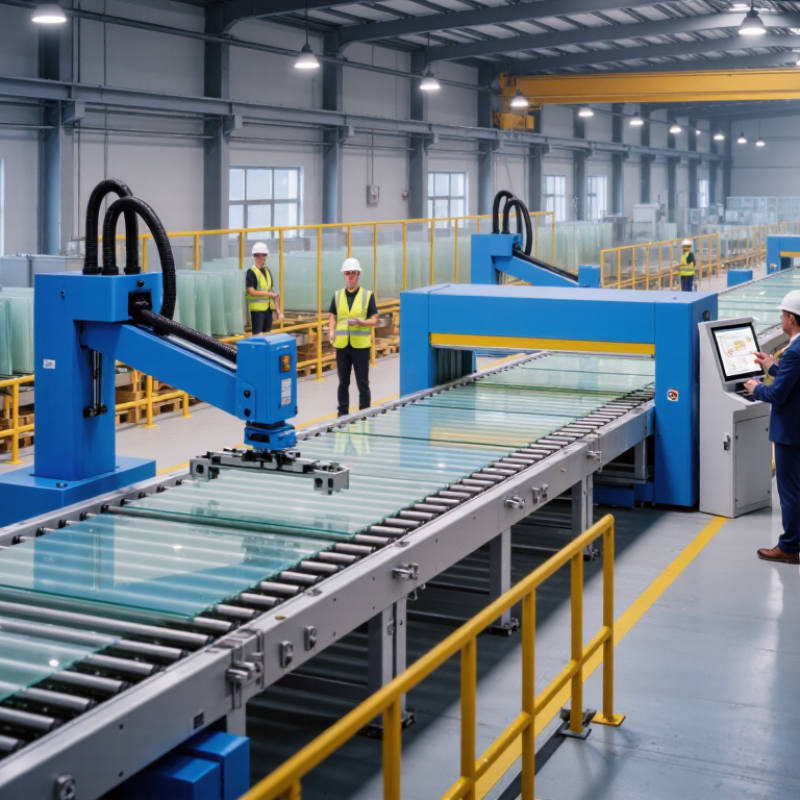
Before comparing glass machine manufacturers in China, define the work the equipment must perform. Start with the product. Record glass type, thickness range, maximum sheet size, and required edge or hole specifications.
For example, a line handling 4–19 mm architectural glass has different feeding and cutting needs from one processing small appliance panels. Measure actual demand. Estimate sheets per shift, peak orders, and expected changeovers, rather than relying on a best-case production target.
Write these details into a concise technical brief. Include available floor space, loading direction, power supply, compressed-air capacity, and operator skill level.
Specify acceptable tolerances and how finished quality will be checked, such as edge inspection under consistent lighting. Ask manufacturers to confirm which requirements are standard and which need customization.
Request layout drawings, utility figures, and a sample cycle-time calculation based on your actual glass dimensions.
Leave room to revise. Early estimates are often imperfect; product mixes and order volumes can change. A clear brief makes those uncertainties visible and helps you compare proposals on practical fit, not headline speed alone.

Assessing a manufacturer’s equipment range means checking how well its machines fit your actual glass products, not counting catalog pages. Look for relevant equipment across cutting, edging, drilling, tempering, laminating, and insulating-glass production. A broad range can simplify line planning, but only if machine capacity, glass thickness, and control systems work together. Details matter. Ask whether the manufacturer can demonstrate a complete process using your specifications, including sample pieces with clean edges and consistent dimensions.
Technical expertise should show up in measurable evidence. The IEA’s Energy Technology Perspectives 2023 reports that industry uses about 37% of global energy and produces roughly 25% of energy-related CO₂ emissions. These figures are not glass-specific, but they underline why furnace efficiency, heat recovery, and process control deserve close attention. Request machine acceptance-test records, documented cycle times, energy-consumption figures, and examples of troubleshooting support. Check who installs the line and how quickly technicians can respond. A polished brochure is not a service plan.
Tips: Ask for a live or recorded test with glass close to your own material and thickness. Request the test conditions in writing. Compare claimed output with changeover time, reject rates, and operator requirements. If a technical answer sounds vague, pause and ask for a drawing or data sheet. Even experienced buyers can miss small integration gaps.
| Assessment Dimension | What to Check | Evidence to Request | Signs of a Strong Fit |
|---|---|---|---|
| Glass cutting equipment | Determine whether the range covers the required sheet sizes, glass thicknesses, cutting types, loading, and breaking or sorting needs. | Machine specifications, supported glass dimensions and thicknesses, layout drawings, and a demonstration using representative production requirements. | Specifications match the buyer’s actual glass types and workflow, with clear information about tolerances and material-handling limits. |
| Edge processing and drilling | Check availability of suitable edging, beveling, arrissing, polishing, and drilling equipment for the intended products. | Process descriptions, tooling requirements, sample-piece results, and details of compatible glass shapes and thicknesses. | The proposed machines cover the required edge finishes and hole operations without relying on unsupported assumptions about compatibility. |
| Tempering and heat treatment | Review furnace size, heating method, glass-size range, thickness range, and suitability for the intended flat or curved products. | Furnace data sheet, utility requirements, process parameters, sample test results, and installation references for comparable applications. | The manufacturer explains capacity in relation to glass size, thickness, loading pattern, and production cycle—not only a headline output figure. |
| Laminated glass processing | Assess whether the equipment and process support the specified interlayer materials, product dimensions, and required production method. | Equipment configuration, process flow, compatible material information, and sample or trial-production results. | The proposed line is matched to the buyer’s product requirements, with clear limits and documented process controls. |
| Insulating glass unit (IGU) production | Check the required washing, assembly, gas-filling, pressing, sealing, and handling stages, as applicable to the intended line. | Line layout, supported unit sizes and configurations, process sequence, and details of quality checks at each stage. | The equipment arrangement fits the planned IGU products and factory flow, and the supplier identifies which operations are included or optional. |
| CNC and automation options | Confirm CNC functions, software compatibility, data input methods, automation interfaces, and integration with upstream or downstream equipment. | Software and interface documentation, sample program workflow, control-system details, and a demonstration of the intended operating sequence. | Integration requirements, operator responsibilities, and any third-party dependencies are stated clearly before purchase. |
| Engineering and application expertise | Evaluate the ability to select and configure equipment for the buyer’s glass products, factory layout, utilities, and production targets. | Technical proposal, process-flow diagram, utility list, installation plan, and written answers to application-specific questions. | Recommendations are supported by engineering details and identify assumptions, constraints, and items the buyer must provide. |
| Capacity and performance claims | Clarify how stated output is calculated, including product mix, loading, changeovers, operating hours, and process bottlenecks. | Capacity assumptions, acceptance-test criteria, sample production records, and a defined method for measuring performance. | Performance figures are tied to a stated product and operating scenario, with measurable acceptance conditions. |
| Quality management and documentation | Review manufacturing controls, traceability, inspection procedures, manuals, drawings, and documentation relevant to the destination market. | Current quality-management certificates where applicable, inspection records, operating and maintenance manuals, and electrical documentation. | Documents are machine-specific, current, and consistent with the quoted configuration and applicable market requirements. |
| Installation, training, and after-sales support | Confirm commissioning scope, training format, spare-parts availability, troubleshooting process, and support arrangements across time zones. | Installation schedule, training plan, recommended spare-parts list, service response procedure, and warranty terms. | Responsibilities, response channels, support scope, and any travel or service costs are stated in writing. |
| Overall assessment | Compare shortlisted manufacturers against the same production requirements and a consistent evaluation method. | Completed technical checklist, clarification log, quotations with matching configurations, and a documented factory or remote inspection. | Select the supplier whose equipment range and technical evidence best match the required products, process, budget, and support needs. |
Choosing the best glass machine manufacturer in China starts with evidence of real factory capacity. Ask for a live production tour, current machine list, and monthly output schedule. Look for dedicated assembly areas, calibrated measuring tools, and technicians testing machines before shipment. Request a sample production run using glass close to your own thickness and dimensions. Watch how operators handle alignment, cutting accuracy, and edge quality. A polished showroom can still hide weak scheduling, so check recent delivery records.
Tips: Ask for dated inspection reports, not just verbal assurances. Compare the machine’s stated capacity with its actual test results.
Quality control should be traceable at each stage. Request records for component inspection, assembly checks, and final run tests. Confirm what happens when a test fails, and ask whether spare parts and service support are available. Review industry certifications carefully: verify the issuing organization, validity period, and whether the certificate covers the specific machine model. Requirements can vary by destination and application. An impressive certificate alone is not enough; its scope matters. You may not catch every weakness from one visit. Cross-check claims with customer references and clear, written specifications.
Choosing a glass machine manufacturer in China means checking more than the quotation. Customization should be specific: ask whether the line can handle your glass thickness, sheet size, edge finish, and daily output. Request a drawing, utility list, and acceptance criteria before paying a deposit. The World Bank’s 2023 Logistics Performance Index assesses 139 economies across six areas, including shipment timeliness and logistics competence. Use those same practical questions when comparing delivery plans: request a production schedule, packing details, and a named shipping contact. A promised date is not a tracking plan.
Installation can make or break a start-up. Confirm who supervises assembly, whether remote support is available, and what training operators receive. Ask for a spare-parts list with part numbers, not just a general promise of support. After-sales service should state response times, warranty coverage, and the process for diagnosing faults. Request references from buyers with similar production needs, then ask what went wrong as well as what worked. A polished factory visit helps. It proves little about service six months later.
Tips: Put customization, delivery milestones, installation scope, and support response times into one written checklist. Compare answers, not adjectives. One detail is often overlooked: your own team may need extra training, even when the machine runs well.
A glass machine quote should be checked line by line, not judged by its final figure. Compare the same specifications, including cutting accuracy, maximum glass size, loading equipment, and included installation work. A cheaper offer may leave out essential tooling or operator training. Ask for a written list of exclusions. Small details matter.
Supplier reliability shows up in the answers. Request references from buyers using similar equipment, and ask how quickly common spare parts can be shipped. A video call can help you inspect the factory floor, but it cannot confirm every quality-control step. Ask for sample inspection records and a clear acceptance procedure before payment milestones are agreed. If answers keep changing, pause. That is a useful warning, though not proof of poor workmanship.
Long-term costs include electricity, consumables, maintenance, downtime, and training—not just the purchase price. Ask for expected service intervals and the price of wear parts such as belts or cutting tools. Compare these figures across several years, using your own production hours where possible. Estimates are imperfect. Real workloads vary, and suppliers may not predict every stoppage accurately. Keep a contingency in the budget, and verify key assumptions with your production team before choosing.
Suggested evaluation weights for comparing quotes, supplier reliability, and long-term operating costs.
Treat the percentages as an adjustable decision framework, not industry survey data. Compare itemized quotes, verify technical specifications and service commitments, and estimate energy, maintenance, and spare-parts costs over the machine’s expected service life.