Why is Cable Fabrication Important in Modern Industry?
In today’s high-tech world, cable fabrication is crucial. It underpins various industries, from telecommunications to automotive. Experts emphasize its importance. John Smith, a leading figure in cable manufacturing, states, "Quality cable fabrication is the backbone of reliable technology."
Cable fabrication involves creating precise connections. These connections ensure products operate efficiently. An error in fabrication can lead to significant flaws. For instance, a faulty cable can disrupt communications or create safety hazards.
Despite its significance, many overlook the precision required. Poor cable fabrication might save costs initially but can result in more severe problems later. Companies must invest in quality processes. This investment pays off in reliability and safety. As technology advances, so must the methods of cable fabrication. The industry must adapt or risk falling behind.
Importance of Cable Fabrication in Industrial Applications
Cable fabrication plays a crucial role in various industrial applications. This process involves designing and assembling cables tailored for specific needs. In industries like telecommunications, automotive, and manufacturing, customized cables are essential for efficiency. They enable smooth data transmission and power delivery.
Precision in cable fabrication can impact overall performance. A small mistake in measurements can lead to failures. Quality control measures are vital. They ensure that each cable meets the necessary standards. The right materials can enhance durability, but sourcing can be challenging. Finding the balance between cost and quality requires careful thought.
In high-demand industries, the need for adaptability is clear. Production lines often evolve. Keeping up with these changes means adjusting cable designs frequently. This flexibility is not always easy to manage, demanding an innovative approach. Some companies overlook the importance of testing. Regular assessments can prevent major issues down the line.
Importance of Cable Fabrication in Modern Industry
Key Materials Used in Cable Fabrication Processes
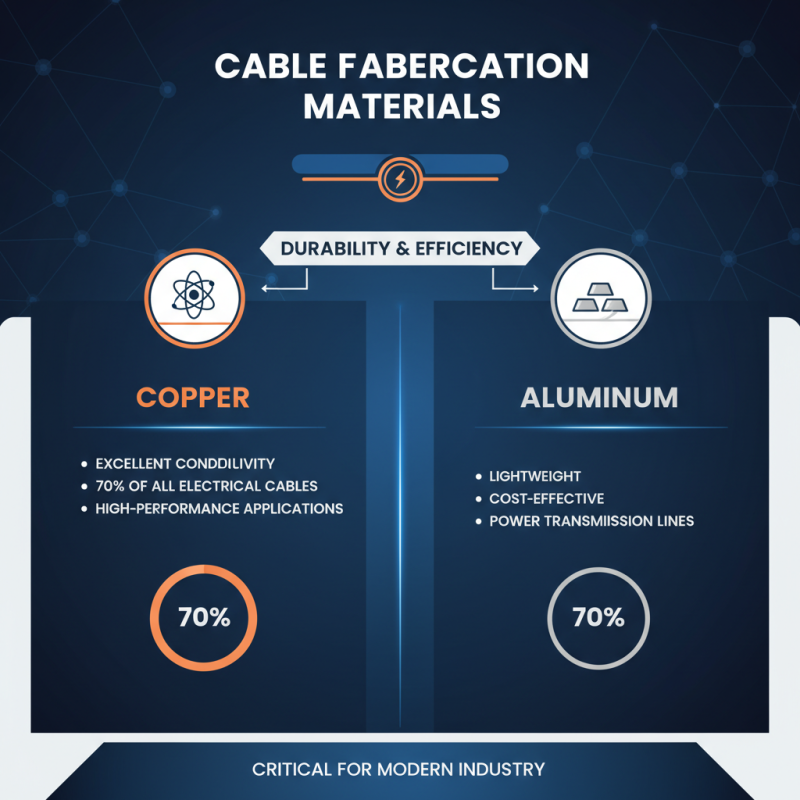
Cable fabrication is a critical aspect of modern industry, relying heavily on specific materials that ensure durability and efficiency. The most commonly used materials include copper and aluminum. Copper stands out due to its excellent conductivity. Reports indicate that around 70% of all electrical cables use copper. This metal is vital for applications requiring high performance.
Aluminum, on the other hand, offers a lightweight alternative. It is cost-effective and suitable for various industries. In 2022, the global aluminum market reached 83 million metric tons. This growth highlights its increasing importance in cable fabrication. The balance between copper and aluminum usage often leads to debates about ideal applications. They are not always interchangeable, and each has unique benefits.
Insulation materials also play a significant role. Polyvinyl chloride (PVC) and cross-linked polyethylene (XLPE) are widely utilized. PVC is favored for its versatility, while XLPE exhibits superior thermal resistance. However, the choice of insulation can affect the overall performance of cables, leading to potential inefficiencies. Manufacturers should critically analyze their material choices to avoid costly errors.
Major Industries That Benefit from Cable Fabrication
Cable fabrication plays a crucial role in various modern industries.
Manufacturing, aerospace, and telecommunications heavily rely on high-quality cables.
In manufacturing, the right cables ensure smooth machinery operations.
For aerospace, cables must withstand extreme conditions.
In telecommunications, reliable connections are vital for data transmission.
Tips: Always prioritize selecting the right materials. The choice affects durability and performance.
Moreover, skilled technicians are key to precise cable assembly. The quality of their work impacts the entire system.
The automotive industry also benefits greatly from cable fabrication. Vehicles use numerous cables for safety and communication.
Each cable must meet strict specifications.
Any failure could lead to serious consequences.
Reflections on efficiency and quality control are essential.
In the energy sector, cables transport electricity safely. Renewable energy systems rely on durable connections.
This creates a need for ongoing innovations in cable fabrication.
However, it also brings challenges in sourcing sustainable materials.
Balancing quality and cost is often a struggle.
Technological Advances in Cable Fabrication Techniques
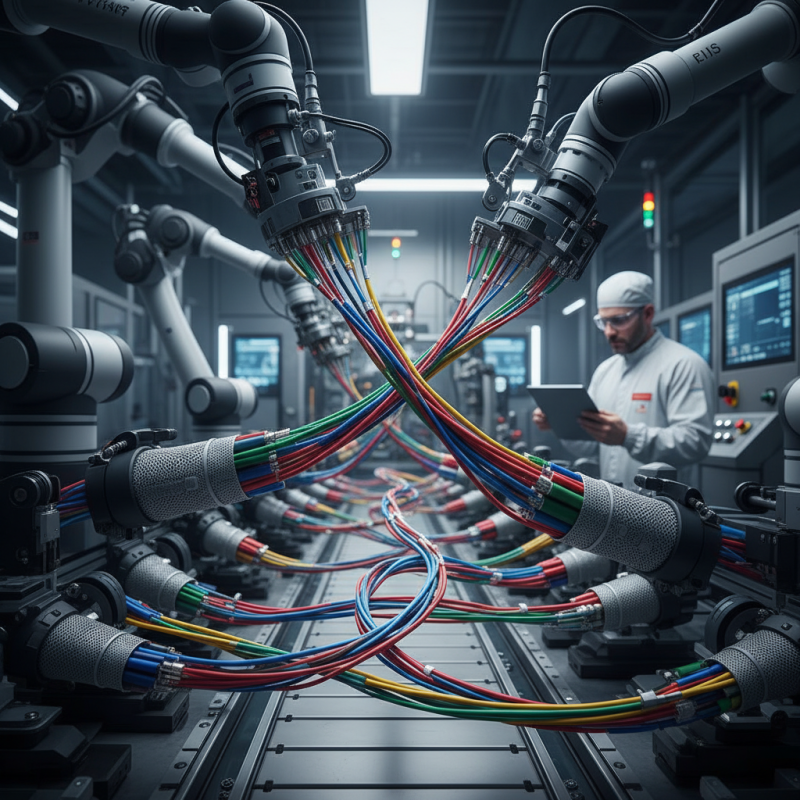
Cable fabrication plays a crucial role in modern industry. Technological advances are reshaping how cables are made. These innovations lead to improved efficiency and reliability. New tools and techniques streamline the manufacturing process. For example, automation in the fabrication process reduces manual errors. This not only saves time but also enhances the quality of the cables produced.
Materials used in cable fabrication are also evolving. High-strength composites and advanced conductors provide better performance. Such advancements enable cables to withstand harsher environments. Testing methods have also improved, allowing for more rigorous evaluations of durability. However, it is essential to regularly reassess these techniques. Are they environmentally friendly? Can the materials be recycled? These questions encourage ongoing improvement.
Moreover, as industries adopt smart technologies, cables must adapt. This creates a need for more specialized fabrication techniques. Customization is key, but it can lead to complexities in production. Balancing efficiency with quality remains a challenge. As we look to the future, the industry must continuously innovate while reflecting on its practices.
Challenges and Future Trends in Cable Fabrication
Cable fabrication plays a crucial role in modern industrial applications. However, the industry faces multiple challenges. One primary concern is the demand for highly customized products. Each client often requires unique specifications. This customization can lead to longer production times. Additionally, maintaining quality while meeting deadlines is a constant struggle. Every mistake can result in significant losses.
The industry must also adapt to technological advancements. Automation can streamline processes, but it isn't always straightforward to implement. Workers need training to operate new machinery efficiently. There’s a risk of losing the human touch in craftsmanship. Moreover, sustainable practices are becoming vital. Eco-friendly materials and recycling methods are often harder to integrate but necessary for future viability.
Competition is fierce, pushing companies to innovate continually. However, not every new idea proves effective. Some innovations may fail or lead to unexpected complications. Finding the right balance between innovation and reliability remains challenging. As the industry evolves, these obstacles will shape its trajectory. Companies must remain vigilant, learning from both successes and failures.
Why is Cable Fabrication Important in Modern Industry? - Challenges and Future Trends in Cable Fabrication
| Dimension |
Description |
Current Challenges |
Future Trends |
| Material Quality |
The importance of selecting the right materials for durability and performance. |
Inconsistencies in material sourcing. |
Advancements in composite materials. |
| Manufacturing Process |
Techniques used in the production of cables, including machines and labor. |
High labor costs and skilled labor shortages. |
Automation and AI integration in production. |
| Regulatory Compliance |
Ensuring all products meet industry standards. |
Complex compliance requirements leading to delays. |
Increasing global standardization. |
| Innovation |
New technologies emerging to enhance cable functionality. |
Slow adoption of new technologies in existing processes. |
Growth of smart cables and IoT integration. |
| Cost Management |
Balancing production costs with market pricing. |
Fluctuating raw material prices impacting budgets. |
Increased focus on sustainable materials to reduce costs. |