How to Optimize Cable Harness Design for Global Procurement?
In today's interconnected market, optimizing cable harness design is crucial for global procurement. Industry expert John Smith, a leading engineer in electrical systems, emphasizes, "Effective design can significantly reduce costs and improve efficiency." As businesses expand internationally, the demand for innovative and reliable cable harness solutions grows.
Cable harness design involves careful planning and intricate engineering. Missteps in this area can lead to costly delays and product failures. Companies must understand how different regions approach materials and manufacturing practices. This understanding is essential for successful global procurement.
The challenge lies in balancing quality with cost. Many companies compromise on design to save money. However, investing in robust cable harness design pays off in the long run. It's vital to reevaluate strategies continually. Embracing new technologies and methods can enhance effectiveness. The road to optimization requires reflection and adaptation.

Importance of Cable Harness Design in Global Procurement Efficiency
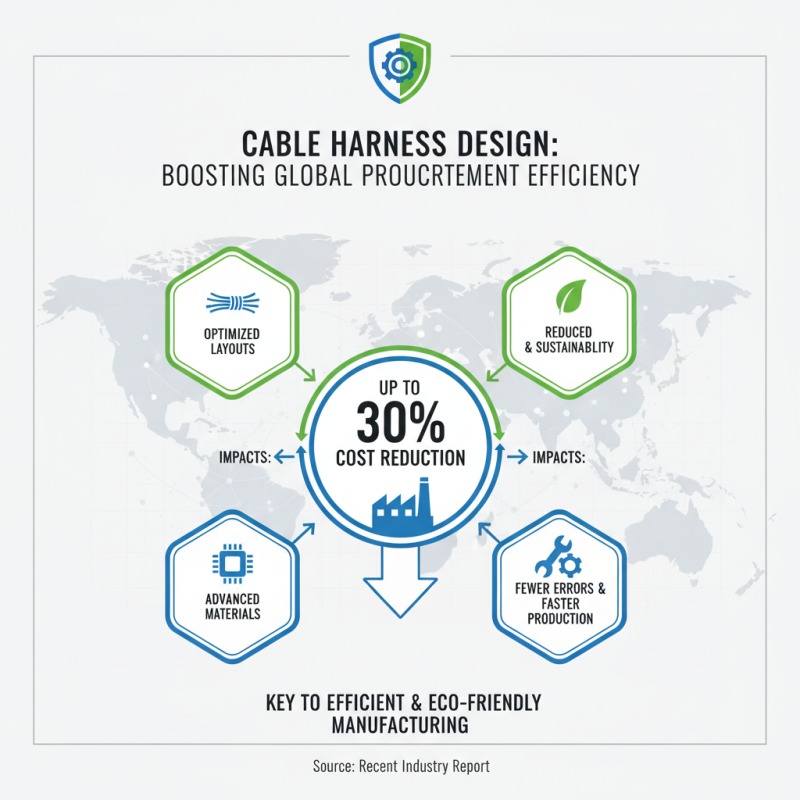
Effective cable harness design plays a critical role in global procurement efficiency. According to a recent industry report, well-optimized cable harnesses can reduce manufacturing costs by up to 30%. This number reflects how design impacts the production process. Integrating advanced materials and streamlined layouts often leads to fewer errors and less waste. In turn, this aligns with the growing need for sustainability in global supply chains.
Moreover, a poorly designed cable harness can lead to delays. In fact, inefficient designs are responsible for over 20% of procurement-related delays. Addressing this issue requires collaboration between design and procurement teams. Best practices suggest using simulation tools to foresee potential problems. These tools not only enhance accuracy but also cut down on the time needed for revisions. Identifying flaws early in the design process can transform procurement timelines significantly.
The importance of effective cable harness design can't be overstated. With more companies relying on global sourcing, maximizing efficiency is crucial. However, there is often a gap between design expectations and reality. Companies must recognize this and proactively review their design processes. A focus on continuous improvement and learning will help close that gap in the long run.
Key Factors Affecting Cable Harness Costs in Different Regions
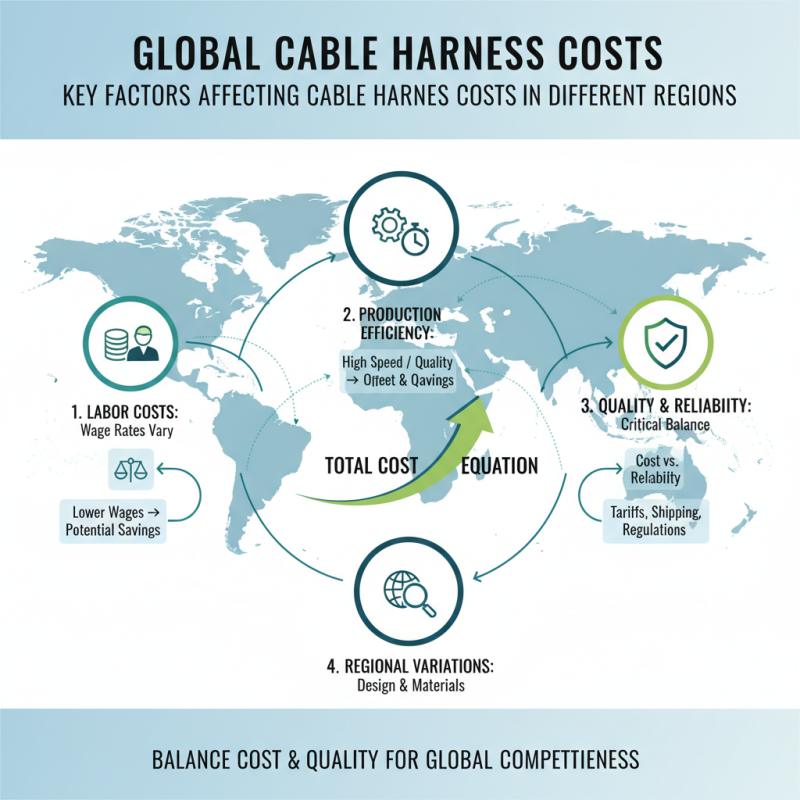
Cable harness design varies significantly across regions, influenced by multiple factors. Labor costs play a crucial role in determining the overall price. For instance, regions with lower wage rates may appear more attractive for production. However, these savings can be offset by the quality of work and production speed. It’s essential to balance cost with quality to ensure reliability.
Material sourcing is another critical factor. Different regions have access to various raw materials, impacting the design process. Regions rich in specific resources may offer lower material costs, but logistics can complicate procurement. It’s vital to consider transportation costs and time delays when selecting a production location. Communication barriers can arise, leading to potential miscommunication and errors in the design process.
Cultural aspects also influence cable harness design. Understanding regional preferences and standards is key to avoiding complications that could affect costs. A design that works well in one market might need adaptation in another. Embracing local insights can enhance product acceptance. Reflecting on these factors helps create a more efficient and cost-effective cable harness design strategy.
Strategies for Selecting Reliable Suppliers in Global Cable Harness Markets
Selecting reliable suppliers in global cable harness markets requires careful consideration. Begin by evaluating a supplier's experience and technical expertise. Look for companies with a proven track record in cable harness production. Their history can indicate stability and reliability. Engage in direct conversations to gauge their understanding of industry trends and technologies.
It is crucial to assess the quality of their materials. Poor-quality components can lead to failures down the line. Request samples and conduct thorough testing. Besides, consider their production capabilities and lead times. Delays can impact your entire supply chain. Visits to manufacturing facilities can provide insights into their operational processes and quality control measures.
Keep in mind the importance of communication. Suppliers should be responsive and transparent. Miscommunication can lead to costly mistakes. Reflect on any past experiences with suppliers, whether positive or negative. These insights can guide future selections. Balancing cost with quality is another ongoing challenge. Aim for partnerships that prioritize both reliability and competitive pricing without compromising standards.
How to Optimize Cable Harness Design for Global Procurement? - Strategies for Selecting Reliable Suppliers in Global Cable Harness Markets
| Supplier Region |
Quality Rating |
Lead Time (Weeks) |
Cost ($ per unit) |
Compliance Certifications |
| North America |
High |
4 |
75 |
ISO 9001, UL |
| Europe |
Medium |
6 |
65 |
ISO 14001, CE |
| Asia |
Medium |
8 |
50 |
ISO 9001, RoHS |
| South America |
Low |
5 |
85 |
None |
| Africa |
Low |
10 |
95 |
None |
Innovations in Cable Harness Design for Enhanced Procurement Flexibility
The landscape of cable harness design is evolving, focusing on enhancing procurement flexibility. Recent industry reports reveal that companies can save up to 30% on procurement costs by implementing innovative design methodologies. Streamlining the design process leads to shorter lead times. This is crucial in today's fast-paced market.
Embracing modular designs is one innovation driving this change. Modular harnesses allow for easier adjustments and adaptations to meet diverse requirements. This flexibility reduces the need for extensive re-engineering, making upgrades more feasible and cost-effective. Furthermore, data shows that 55% of organizations struggle with customization in traditional designs, underscoring the necessity for these advancements.
Collaboration between design engineers and suppliers is another vital aspect. Engaging early with suppliers can yield insights into material availability and cost structures. Yet, many firms overlook this step, leading to delays and increased costs. Integrating feedback loops into the design phase encourages continuous improvement and adaptability.
Best Practices for Quality Assurance in Global Cable Harness Production
When optimizing cable harness design for global procurement, quality assurance is paramount. A report by the International Electrotechnical Commission highlights that up to 30% of project costs can arise from quality-related issues. This emphasizes the need for stringent measures in production processes.
Effective quality assurance begins with robust material selection. According to a study from the Society of Automotive Engineers, using high-grade materials can reduce failure rates by 25%. Manufacturers should also implement rigorous testing protocols. Preliminary inspections of materials and components can identify flaws before they become costly problems.
Communication across the supply chain is often overlooked. Research findings indicate that over 40% of delays stem from miscommunication. Establishing clear guidelines and expectations can mitigate this risk. Regular audits and feedback loops can also enhance collaboration. Inconsistencies in production quality can create significant hurdles. Continuous training for workers is essential to maintain high standards and address potential issues proactively.
Quality Assurance Metrics in Global Cable Harness Production