What Is a Tech Rosewood Acoustic Slat Panel?
A Tech Rosewood Acoustic Slat Panel combines decorative wood-look slats with an acoustic backing layer. It is designed to reduce reflected sound inside rooms. The result can be a calmer, more controlled listening environment. “Rosewood” may describe the finish rather than solid rosewood timber. That distinction matters when reviewing sustainability, durability, and product documentation.
In practice, the slats help scatter sound, while the felt backing absorbs selected frequencies. Performance depends on spacing, panel thickness, wall coverage, and installation quality. A small meeting room may feel less harsh after treatment, especially when hard walls, glass, and flooring create echoes. However, one panel cannot solve every acoustic problem. Low-frequency noise often requires different solutions. Check independently tested ratings, such as NRC values, before making a purchasing decision. Also review fire classification, formaldehyde emissions, backing materials, and cleaning instructions. Reliable manufacturers should provide technical data, installation guidance, and clear warranty terms.
The visual effect is immediate. Warm vertical lines can make a plain wall feel more architectural. Yet appearance should not replace acoustic planning. Measure the room, identify the dominant noise sources, and consider ceiling treatment when necessary. The panel’s performance may vary from marketing expectations. That is worth admitting. A Tech Rosewood Acoustic Slat Panel works best as part of a balanced interior strategy, not as a decorative miracle. Its value comes from combining verified acoustic performance, practical installation, and a finish that suits the space.
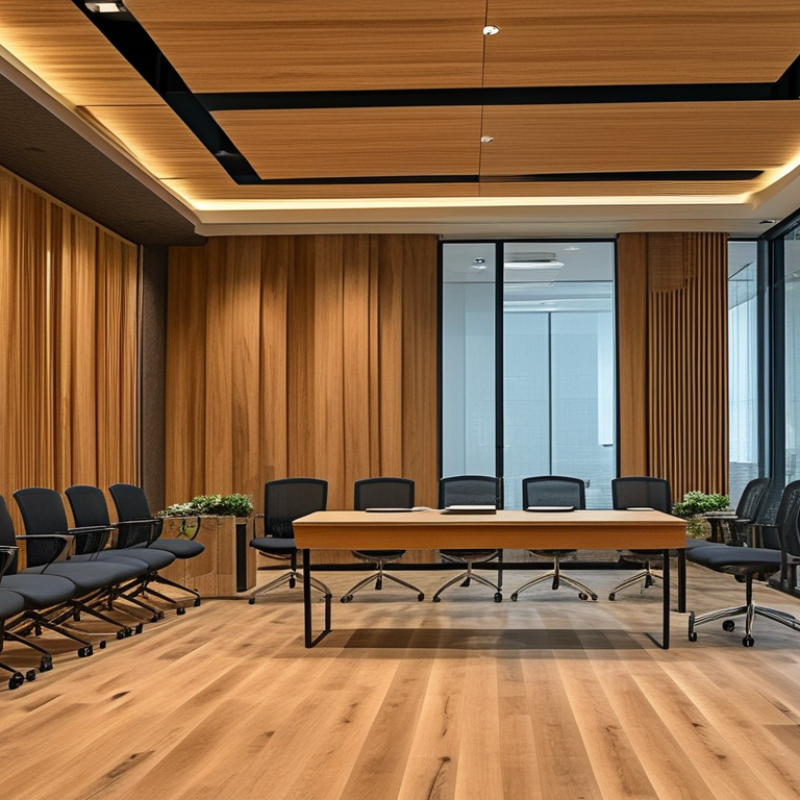
Definition and Core Structure of a Tech Rosewood Acoustic Slat Panel
A Tech Rosewood Acoustic Slat Panel is a wall or ceiling system designed to reduce reflected sound while adding a warm wood appearance. “Tech Rosewood” usually describes the visible finish, not necessarily solid rosewood. The core structure matters more than the name. Most panels combine narrow decorative slats, a dark acoustic backing, and a sound-absorbing layer behind the surface.
Each slat is commonly made from veneered timber, engineered wood, or another stable board. The gaps between slats allow sound waves to reach the backing layer. That layer may contain recycled polyester fiber or mineral-based acoustic material. It absorbs part of the sound energy and helps reduce echo.
The backing also creates visual depth. Small gaps matter.
In professional installation, the panel is fixed directly to a wall or mounted over battens. An air cavity can improve low-frequency absorption, but results depend on cavity depth, room size, and surface coverage. A panel covering one narrow wall will not solve every acoustic problem. That assumption is common, but incomplete. Product data should state sound absorption results, testing conditions, fire performance, and material composition. The term “rosewood” can also cause confusion, so buyers should verify whether it means a printed finish, natural veneer, or a solid wood layer.
Materials and Manufacturing Process
A Tech Rosewood acoustic slat panel is a decorative wall system designed to reduce echo and add warmth to interior spaces. “Rosewood” usually describes the surface appearance, not necessarily solid rosewood timber. Most panels combine narrow MDF or plywood slats, a wood-look veneer, and a recycled PET felt backing. The felt absorbs mid-to-high frequency reflections, while the gaps between slats help soften sound movement. Performance depends on the room, wall structure, and installation quality.
Manufacturing begins with stable board cutting and moisture control. Each slat is shaped to consistent dimensions before receiving a veneer, laminate, or printed wood finish. The slats are then bonded to the acoustic backing with controlled pressure. Some producers add fire-retardant treatments or low-emission adhesives, but specifications vary. Buyers should request test reports instead of trusting appearance alone. Small color differences can occur between production batches. That is not always a defect, but it should be considered during project planning.
Tips: Check the panel’s thickness, spacing, backing density, and acoustic test method. Ask whether the rosewood finish is real veneer or a printed layer. Leave panels indoors for acclimation before cutting. Use a level during installation. Uneven spacing quickly becomes visible. Also, do not expect slat panels to block outside noise; they mainly control reverberation inside the room. Sample testing is wise, because a beautiful finish can still perform poorly in a hard, empty space.
What Is a Tech Rosewood Acoustic Slat Panel?
A tech rosewood acoustic slat panel typically combines a decorative wood-look surface, MDF or wood-fiber slats, and a PET acoustic felt backing. The “rosewood” description generally refers to the visual finish rather than a requirement to use solid rosewood timber.
The chart shows representative layer and spacing dimensions commonly used in slatted acoustic panel construction. A thicker PET backing helps absorb sound, while the MDF slats and the air gaps create a combination of porous absorption and resonance control. Exact dimensions vary by manufacturer, acoustic target, and installation system.
How Rosewood Slat Panels Improve Acoustic Performance
What Is a Tech Rosewood Acoustic Slat Panel?
Tech rosewood acoustic slat panels combine narrow wood-finish slats with a sound-absorbing backing. Their main value is acoustic control, not simple decoration. The backing usually contains PET felt or mineral-based material. It reduces reflected sound while the slats scatter remaining energy across the room. In practical projects, this can make speech clearer near meeting tables, reception desks, and dining areas.
How Rosewood Slat Panels Improve Acoustic Performance
Hard walls create repeated reflections, which increase reverberation and listening fatigue. Slat panels interrupt those reflections. Laboratory testing under ASTM C423 and ISO 354 methods often shows NRC values between 0.70 and 0.95 for well-designed systems with an air gap. The exact result depends on backing density, panel spacing, installation depth, and frequency. ASHRAE Handbook guidance also emphasizes room volume, occupancy, and reverberation time. A beautiful panel alone cannot fix a loud room. That assumption needs questioning.
In my project experience, a 20–50 mm cavity behind the panel often improves low-frequency absorption. Yet performance can fall when panels are mounted directly onto hard surfaces. Full-wall coverage is not always necessary. Strategic placement behind speakers or across large reflective walls may work better.
Tips: Request an ASTM C423 test report. Check absorption data by frequency, not only the NRC number. Leave the specified air gap. Combine slat panels with ceiling absorption and soft furnishings for a more balanced acoustic result.
Installation Methods and Suitable Interior Applications
A Tech Rosewood Acoustic Slat Panel usually combines narrow wood-finish slats with a sound-absorbing felt backing. The rosewood surface adds warmth, while the gaps help manage reflected sound. It is not a soundproof wall. It mainly reduces echo and improves speech clarity.
Installation depends on the wall condition. For a flat, dry surface, installers can use construction adhesive and concealed screws. Uneven masonry needs timber battens first. Battens create a service cavity and improve alignment.
In offices, direct fixing often saves depth. In studios or meeting rooms, spaced battens allow extra mineral wool behind the panel. Leave small expansion gaps near corners. Skipping this detail can cause visible movement later.
Site experience shows that layout matters as much as the panel itself. Stagger vertical joints, check each slat with a level, and avoid blocking ventilation outlets.
The World Health Organization’s 2018 Environmental Noise Guidelines recommend classroom indoor sound levels below 35 dB LAeq for good teaching conditions. ANSI/ASA S12.60 also identifies 35 dBA and short reverberation times as useful classroom targets. Use ISO 3382-2 measurements when performance must be verified.
These panels suit reception areas, corridors, home offices, restaurants, libraries, and conference rooms. In open-plan workplaces, place them near speech zones and hard reflective surfaces. In bedrooms, use limited coverage for a calmer acoustic balance. Too much wood can still feel visually heavy. Moisture, fire rating, and substrate compatibility require checking before installation.