Top 7 Tips for Choosing Ebmpapst Centrifugal Fans?
When selecting the right Ebmpapst Centrifugal Fan, decision-making can be challenging. With numerous options available, understanding your specific needs is crucial. These fans are known for their quality and efficiency, but choosing the wrong one can lead to performance issues.
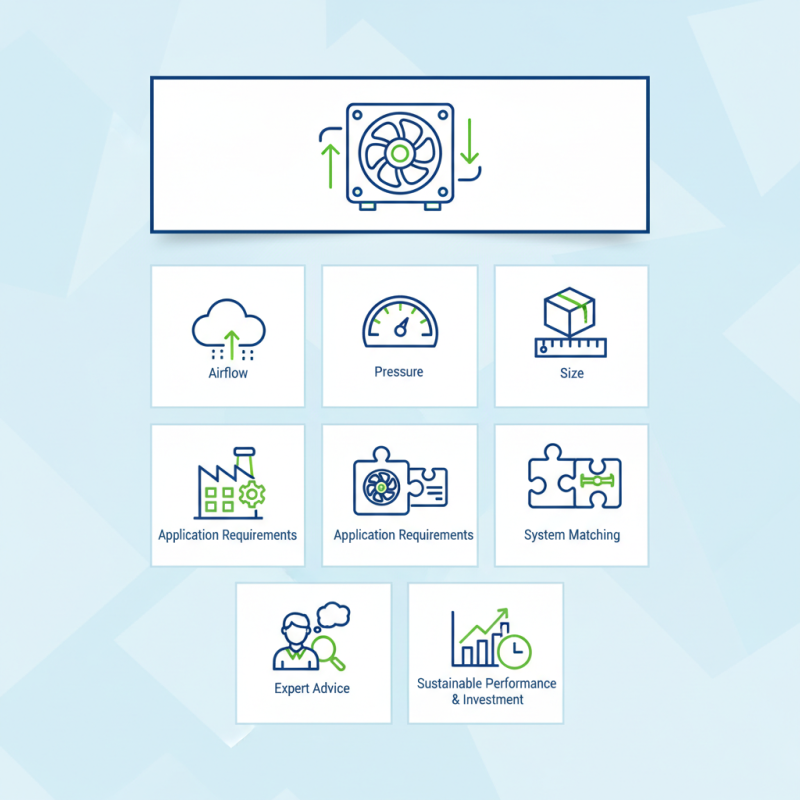
Consider factors like airflow, pressure, and size. Each element plays a vital role in the fan's overall performance. Evaluating your application’s requirements is essential. Many overlook the importance of matching the fan to their system. This might lead to inadequate solutions.
Expert advice can significantly enhance your selection process. Engaging with professionals ensures you consider variables you might miss. The right choices can deliver optimal results, while poor decisions may cost you in efficiency and reliability. Investing the time to research Ebmpapst Centrifugal Fans is worthwhile for sustainable performance.
Understanding the Role of Ebmpapst Centrifugal Fans in HVAC Systems
Centrifugal fans play a crucial role in HVAC systems. They help maintain air circulation and ensure optimal indoor air quality. In various applications, these fans can handle large volumes of air against significant static pressures. This is essential for efficient heating, cooling, and ventilation. Their design allows them to operate quietly, which is vital for residential and commercial spaces.
When choosing a centrifugal fan for your HVAC system, consider airflow requirements and pressure ratings. Pay attention to the fan's efficiency. A more energy-efficient fan can reduce overall operating costs significantly. Additionally, think about the variations in building layouts. Sometimes, a standard fan may not fit specific needs. Therefore, custom solutions might be necessary.
While centrifugal fans are generally reliable, regular maintenance is essential. Small issues can escalate if they go unaddressed. Filtration can also impact performance; clogged filters can lead to decreased airflow. Understanding the specific role of these fans helps in making informed choices. With proper selection and maintenance, they contribute significantly to energy savings and comfort.
Evaluating the Efficiency Ratings of Ebmpapst Centrifugal Fans
When evaluating the efficiency ratings of centrifugal fans, there are key factors to consider. Efficiency directly affects operational costs. A fan with a high efficiency rating will consume less energy, making it a wise investment for long-term savings. Pay attention to the specific metrics, such as the fan's overall airflow capacity and static pressure performance. These metrics will provide a clearer picture of how well a fan will perform in your intended application.
In addition, watch for the fan's noise levels. Some high-efficiency models may produce more noise, impacting the work environment. A balance between noise and efficiency is crucial for many applications. Consider how the fan's design, such as blade shape and motor type, influences both noise and efficiency. It's helpful to look at real-world performance data and user reviews to gauge effectiveness.
Sometimes, the highest rated fans may not be the best choice for every scenario. Over- or under-sizing a fan can lead to inefficiencies. Each setup is unique, and going with the assumption that one size fits all may result in frustration. Evaluate your specific needs carefully. When you do, you'll find the right centrifugal fan that meets both your efficiency expectations and operational demands.
Top 7 Tips for Choosing Centrifugal Fans - Evaluating the Efficiency Ratings
| Tip | Description | Efficiency Rating | Noise Level (dB) |
| 1. Assess Airflow Requirements | Determine the required airflow for your application. | High | 45 |
| 2. Check Motor Efficiency | Look for fans with high motor efficiency ratings. | High | 48 |
| 3. Evaluate Pressure Build-up | Understand the static pressure your fan must overcome. | Medium | 50 |
| 4. Consider Environmental Conditions | Choose fans suitable for your environmental conditions, such as humidity. | High | 60 |
| 5. Look for Durability | Select fans made with high-quality materials for longevity. | High | 55 |
| 6. Factor in Space Constraints | Ensure the fan fits in the designated space without compromising performance. | Medium | 52 |
| 7. Review Maintenance Needs | Select fans with low maintenance requirements for ease of use. | Low | 65 |
Key Specifications to Consider When Selecting Centrifugal Fans
When selecting centrifugal fans, understanding key specifications is essential. Start with airflow rate. This indicates how much air the fan can move. If you under-specify, your system may not achieve the desired performance. If you over-specify, you might waste energy.
Consider static pressure. This measurement tells you how much resistance the fan can overcome. Fans that are inefficient at a higher static pressure can lead to increased energy costs. Pay attention to noise levels as well. A fan that is too loud can disrupt work environments or living spaces.
Take the time to evaluate motor efficiency. An energy-efficient motor can save costs in the long run. However, sometimes the most efficient option may not meet specific application needs. It's vital to balance efficiency with performance. Also, check for design integrity. Fans should be built to withstand the particular conditions they will face, like humidity or temperature variations. These specifications, often overlooked, can significantly impact overall efficiency and reliability.
Assessing Noise Levels and Acoustic Performance of Fan Models
When selecting centrifugal fans, understanding noise levels is crucial. Fans operate in various environments, and noise can significantly affect comfort. It helps to know the decibel (dB) ratings of each model. A fan with a lower dB rating is generally quieter. However, perceived noise may differ based on frequency and installation.
Acoustic performance is not just about decibel levels. Design features can optimize sound reduction. For example, look for fans with sound barriers or special materials designed to dampen vibrations. Fans that operate efficiently often produce less noise, making them suitable for sensitive applications. Testing in real environments can reveal how well a fan performs acoustically, which manufacturers' claims may not always capture.
Real-world conditions can alter expected outcomes. Installing a fan in a tight space may amplify noise levels. Routine maintenance can also affect performance over time. Regularly checking for dust buildup or wear and tear can help maintain optimal acoustic performance. Each fan will have its unique characteristics that may not align perfectly with its advertised specifications, prompting thorough evaluation before final selection.
Noise Levels and Acoustic Performance of Centrifugal Fans
Comparing Energy Consumption and Cost-Effectiveness of Different Fans
When comparing different centrifugal fans, energy consumption plays a crucial role in cost-effectiveness. Selecting a fan with a lower energy consumption rate can lead to significant savings over time. Look for fans with high-efficiency motors. These motors use less electricity, which is beneficial for both your budget and the environment.
It's important to recognize that the initial cost of a fan might not reflect its long-term expenses. Some fans may cost more upfront but save more in energy costs. Calculate the total cost of ownership, including installation and maintenance, to make an informed decision. There’s also the aspect of longevity. A fan that lasts longer reduces replacement costs.
Many buyers overlook the importance of performance curves and airflow ratings. These metrics help in understanding how efficiently a fan will operate in specific conditions. Skimping on this analysis can lead to inefficiency. A fan that doesn't meet your airflow needs may end up costing more in the long run. It's essential to assess your requirements thoroughly before making a choice. Each aspect of a fan's performance should be weighed against its price to ensure you make a well-informed investment.