What Are the Top 10 Types of Vehicle Wedge Barriers?
Vehicle Wedge Barriers protect entrances where speed, mass, and limited stopping distance create serious security challenges. The global perimeter security market continues to expand, driven by transportation hubs, government facilities, logistics centers, and critical infrastructure. Grand View Research identifies rising demand for crash-rated protection and integrated access control. MarketsandMarkets also reports growing investment in physical security systems, especially those combining barriers, sensors, cameras, and automated gates.
John Tindall, founder of Delta Scientific and a long-standing vehicle-barrier specialist, once stated, “A barrier is only as effective as the system around it.” That principle remains practical. A powerful wedge may fail if drainage is poor, controls are exposed, or operators cannot react quickly. Small details matter.
This guide examines the top 10 types of Vehicle Wedge Barrier, including shallow-mount, deep-mount, hydraulic, electric, fixed, retractable, and modular designs. Each type serves a different site condition. Some suit narrow sidewalks. Others require reinforced foundations and substantial underground space. ASTM F2656 and IWA 14-1 crash-test classifications provide useful benchmarks, but test results do not replace site-specific engineering.
The choice is rarely simple. Cost, soil, traffic frequency, maintenance access, emergency response, and pedestrian safety all influence performance. A specification can look excellent on paper. Reality may disagree. Readers should treat this overview as a technical starting point, not a final design decision. Proper assessment should involve qualified security engineers, manufacturers, and local authorities.
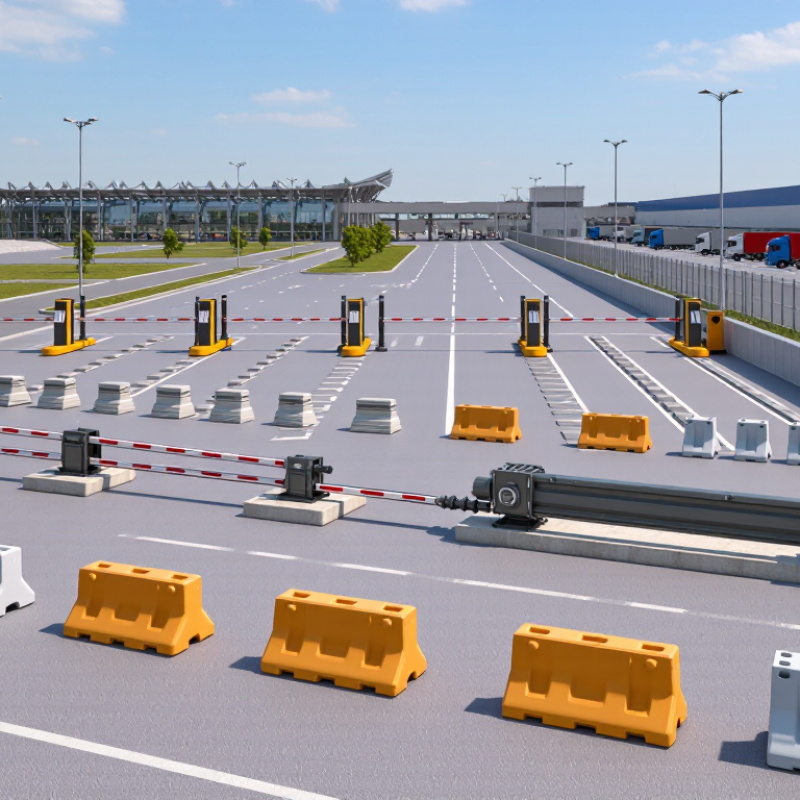
Vehicle Wedge Barriers: Purpose, Structure, and Operating Principles
Vehicle wedge barriers are reinforced road blockers designed to stop or redirect unauthorized vehicle movement. Their angled wedge plate rises from the pavement and meets a vehicle’s tires, axle, or underbody. The barrier’s purpose is simple: protect entrances, loading areas, public buildings, and controlled lanes.
Common types include shallow-mount, deep-mount, fixed, retractable, hydraulic, electromechanical, pneumatic, surface-mounted, crash-rated, and removable wedge barriers. Each type fits different ground conditions and security needs. A shallow system suits sites with limited excavation space. A deep-mount model usually offers stronger foundation support. Fixed barriers remain raised, while retractable units lower for approved traffic. Crash-rated designs require verified testing, not visual assumptions.
The structure normally includes a steel wedge, housing frame, hinges, lifting equipment, drainage paths, sensors, and control equipment. Hydraulic systems use pressurized fluid and cylinders to move the wedge. Electromechanical systems use motors, gearboxes, and lifting arms. Pneumatic versions depend on compressed air, although their performance can change in cold or poorly maintained environments. During operation, sensors confirm vehicle position and barrier status. Warning lights and audible signals help reduce confusion.
Installation quality matters as much as barrier strength. Poor drainage can damage moving parts. Weak concrete can reduce stopping performance. In practice, maintenance teams should inspect hinges, seals, fasteners, sensors, and emergency controls regularly. No system is perfect. Site traffic, soil movement, and delayed maintenance can expose weaknesses that specifications alone cannot predict.
The Ten Main Types of Vehicle Wedge Barriers by Design
What Are the Top 10 Types of Vehicle Wedge Barriers?
The ten main types of vehicle wedge barriers differ by structure, installation depth, and movement. A full-width wedge spans the traffic lane and leaves fewer side gaps. A partial-width wedge protects a selected entry path. A shallow-mount wedge suits sites with limited excavation space. It is useful, but drainage planning can be difficult. A deep-mount wedge reaches stronger foundations and supports demanding traffic loads. It needs more civil work.
A surface-mounted wedge sits above the finished pavement, which can simplify installation. A flush-mounted wedge aligns with the road surface and reduces trip hazards. A single-piece wedge uses one continuous steel plate for direct load transfer. A modular wedge uses connected sections, making transport and replacement easier. Joint quality matters. Poor alignment can create noise, wear, and uneven movement.
A fixed wedge remains raised or permanently positioned at a controlled boundary. A retractable wedge lowers when approved vehicles need passage. Hydraulic designs provide strong lifting force and controlled movement. Electromechanical designs can offer precise positioning with simpler fluid management. These are operating systems, but they also shape the barrier’s internal layout. In field assessments, engineers check road width, soil strength, drainage, impact direction, maintenance access, and emergency clearance. A barrier may look robust while its foundation remains inadequate. That mistake deserves careful review. Testing records, inspection schedules, and visible damage indicators help operators judge reliability over time.
What Are the Top 10 Types of Vehicle Wedge Barriers?
The chart compares ten common vehicle wedge barrier design categories by their defining structural and operating attributes. A value of 1 means the attribute is inherent to the category; a value of 0 means it is not a defining feature. Some categories can overlap because barriers are often classified by more than one design characteristic.
Design attributes shown include fixed construction, a rising mechanism, powered actuation, shallow-foundation installation, full-width coverage, and segmented construction.
How Wedge Barriers Differ in Security Ratings and Performance
What Are the Top 10 Types of Vehicle Wedge Barriers?
How Wedge Barriers Differ in Security Ratings and Performance
Vehicle wedge barriers commonly fall into ten types: shallow-mount, deep-mount, surface-mounted, fixed, retractable, hydraulic, electromechanical, pneumatic, crash-rated, and non-crash-rated. The categories can overlap. A hydraulic barrier may also be shallow-mounted and crash-rated. This detail is often missed.
Mounting depth affects installation and impact performance. Shallow systems suit sites with limited underground space. Deep-mount models usually provide stronger foundations and greater resistance. Surface-mounted units install quickly, but their anchoring needs careful inspection. Fixed wedges remain raised. Retractable units lower for authorized traffic. Hydraulic drives deliver strong lifting force. Electromechanical systems can offer precise movement and simpler maintenance. Pneumatic designs may perform well in certain climates, though air systems need regular checks.
Security ratings indicate tested resistance, not guaranteed protection in every event. Standards such as ASTM F2656, IWA 14-1, and PAS 68 measure vehicle mass, speed, and penetration distance. A higher rating generally means greater tested impact performance. It may also require deeper foundations, stronger drainage, and longer installation work. Non-crash-rated barriers can guide traffic or protect controlled areas, but they should not be treated like certified impact systems. In practical inspections, damaged hinges, slow movement, poor lighting, and blocked drainage often reduce performance. Specifications matter. Site conditions matter more than many buyers expect.