granite air bearings support precise motion where friction, vibration, and thermal drift can compromise results. They create a thin air film between a granite surface and a moving component. This contactless operation helps protect delicate measurement equipment.
Industry evidence supports their growing relevance. MarketsandMarkets’ Air Bearings Market report identifies semiconductor manufacturing, aerospace, and precision engineering as major application areas. Grand View Research also reports rising demand for low-friction motion systems in advanced manufacturing and metrology. These reports do not focus only on granite air bearings, but they clarify the market forces behind their adoption.
Precision matters most.
This guide examines the top 10 types of granite air bearings to buy, including porous-media, orifice, vacuum-preloaded, and hybrid designs. Each type behaves differently on a granite table. A porous bearing may provide stable motion across a clean measuring surface. An orifice design can deliver higher stiffness, but it may require stricter air filtration and pressure control. A vacuum-preloaded model can resist lifting forces during acceleration.
Technical standards also matter. ISO 230-2 provides guidance for evaluating positioning accuracy in machine tools, while ASME B89 standards support dimensional measurement practices. These references help buyers compare accuracy claims more responsibly. However, catalog specifications can still hide practical limitations. Air consumption, installation flatness, noise, maintenance access, and contamination control deserve equal attention.
The best choice depends on load, travel, stiffness, accuracy, and operating environment. Price alone is a weak filter. This ranking offers a practical starting point, not a universal verdict. Some recommendations may change after real-world testing, because laboratory performance can differ from factory-floor conditions.
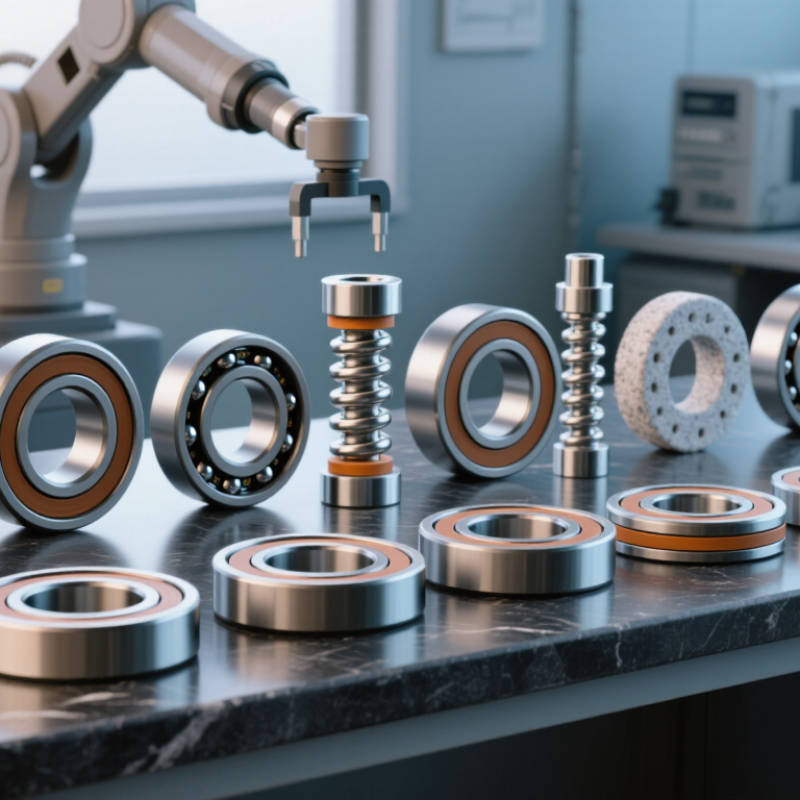
Granite air bearings support motion with a thin, clean air film between polished surfaces. Common designs include flat, thrust, radial, rotary, porous, orifice-restricted, vacuum-preloaded, opposed-pad, annular, and hybrid bearings. Each type suits a different motion pattern. Flat bearings guide linear stages, while radial bearings support rotating shafts. Porous bearings often provide smoother pressure distribution across a wider surface.
Selection starts with the load, travel direction, speed, and available air pressure. A bearing carrying a 50-kilogram platform needs different capacity from a small optical carriage. Check stiffness under working load, not only the catalogue rating.
Granite flatness also matters. A tiny surface error can change the air gap and create uneven motion. Look for suitable restrictor design, filter requirements, mounting tolerance, and emergency contact protection.
Measure the actual granite surface before installation. Dust is a serious problem. Use clean, dry air and inspect the gap with calibrated equipment. In practical testing, sound can reveal instability before software detects it. A low, steady hiss is usually reassuring, but it is not proof of accuracy. A perfect calculation may still fail when temperature changes or the mounting frame flexes. I would leave adjustment room in the design. That small concession often prevents expensive rework.

Flat granite air bearings are a practical choice for precision measurement platforms. They support smooth, low-friction movement across a stable granite surface. A thin film of compressed air separates the bearing from the guideway. This contactless motion reduces wear, vibration, and particulate contamination.
Their value appears in coordinate measuring machines, optical inspection stages, and calibration systems. Granite offers strong dimensional stability and excellent damping. Its flat surface also helps maintain predictable motion over long travel distances. During installation, technicians should check air quality, pressure stability, and mounting alignment. Even a small tilt can affect measurement repeatability.
Details matter here. A bearing may feel smooth but still produce uneven readings. Operators should inspect the granite for chips, stains, and gradual surface changes. They should also record temperature during critical measurements. Air consumption is another practical concern, especially in facilities with limited compressor capacity. A larger bearing is not always better. It may increase stiffness while reducing design flexibility.
I would not treat these bearings as maintenance-free. Filters need regular replacement, and air lines require careful inspection. Some platforms also need controlled preloading for stable positioning. Results can vary between installations. That deserves honest testing. A short trial with calibrated instruments often reveals more than a specification sheet.
Top 10 Types of Granite Air Bearings to Buy?
Porous granite air bearings support stable, frictionless motion in precision equipment. Their stone body resists corrosion, vibration, and thermal distortion. Micro-pores distribute clean air across the bearing surface. This creates a quiet film between the granite and moving stage. Common choices include rectangular, circular, thrust, journal, vacuum-preloaded, and externally pressurized designs. Selection depends on load direction, travel length, stiffness, and available air pressure.
A 2024 precision-motion market analysis reported continued growth in air-bearing applications for semiconductor inspection and coordinate measurement. These systems often demand sub-micrometer repeatability. Porous granite helps maintain alignment because its thermal expansion is lower than many metal structures. Surface flatness still matters. A small machining error can create uneven airflow and unstable motion. Buyers should request flatness, permeability, load-capacity, and stiffness data before purchasing.
Clean air is essential. ISO 8573-1 provides a practical framework for checking particles, water, and oil. The U.S. Department of Energy reports that compressed-air leaks can waste 20% to 30% of compressor output. That hidden cost affects every bearing system. Choose proper filtration and inspect tubing regularly. Not perfectly. Real installations may show slight drift after temperature changes. I would also test the bearing under the actual payload, not an ideal laboratory load. A smooth granite surface can feel flawless while still revealing vibration at higher speeds.
Granite air bearing ways provide exceptionally smooth linear travel for metrology, inspection, and precision manufacturing. Their stone surface stays stable, resists corrosion, and supports clean motion without mechanical contact. The top ten configurations include flat air bearing pads, opposed pads, vacuum-preloaded pads, porous-media bearings, orifice-restricted bearings, air bushings, air slides, thrust bearings, journal bearings, and modular granite guideways.
Each type suits a different motion problem. Flat pads work well for simple horizontal travel, while opposed pads control vertical lift and side movement. Vacuum preload improves stability when cutting forces or acceleration may disturb the carriage. Porous media creates an even air film, although it can respond slowly to pressure changes. Orifice systems often provide higher stiffness, but contamination near small openings remains a practical concern.
A reliable granite guide system needs more than a polished stone surface. Engineers should check bearing load, air consumption, preload, guide length, and thermal conditions. A clean, dry air supply matters. Tiny oil droplets can damage performance. Installation also requires careful leveling and alignment, preferably with calibrated instruments. Some systems look perfect during assembly but reveal drift after several hours. That detail deserves attention. Designers should leave adjustment access, document actual straightness, and test the carriage under its real load rather than relying only on catalog values.
Granite Air Bearing Ways and Guide Systems for Linear Travel
The chart compares representative load-capacity ranges for common granite air-bearing configurations. Values are expressed in kilonewtons per 100 cm² of bearing area at approximately 0.4 MPa supply pressure. Actual performance depends on pad geometry, air-film gap, restrictor design, preload, granite flatness, and operating conditions.
Buying a granite air bearing requires more than checking its advertised load. Compare ten common configurations: flat, rectangular, circular, linear, rotary, thrust, journal, spherical, vacuum-preloaded, and opposed-pad designs. Flat and rectangular types suit inspection tables and precision stages. Circular and rotary versions support controlled angular movement. Thrust bearings handle vertical loads, while journal designs guide rotating shafts. Spherical types tolerate limited angular misalignment. Vacuum-preloaded and opposed-pad designs improve stability, but they may require more complex plumbing.
Check the granite surface finish, bearing clearance, stiffness, air consumption, and rated load together. Ask for repeatability data under your actual temperature range. A bearing that performs well in a clean laboratory may react poorly to dust or oil mist. During testing, I would measure motion at several speeds, not only at the supplier’s preferred setting. That detail is easy to overlook. It can change the buying decision.
Tips: Match the bearing to the load direction and motion path. Request a pressure-versus-gap curve and a flatness report. Confirm mounting tolerances before ordering. Keep filtration in the design. Compare replacement seals, regulators, and service access, even when the bearing itself looks maintenance-free. If two types appear equal, choose the simpler installation, unless stiffness data proves otherwise.