China Top 10 Open Frame Generator Set Manufacturers
Reliable backup power is becoming more important as data centers, construction sites, hospitals, and factories face tighter continuity requirements. The International Energy Agency’s Electricity 2024 report expects global electricity demand to grow by about 4% in both 2024 and 2025. That pressure makes dependable standby and prime-power equipment increasingly relevant.
Open Frame Generator Sets remain practical where ventilation, inspection access, and installation flexibility matter. Their visible engine and alternator simplify daily checks, oil-leak detection, cable connections, and routine servicing. On a busy construction site, technicians can inspect belts and coolant levels without removing large enclosure panels. Small details matter.
China has developed a broad generator manufacturing base, supported by mature engine supply chains, metal fabrication, control-system integration, and export experience. Industry research from Grand View Research and MarketsandMarkets continues to identify diesel generator demand as a significant segment of the global power-generation equipment market. However, market reports often combine enclosed, open-frame, standby, and prime-power products. Direct comparisons can therefore be imperfect.
This guide examines China’s top 10 Open Frame Generator Sets manufacturers through practical indicators, including rated output, engine origin, alternator quality, controller functions, fuel consumption, noise considerations, factory capability, certifications, and after-sales support. It does not treat brand visibility as proof of technical excellence. A lower purchase price may hide weaker documentation or limited spare-parts availability.
The ranking is not absolute.
Actual suitability depends on load profile, operating hours, climate, installation conditions, and local service capacity. Readers should verify test records, warranty terms, emissions compliance, and maintenance access before making a purchasing decision.
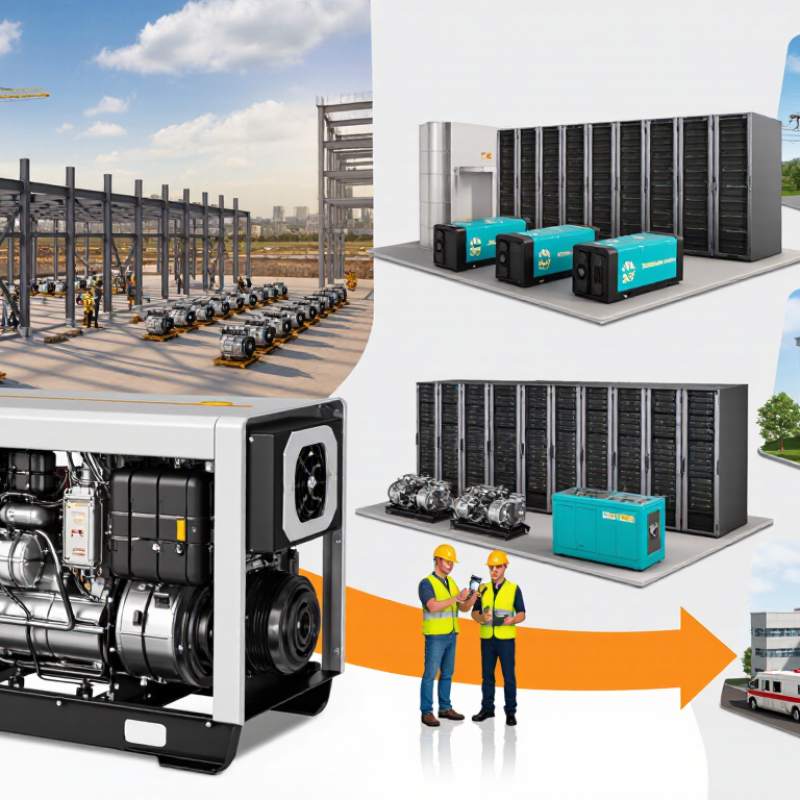
What Is an Open Frame Generator Set?
An open frame generator set is a power system with an exposed steel frame. Its engine, alternator, fuel tank, and controls remain visible and accessible. The engine converts fuel energy into mechanical power, while the alternator produces electricity. This design suits construction sites, farms, workshops, and emergency facilities. It also allows air to move freely around hot components.
During field maintenance, technicians can check oil levels, belts, wiring, and cooling paths without removing a large enclosure. Small problems become easier to notice. A loose cable or blocked air passage can still create serious downtime. The open structure is practical, but it is not automatically weatherproof. Rain, dust, and direct sunlight require suitable shelter and planned placement. Noise is another concern. An open frame set usually sounds louder than an enclosed model.
When comparing leading manufacturers, buyers should examine rated power, voltage, frequency, phase, fuel use, and standby or prime-duty ratings. Control panels should display essential readings clearly, including temperature, oil pressure, and operating hours. Reliable grounding and proper exhaust routing also matter. A generator may look powerful on paper, yet fail to match a motor’s starting demand. That assumption is easy to make and often costly. Selection should reflect the actual load, working environment, service access, and local electrical requirements. Qualified personnel should handle connection and commissioning, because convenience should never replace verification.
China Top 10 Open Frame Generator Set Manufacturers - What Is an Open Frame Generator Set?
| Configuration Class | Typical Prime Power | Typical Standby Power | Common Output | Typical Engine Speed | Approx. Fuel Use at 75% Load | Typical Applications |
| Micro | 8–12 kVA | 9–13 kVA | 230/400 V, 50 Hz | 1,500 rpm | 2.0–2.8 L/h | Small offices, retail units, residential backup |
| Light Commercial | 15–25 kVA | 17–28 kVA | 230/400 V, 50 Hz | 1,500 rpm | 3.0–5.2 L/h | Shops, small workshops, telecom backup |
| Commercial | 30–40 kVA | 33–44 kVA | 230/400 V, 50 Hz | 1,500 rpm | 5.8–8.2 L/h | Restaurants, clinics, commercial buildings |
| Medium Duty | 50–75 kVA | 55–83 kVA | 230/400 V, 50 Hz | 1,500 rpm | 9.5–15.0 L/h | Construction sites, farms, warehouses |
| Industrial Entry | 80–125 kVA | 88–138 kVA | 230/400 V, 50 Hz | 1,500 rpm | 16.0–24.5 L/h | Factories, irrigation systems, data rooms |
| Industrial Standard | 150–200 kVA | 165–220 kVA | 230/400 V, 50 Hz | 1,500 rpm | 29.0–39.0 L/h | Manufacturing plants, hotels, infrastructure projects |
| Heavy Commercial | 225–300 kVA | 250–330 kVA | 230/400 V, 50 Hz | 1,500 rpm | 43.0–58.0 L/h | Large buildings, mining support, utility backup |
| Large Industrial | 350–500 kVA | 385–550 kVA | 230/400 V, 50 Hz | 1,500 rpm | 67.0–96.0 L/h | Heavy industry, ports, large construction projects |
| High-Capacity | 550–750 kVA | 605–825 kVA | 230/400 V, 50 Hz | 1,500 rpm | 105–145 L/h | Shopping centers, hospitals, industrial campuses |
| Large-Scale | 800–1,000 kVA | 880–1,100 kVA | 230/400 V, 50 Hz | 1,500 rpm | 155–195 L/h | Data centers, major infrastructure, power rental projects |
Technical note: An open-frame generator set consists of an engine, alternator, fuel system, control panel and radiator mounted on a steel base frame without a sound-attenuating enclosure. The power and fuel-consumption figures above are typical selection ranges; actual values vary according to engine efficiency, alternator loading, ambient conditions, voltage, frequency and applicable emissions requirements.
How China’s Open Frame Generator Industry Has Developed
China’s open frame generator industry has changed from a low-cost assembly market into a more technically organized manufacturing sector. Early production often focused on basic diesel engines, welded frames, and simple control panels. Today, manufacturers commonly use computer-aided design, automated cutting, and improved vibration isolation. The change was practical. Buyers wanted quieter operation, easier maintenance, and stable performance in construction, agriculture, and emergency power applications.
The top 10 manufacturers are not identical. Some specialize in compact sets for small worksites, while others build high-output units for factories and infrastructure projects. In supplier evaluations, I look beyond rated power. Frame thickness, fuel tank access, cable protection, cooling airflow, and control-panel readability reveal daily usability. Factory testing should include load changes, voltage stability, oil pressure alarms, and extended running hours. Documentation matters too. Clear service schedules and traceable test records reduce avoidable problems after delivery.
China’s supply chain has also become more integrated. Local producers can source engines, alternators, controllers, and steel components within shorter distances. This supports faster customization and more competitive lead times. However, development is uneven. Some factories still emphasize appearance over acoustic control or long-term corrosion resistance. That is easy to miss during a short inspection. Experienced buyers should request production samples, review quality records, and examine machines after continuous operation. A polished catalog is not enough. Real performance can be less impressive.
China’s Open Frame Generator Industry Development Context
China’s expanding power system and steadily increasing electricity demand have supported the development of generator-set manufacturing, including open frame diesel generator sets used for construction, backup power, rental fleets, agriculture and temporary power applications.
Source: National Energy Administration of China and China Electricity Council. The indicators provide market-development context and do not represent sales of any individual company or brand.
Criteria for Ranking China’s Top 10 Manufacturers
Ranking China’s top ten open frame generator set manufacturers requires more than production volume. The assessment begins with measurable experience. We review years in diesel engineering, installed units, export regions, and documented operating hours. Factory visits add useful evidence. We inspect welding quality, frame coating, fuel systems, wiring, and final-load testing. A clean workshop helps, but it never proves long-term reliability.
Technical competence carries greater weight than polished marketing. Each manufacturer is compared through rated output, fuel consumption, voltage stability, noise data, and protection systems. We examine whether test reports identify standards, instruments, dates, and operating conditions. Independent certificates matter when their scope matches the actual model. Engineers should also explain maintenance intervals, cold-start behavior, and spare-part compatibility clearly. Vague answers reduce confidence.
Authority comes from verifiable customer evidence, not impressive claims. We check reference projects, service response records, warranty terms, and technician coverage. Delivery consistency, customization control, and transparent pricing influence the score. Total cost includes filters, batteries, fuel use, downtime, and disposal planning. The ranking must remain flexible. Public records can be incomplete, and customer feedback can conflict. A supplier may perform well in factories but poorly under remote-site pressure. That weakness deserves a lower score, even when its catalog looks excellent. Human judgment still enters the process, so every criterion should be recorded and reviewed.
Profiles of China’s Top 10 Open Frame Generator Set Manufacturers
China Top 10 Open Frame Generator Set Manufacturers
Profiles of China’s Top 10 Open Frame Generator Set Manufacturers require more than factory size. This review considers ten leading Chinese manufacturers through production capacity, engine integration, testing systems, export experience, and service coverage.
Key focus
Production capacity, engine integration, testing systems, export experience, and service coverage.
The International Energy Agency’s Electricity 2024 report forecasts global electricity demand to grow by about 4% in 2024 and 2025. That pressure supports continued demand for practical backup power, especially on construction sites, farms, workshops, and temporary facilities.
Why Open-Frame Sets Remain Attractive
Open-frame sets remain attractive because technicians can access filters, belts, terminals, and control panels quickly.
The ten profiles show different strengths. Several manufacturers emphasize automated welding and load-bank testing. Others focus on compact 10–100 kVA units for rental fleets. Larger producers usually offer higher-capacity sets, remote monitoring, and documented factory acceptance tests.
Manufacturing Strengths
Automated welding, load-bank testing, compact rental-fleet units, and higher-capacity generator sets.
Advanced Capabilities
Remote monitoring and documented factory acceptance tests are more common among larger producers.
China’s National Energy Administration reported national power-generation capacity above 2.9 terawatts in 2023, showing the scale of its wider electrical manufacturing base. However, that figure does not measure generator-set quality.
Important Buyer Considerations
Buyers still need to verify fuel consumption, voltage stability, noise data, emissions documentation, and spare-parts availability. Check the test records. Certification claims can be unclear.
The ranking is not perfect because export data and private production figures are rarely disclosed consistently. A stronger assessment should include long-term field failure rates, yet many manufacturers do not publish them. That missing evidence deserves attention.
How to Select the Right Chinese Generator Set Manufacturer
China’s open frame generator sector serves construction, agriculture, mining, and backup power projects. Fortune Business Insights valued the global genset market at USD 28.96 billion in 2023. It projects USD 41.58 billion by 2032. These figures suggest strong demand, but demand alone does not prove manufacturing quality.
When selecting a Chinese generator set manufacturer, inspect production evidence, not only catalog photographs. Ask for engine-alternator matching data, ISO 8528 test results, load-bank records, and insulation test reports. Confirm whether the factory performs noise, voltage stability, fuel consumption, and emergency-stop testing. A reliable supplier should explain test conditions clearly. Vague answers deserve caution. I would also review factory age, monthly capacity, technician training, spare-parts storage, and export service records. A low quotation can become expensive after delivery.
The MarketsandMarkets industry report identifies rising demand for diesel generator sets in commercial, industrial, and infrastructure applications. This makes lifecycle support increasingly important. Check warranty response times, remote troubleshooting, manuals, and replacement-part availability before signing. Request a sample inspection of the frame, fuel tank welds, control panel wiring, and grounding points. Open frame units expose workmanship immediately. That is useful. It can also reveal rushed assembly. One practical mistake is trusting certifications without checking their scope and validity. Compare the certificate model, test date, and actual production configuration. The best manufacturer is not always the cheapest; it is the one that can repeatedly prove performance under documented load conditions.