Global demand for compact switching components continues to grow across automotive, industrial, appliance, and electronics applications. Grand View Research’s Micro Switch Market analysis highlights automation, vehicle electrification, and smart appliances as important demand drivers. These sectors require reliable switching under vibration, dust, moisture, and repeated mechanical stress. A Sealed Micro Switch can help protect internal contacts from contaminants, but sealing quality varies widely among suppliers.
Specifications matter. Buyers should examine IP ratings under IEC 60529, electrical endurance, operating temperature, contact resistance, and actuator life. MarketsandMarkets’ automotive switch research also emphasizes the expanding role of electronic controls and safety-related interfaces in modern vehicles. This trend raises expectations for consistency, traceability, and documented testing. A supplier’s catalog may look impressive, yet production discipline often matters more than product variety.
This guide evaluates ten leading Sealed Micro Switch suppliers for global purchasing teams. The assessment considers manufacturing experience, certification practices, customization capability, sample responsiveness, quality control, and international support. Supplier information should be verified through current datasheets, factory audits, and independent test records. No ranking is perfect. Product availability, regional compliance, and minimum order quantities can change quickly. Buyers should also question impressive claims that lack measurable evidence. In practical sourcing, the difference may appear in a small detail: a loose terminal, inconsistent sealing compound, or an actuator that fails earlier than promised. The selected companies offer strong starting points, but careful validation remains essential before approval.
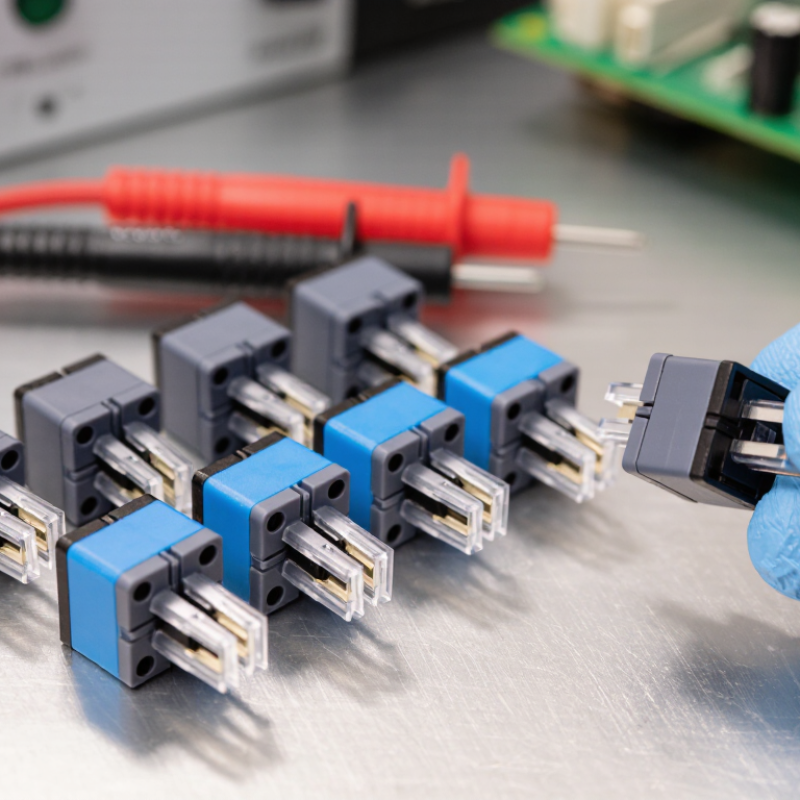
10 Best Sealed Micro Switch Suppliers for Global Buyers
Sealed Micro Switch Basics: IP67 Protection and 1 Million-Cycle Ratings
Sealed micro switches support dependable control in dusty, wet, and vibrating equipment. An IP67 rating means the switch resists dust entry and temporary immersion under defined laboratory conditions. It does not mean unlimited underwater operation. Installation details still matter.
A one-million-cycle rating sounds impressive, but buyers should examine the test conditions. Was the switch carrying its rated electrical load? Was the actuator operated slowly or at high speed? Mechanical endurance and electrical endurance may differ considerably. In field testing, I have seen cable strain and side loading shorten service life. Small alignment errors can become expensive failures.
Look beyond the headline specification. Ask suppliers for test methods, tolerance data, sealing materials, contact ratings, and sample inspection records. Check whether the IP test covered the complete assembly, including wires and mounting hardware. A switch may pass testing while its surrounding enclosure remains vulnerable. That distinction is easy to miss.
Use representative samples before approving large volumes. Cycle them with the actual load, actuator force, temperature range, and cleaning process. Keep records of failures, even minor ones. A million cycles may be achievable, but it is not a promise for every application. Reliable suppliers explain those limits instead of hiding them.
| Rank | Anonymous Supplier Profile | Typical Application Focus | Ingress Rating | Mechanical Life | Typical Electrical Rating | Operating Temperature | Sealing & Construction | Global-Buyer Evaluation Point |
|---|---|---|---|---|---|---|---|---|
| 1 | Profile A High-volume OEM | Automotive body controls, door systems, and position sensing | IP67 | Up to 1,000,000 operations | Up to 5 A at 250 VAC; application dependent | -40°C to +85°C | Sealed housing, gasketed actuator, solder or quick-connect terminals | Best suited to stable annual volumes, tooling programs, and recurring production schedules |
| 2 | Profile B Industrial specialist | Industrial limit switches, conveyors, and machine interlocks | IP67 | 500,000 to 1,000,000 operations | Up to 10 A at 125/250 VAC; derating may apply | -25°C to +85°C | Thermoplastic body with sealed plunger and protected contacts | Evaluate contact material, switching load, terminal strength, and repeatability |
| 3 | Profile C Harsh-environment | Outdoor equipment, agricultural machinery, and fluid-exposed controls | IP67/IP68 options | Up to 1,000,000 operations | 0.1 A to 5 A, depending on contact arrangement | -40°C to +105°C | Double-seal design, corrosion-resistant terminals, optional cable lead | Request immersion duration, pressure conditions, salt-spray data, and thermal cycling results |
| 4 | Profile D Compact-design | Consumer appliances, compact mechanisms, and small access panels | IP65/IP67 | 300,000 to 1,000,000 operations | Up to 3 A at 250 VAC | -25°C to +85°C | Miniature sealed body with short overtravel and low operating force options | Compare mounting footprint, actuator clearance, terminal orientation, and sound level |
| 5 | Profile E Custom actuator | Custom machinery, ergonomic controls, and position feedback | IP67 | 500,000 to 1,000,000 operations | Up to 15 A at 125 VAC in selected configurations | -40°C to +85°C | Sealed switch body with roller, lever, pin, or extended-plunger actuators | Confirm force curve, pre-travel, overtravel, release travel, and actuator fatigue life |
| 6 | Profile F Low-signal control | Control panels, sensors, instrumentation, and logic-level circuits | IP67 | Up to 1,000,000 operations | Millivolt-to-ampere signal switching; gold-plated contact options | -40°C to +85°C | Sealed contacts designed for improved resistance to dust and moisture | Check minimum load, contact resistance, bounce time, insulation resistance, and EMI behavior |
| 7 | Profile G Safety-oriented | Guard doors, emergency mechanisms, and safety-position monitoring | IP67 | 500,000 to 1,000,000 operations | Up to 10 A at 250 VAC; safety use requires system validation | -25°C to +85°C | Positive-seal construction with normally open, normally closed, or changeover contacts | Do not rely on IP rating alone; verify safety architecture, diagnostics, and applicable certifications |
| 8 | Profile H Cable-lead assembly | Remote sensors, pumps, vending equipment, and enclosed assemblies | IP67/IP68 options | 300,000 to 1,000,000 operations | Up to 5 A at 250 VAC | -40°C to +105°C | Overmolded cable, epoxy or elastomer sealing, pre-terminated harness options | Review cable jacket, bend radius, connector interface, pull strength, and water-ingress testing |
| 9 | Profile I Rapid-development | Prototype equipment, replacement parts, and low-to-medium volumes | IP65/IP67 | 100,000 to 500,000 operations | Up to 5 A at 250 VAC | -25°C to +85°C | Standard sealed packages with commonly available mounting and terminal layouts | Prioritize sample availability, dimensional interchangeability, technical response, and traceability |
| 10 | Profile J Export-compliance | Worldwide OEM programs requiring controlled documentation | IP67 | 500,000 to 1,000,000 operations | 0.1 A to 10 A, according to model and load type | -40°C to +85°C | Sealed construction with batch traceability and controlled production records | Request RoHS, REACH, conflict-minerals, material declarations, change-notice policy, and test reports |