Why Choose a Molded Circuit Breaker?
When a panel must protect a busy electrical system, the choice of breaker affects more than a line on a specification sheet. A Molded Circuit Breaker combines switching and overcurrent protection in a compact, insulated housing. Inside, thermal-magnetic or electronic trip mechanisms can respond to overloads and short circuits, depending on the model. That flexibility makes these breakers useful in commercial buildings, workshops, and industrial distribution panels. No device fits every job. The enclosure protects internal parts, but it does not remove the need for correct selection, installation, and maintenance.
Choosing one begins with the actual electrical conditions, not just the equipment name. Check the system voltage, continuous current, available fault current, and required interrupting rating against the manufacturer’s data. Then consider trip settings, pole count, ambient temperature, enclosure conditions, and coordination with upstream and downstream protection. In a workshop, for example, motor starting current may affect trip selection; a setting chosen too casually can cause nuisance trips or weaken protection. These details are easy to overlook. A larger rating is not automatically safer, and a molded case alone does not guarantee suitability for a particular panel. Review the breaker’s documentation and applicable installation requirements, and involve a qualified electrical professional when ratings or coordination are uncertain. The right choice should fit the circuit, the environment, and the people who will maintain it. Worth checking twice.
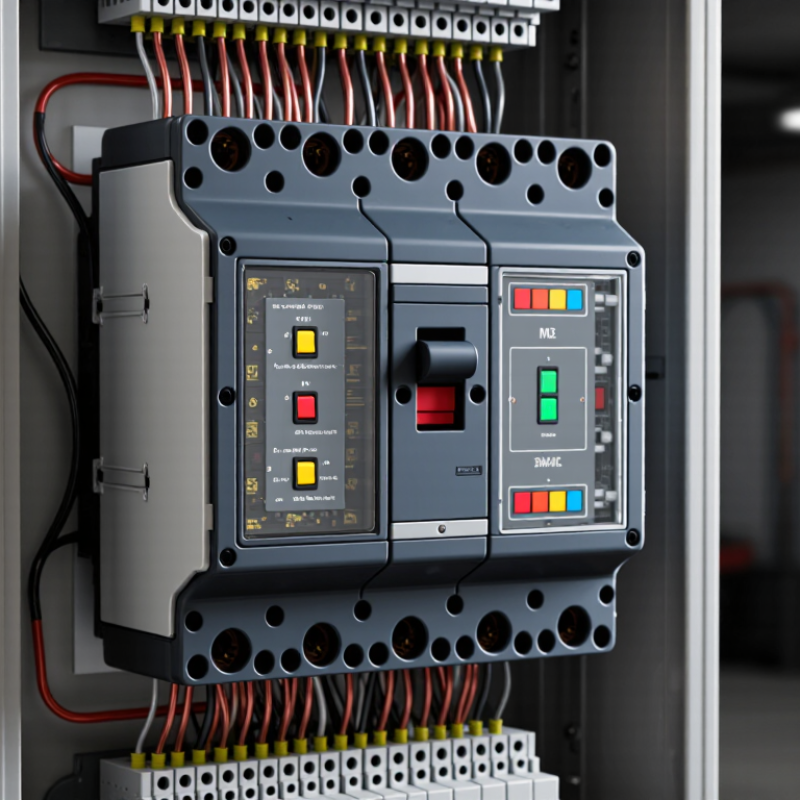
What a Molded Circuit Breaker Is and How It Is Built
Why Choose a Molded Circuit Breaker?
What a Molded Circuit Breaker Is and How It Is Built
A molded circuit breaker is an overcurrent protection device housed in a rigid, insulating case. The case supports and separates internal parts, while its shape helps protect them from dust and accidental contact. It is not a complete enclosure for every installation; the surrounding panel still matters.
Inside, a typical unit has fixed and moving contacts, an operating mechanism, and an arc chute. When the contacts separate under fault conditions, the chute divides and cools the arc to help extinguish it. A thermal-magnetic trip unit commonly uses a bimetal strip for sustained overloads and a magnetic element for high fault currents. Some breakers use electronic trip units instead. Small details count.
The handle lets an operator open or reset the breaker, but it does not replace proper fault diagnosis. Current rating, interrupting capacity, conductor size, and installation conditions must suit the circuit. Heat inside a crowded panel can affect performance, so checking the manufacturer’s technical data is essential. I’ve seen selection treated as a label-matching exercise; that shortcut can miss the actual fault level or operating environment. A molded case is useful, but it cannot correct an undersized conductor or poor installation.
How a Molded Circuit Breaker Detects and Interrupts Faults
A molded case circuit breaker responds to two different warning signs. During a sustained overload, current heats a bimetal element until it bends and releases the trip mechanism. During a severe short circuit, an electromagnetic mechanism can trip the breaker almost instantly. The contacts then separate, and arc chutes divide and cool the electrical arc. The breaker interrupts current only within its rated voltage and interrupting capacity; those ratings must match the installation’s available fault current.
NFPA’s Electrical Fires report, based on 2015–2019 data, estimates that electrical failure or malfunction was involved in about 46,700 U.S. home structure fires annually. That figure is context, not proof that a circuit breaker alone prevents fires. A breaker may not detect every hazardous condition, such as a loose connection that heats without drawing enough excess current. That detail matters. Selecting the trip curve and rating requires checking the conductor size, load, and prospective fault current. Field conditions can differ from a neat calculation.
Tips: Check the breaker’s marked ratings and trip characteristics against the equipment documentation. A warm enclosure, repeated trips, or visible damage deserves investigation by a qualified electrical professional. Don’t simply reset it.
Why Choose a Molded-Case Circuit Breaker?
How a molded-case circuit breaker detects and interrupts a fault
This illustrative waveform shows current rising from a normal load to a fault level, then falling to zero when the breaker trips and opens its contacts. Depending on its trip unit, a breaker detects overcurrent thermally, magnetically, or electronically; its arc-control system helps extinguish the arc. Actual trip and interruption times vary by breaker and fault conditions, so this is not a product trip curve.
Protection Features That Support Electrical Safety
Molded-case circuit breakers protect electrical systems by opening a circuit when current exceeds a safe level. Thermal-magnetic trip mechanisms respond to sustained overloads and sudden short circuits. Some models also offer adjustable settings, which can help match protection to a motor or feeder. A properly selected breaker can limit damage to conductors and connected equipment. It is not a substitute for correct wiring or maintenance.
Selection requires more than matching the breaker to the load. Its interrupting rating must suit the available fault current, and its settings should coordinate with downstream devices.
No breaker is magic. NFPA’s Home Electrical Fires report found that U.S. fire departments responded to an average of 46,700 home fires involving electrical failure or malfunction each year from 2015 through 2019. Those fires caused an estimated 390 civilian deaths and $1.5 billion in direct property damage annually.
The figures cover home fires, not breaker failures specifically, but they show why dependable overcurrent protection matters. A licensed electrical professional can verify ratings, wiring conditions, and installation requirements; small mismatches are easy to overlook.
Practical Advantages for Different Electrical Systems
A molded case circuit breaker can fit electrical systems with higher currents or changing loads. In a workshop panel, it may protect a motor circuit that draws a brief surge during startup. In a commercial building, it can serve larger feeders supplying lighting, ventilation, or equipment. Its molded insulating case encloses the operating and interrupting parts, while the breaker responds to overloads and short circuits.
Some models offer adjustable trip settings, which can help qualified professionals coordinate protection across connected circuits. That matters when a fault should disconnect one branch without shutting down an entire floor. Settings must match the cables, expected fault current, and equipment; flexibility is not permission to guess. A small miscalculation can leave conductors inadequately protected. Real systems are rarely tidy.
The right choice depends on the installation, not just the breaker’s current rating. Consider available panel space, ambient heat, maintenance access, and whether the load has motor-starting surges. A molded case breaker may be more capacity than a simple lighting circuit needs. It can also require more careful selection and installation. An engineer or licensed electrical professional should verify the protection design against the system’s actual conditions.
How to Choose a Molded Circuit Breaker for an Application
Why Choose a Molded Circuit Breaker?
Choosing a molded case circuit breaker starts with the application, not the frame size. Identify the system voltage, phase configuration, and continuous load current. Then confirm the breaker’s interrupting rating meets or exceeds the prospective short-circuit current at its installation point. This is a critical check. A breaker that fits the panel may still be unsuitable for the available fault level.
Consider how the load behaves. Motors can draw high starting current, while heaters usually create a steadier demand. Choose trip characteristics and adjustable settings that protect conductors without causing nuisance trips. Check ambient temperature, enclosure conditions, and manufacturer derating guidance. Also review coordination with upstream and downstream protective devices. In field reviews, coordination is sometimes overlooked. A tidy calculation can still miss a changing load or future equipment, so document assumptions and revisit them when the installation changes.
Tips: Gather load data, conductor sizes, and fault-current information before selecting a unit. Compare these details with the product datasheet, including pole count and terminal limits. Ask a qualified electrical professional to verify the selection, especially where fault-current calculations or coordination are uncertain. Small details matter. A loose assumption is not a design method.