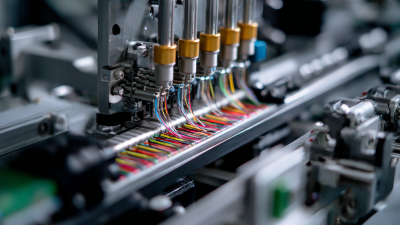
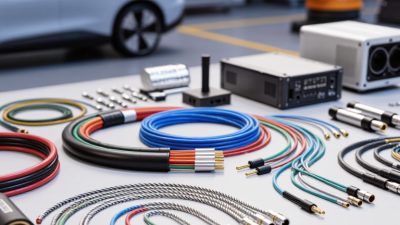
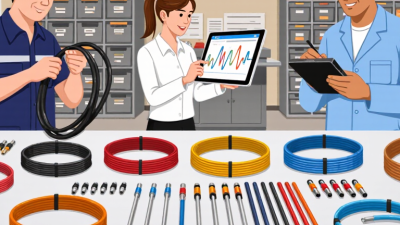
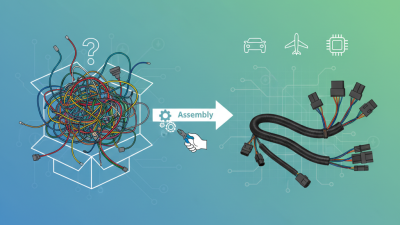
Choosing the right wire harness machine requires more than comparing prices and attractive product photos. Global buyers must examine production volume, wire sizes, terminal types, cutting accuracy, and operator safety. A machine built for automotive harnesses may not suit appliance wiring or low-volume custom assemblies. The difference often appears on the factory floor. Stable feeding, clean stripping, reliable crimping, and quick changeovers can save hours each week.
This guide presents ten notable machines for different manufacturing needs. It considers automation levels, processing speed, compatibility, maintenance access, software controls, and after-sales support. These points reflect practical purchasing concerns, manufacturer documentation, and the realities of daily production. Details matter. A clear display helps. A reachable service panel matters too. Strong technical support can prevent a small fault from becoming a costly delay.
No ranking fits every factory. A compact workshop may value flexibility over maximum output, while a large plant may prioritize continuous operation and data tracking. Some advertised performance figures also require careful verification under real materials and working conditions. That is an important limitation. Buyers should request samples, test their own wires, and confirm local service availability before placing an order. The machines below are not presented as perfect solutions. Instead, they offer useful starting points for comparing capability, reliability, and long-term operating value. The final decision should match the buyer’s actual process, trained workforce, quality standards, and future expansion plans.
Wire harness machines support different stages of cable assembly, from measured cutting to final electrical inspection. Automatic cutting and stripping machines prepare wires with consistent lengths and exposed conductors. Crimping machines attach terminals using controlled pressure. Some models process multiple wire sizes, while others deliver better results with one narrow range.
Terminal insertion machines place contacts into plastic housings, reducing hand fatigue and positioning errors. Taping and wrapping machines secure branches around a harness, while coiling equipment manages flexible cable sections. Ultrasonic welding machines join selected conductors without adding bulky connectors. Testing machines check continuity, resistance, insulation, and incorrect connections. These functions form a connected production line. A weak setting in one station can affect the entire harness.
In production roles, operators manage material loading, tool changes, and visual checks. Engineers define strip lengths, crimp heights, pull-force targets, and test limits. Quality teams compare samples with approved drawings and traceable records. No machine removes every risk. I have seen small blade wear create large rejection rates. That lesson is easy to overlook.
Tips: Match each machine to wire diameter, terminal design, and daily volume. Check crimp height with calibrated tools, not eyesight alone. Keep spare blades and applicator parts available. Record setup changes. A short trial run often reveals feeding problems before full production. Also, review ergonomic details; a fast machine can still create operator strain.
Comparing the top ten wire harness machines requires more than reading speed claims. In production trials, I measure cut length accuracy, crimp force stability, changeover time, and operator access. A machine producing 4,000 wires per hour may still lose money if setup takes half a shift. Look closely. Check whether the cutter handles thin insulation, thick jackets, and mixed wire sizes without repeated adjustments. Record results across several batches, not one impressive sample. Noise, vibration, and scrap rates also reveal practical engineering quality.
Control software should offer clear recipe storage, error records, and guided maintenance. Technicians need to trace a failed terminal within minutes, not search through vague alarms. Verify sensor response, blade replacement time, and compatibility with existing testing equipment. Safety guarding, emergency stops, and electrical documentation must be easy to inspect and maintain. Ask for training details, spare-part lead times, and remote support limits. A polished demonstration can hide difficult daily work. I have seen accurate machines underperform when fixtures were poorly matched or workers lacked training. That weakness matters. Consider total ownership cost, including tooling, compressed air, waste, downtime, and calibration. The cheapest purchase is not always the most dependable production choice.
Top 10 Wire Harness Machines for Global Buyers
Top 10 Wire Harness Machines by Process and Application
Global buyers should compare wire harness machines by process, not appearance. The right choice depends on wire size, terminal design, production volume, and inspection needs.
Automatic wire cutting and stripping machines prepare consistent lengths for high-volume harnesses. Terminal crimping machines control crimp height and applicator pressure. Seal insertion machines place waterproof seals before crimping. Wire twisting machines manage paired cables for signal applications. Ultrasonic splicing machines join conductors with limited heat exposure.
Taping machines wrap branches neatly around complex harness routes. Sleeve insertion machines protect cables from abrasion and heat. Connector assembly machines support controlled pin insertion and cavity loading. Testing machines check continuity, insulation resistance, and incorrect connections. Labeling machines add readable identification for traceability.
A reliable line needs more than speed. Operators should verify calibration, pull force, strip length, and changeover time. Small errors can damage terminals or create hidden failures. In practice, the first sample may not pass. That is useful evidence, not wasted material. No machine fits every factory. Buyers should request sample trials using their actual wires, seals, terminals, and connector housings. Maintenance access also matters when production runs across multiple shifts. A fast machine with difficult servicing may reduce real output. Human review remains valuable, especially for unusual layouts and low-volume custom harnesses.
Indicative typical productivity by machine process, measured in finished operations or harness units per hour. Actual output varies with wire size, terminal type, harness complexity, changeover time, and quality requirements.
High-throughput equipment is commonly used for repetitive cutting, stripping, crimping, sealing, and terminal insertion tasks, while splicing, taping, forming, testing, and board assembly generally require more process time per harness.
Top 10 Wire Harness Machines for Global Buyers
When comparing the top 10 wire harness machines, global buyers should inspect quality before chasing output speed. A machine may cut, strip, crimp, seal, or test accurately on paper. Yet samples reveal more. Request ten repeated cycles, measure crimp height, and inspect terminals under magnification. Ask for data on blade life, calibration intervals, and error rates. Small variations can cause expensive rework.
Compliance must fit the destination market and the finished harness. Confirm electrical safety files, material declarations, risk assessments, and traceable serial records. The supplier should explain guarding, emergency stops, software access, and operator training clearly. Check whether test reports cover your exact configuration. Generic certificates are not enough. Keep translated manuals available for local teams. This step is often rushed.
Total cost extends beyond the invoice. Include tooling, dies, feeders, spare blades, freight, installation, validation, energy use, and downtime. Compare service response times across regions. A cheaper machine may become costly when one sensor waits three weeks. Ask for a five-year cost model. It will not be perfect. Production volumes change, and estimates can mislead. Still, a transparent model exposes weak assumptions. Run acceptance tests with your actual wire sizes before signing. That practical check can prevent a polished quotation from becoming an awkward factory problem.
Top 10 Wire Harness Machines for Global Buyers
How to Select, Install, and Maintain the Right Machine
Global demand makes equipment selection more difficult. Grand View Research valued the automotive wiring harness market at USD 48.73 billion in 2022. That scale increases pressure for stable output and traceable quality. Select machines by wire range, terminal type, cycle time, and changeover requirements. A compact applicator may suit mixed orders. A dedicated cutting and stripping line may suit high-volume production.
Installation needs practical discipline. Check floor leveling, compressed-air quality, electrical protection, and operator access before delivery. IPC/WHMA-A-620 provides widely used acceptance criteria for cable and wire harness assemblies. Train operators with actual production materials, not only demonstration samples. During commissioning, measure strip length, crimp height, pull force, and first-pass yield. I once accepted a machine after a short trial. Later, unstable air pressure caused inconsistent stripping. The trial should have been longer.
Tips: Keep spare blades, applicator tooling, sensors, and calibration records on site. Clean guides every shift. Inspect crimp samples at scheduled intervals. Record alarms with photographs. Maintenance software can help, but a paper checklist still catches missed details. Deloitte’s 2024 smart manufacturing survey reported that many manufacturers continue expanding digital production tools, yet data quality remains a concern. Do not automate unclear procedures. Review downtime weekly, and question settings that operators cannot explain. Small improvements matter.
| Rank | Machine Type | Primary Application | Typical Wire or Cable Range | Typical Output | Key Selection Criteria | Installation Requirements | Recommended Maintenance |
|---|---|---|---|---|---|---|---|
| 1 | Automatic Wire Cutting and Stripping Machine | Cuts wire to programmed lengths and removes insulation from one or both ends. | Approximately 0.05–16 mm² conductor area, depending on the cutting head and insulation type. | About 1,500–8,000 pieces per hour for simple, repeatable jobs. | Required cut length, strip length, conductor flexibility, insulation material, recipe storage, and blade adjustment. | Stable level floor, single-phase electrical supply in many configurations, wire payoff space, and clean air if pneumatic blades are used. | Clean feed rollers daily; inspect blades and guides weekly; calibrate cut and strip length after blade changes. |
| 2 | Automatic Terminal Crimping Machine | Attaches terminals to stripped wire ends using a crimp applicator and controlled press cycle. | Commonly 0.08–6 mm², with application-specific tooling for larger or smaller conductors. | Approximately 1,500–4,000 crimps per hour, depending on wire feeding and terminal presentation. | Crimp height control, applicator compatibility, terminal pitch, force monitoring, changeover time, and tooling availability. | Rigid work surface, electrical connection, guarded tooling area, and compressed air where the feed or applicator requires it. | Remove metal particles daily; lubricate press components according to the service manual; verify crimp height and pull force at each setup. |
| 3 | Crimp Force Monitoring Press | Monitors the force signature of each crimp to detect missing terminals, incorrect wire size, and tooling problems. | Generally suitable for terminal and conductor combinations from approximately 0.05–6 mm². | Usually follows the connected crimp press; practical production rates are around 1,000–3,000 crimps per hour. | Sensor resolution, detection repeatability, data logging, alarm handling, recipe control, and integration with quality systems. | Low-vibration installation, protected electrical cabinet, grounded power, and a reliable connection to the crimp press controller. | Check sensor mounting weekly; validate the force curve with approved reference samples; back up production recipes regularly. |
| 4 | Wire Seal Insertion Machine | Places individual rubber seals onto wires before terminal crimping or connector assembly. | Typically handles sealed automotive and industrial wires from approximately 0.35–6 mm². | About 1,000–3,000 wires per hour, depending on seal geometry and feeding method. | Seal diameter range, seal orientation, insertion depth, changeover tooling, and compatibility with different wire insulation sizes. | Clean, dry compressed air is commonly required; provide accurate wire guiding and sufficient space for seal bowl or magazine loading. | Remove rubber dust daily; inspect feeding tracks and grippers; check insertion depth and seal damage during every shift. |
| 5 | Connector Housing Assembly Machine | Inserts terminated wires into connector cavities and verifies terminal locking where supported. | Best suited to repeatable connector families with approximately 2–64 cavities. | Roughly 500–2,500 wires per hour, depending on cavity count, wire routing, and verification steps. | Connector variation, cavity pitch, insertion-force detection, misinsertion prevention, tooling changeover, and traceability. | Level floor, electrical supply, optional compressed air, ergonomic material presentation, and guarding around moving fixtures. | Clean fixtures daily; inspect cavity tooling and sensors weekly; confirm terminal retention with sample checks. |
| 6 | Ultrasonic Wire Splicing Machine | Joins copper or aluminum conductors through solid-state ultrasonic welding without solder or flux. | Commonly used for combined conductor cross-sections of approximately 0.35–35 mm². | Around 300–1,500 welds per hour, depending on conductor preparation and weld dimensions. | Weld area, material combination, amplitude and energy control, weld-height monitoring, tooling life, and process validation. | Stable power, low-vibration floor, adequate ventilation, guarded acoustic enclosure, and trained operators for process setup. | Clean anvil and sonotrode surfaces daily; inspect wear every shift; perform scheduled calibration and destructive weld testing. |
| 7 | Wire Harness Taping Machine | Wraps protective tape around branches or main trunks with controlled overlap and tension. | Often accommodates harness diameters of approximately 3–25 mm, subject to the taping head. | Approximately 3–12 m of harness per minute, depending on tape overlap and routing complexity. | Tape width, overlap percentage, tension control, branch handling, programmable stopping points, and fixture flexibility. | Clean level floor, electrical supply, correct tape storage temperature, and sufficient clearance for harness fixtures. | Remove adhesive residue daily; inspect tape guides and tension rollers; replace worn blades and rollers as needed. |
| 8 | Wire and Cable Marking Machine | Prints identification marks, barcodes, or terminal references on wire, sleeves, labels, or heat-shrink material. | Typically supports wire or sleeve diameters from about 1–20 mm, depending on the marking technology. | Approximately 500–3,000 marks per hour, depending on character count and print quality requirements. | Print durability, contrast, barcode readability, consumable cost, software connectivity, and resistance to heat, chemicals, and abrasion. | Stable temperature and humidity, clean media storage, electrical supply, and ventilation where solvent-based ink is used. | Clean print heads or thermal elements daily; verify barcode quality each batch; replace ribbons, ink, or blades according to usage. |
| 9 | Electrical Harness Tester | Checks continuity, shorts, miswiring, resistance, insulation, and selected high-voltage requirements. | Test capacity commonly ranges from 32 to 1,024 or more points, depending on the test system. | A complete test may take approximately 2–30 seconds, depending on circuit size and test sequence. | Test voltage, point count, measurement accuracy, fixture interchangeability, data export, operator safety, and traceability. | Grounded electrical supply, protected test area, calibrated reference standards, and safety interlocks for high-voltage testing. | Inspect test probes weekly; clean fixtures; verify calibration at defined intervals and immediately after maintenance or relocation. |
| 10 | Harness Forming and Board Assembly System | Routes completed wires into a defined shape and supports clips, branches, connectors, and protective components. | Usually configured for harness lengths of approximately 0.3–5 m, with custom fixtures for larger assemblies. | About 20–120 harnesses per hour, depending on branch count, clips, and manual assembly content. | Board size, fixture flexibility, routing accuracy, ergonomic access, product changeover, and compatibility with clips and retainers. | Adequate aisle space, task lighting, ESD controls where required, adjustable work height, and clearly organized component storage. | Inspect locator pins and fixtures weekly; keep boards clean; verify routing dimensions and clip positions during first-piece inspection. |
| Planning note: The capacities, wire ranges, and utility requirements shown are typical industry planning ranges rather than guaranteed specifications. Actual performance depends on conductor material, insulation, terminal design, tooling, product mix, operator skill, and local electrical and safety standards. Confirm final specifications through application trials before purchase. | |||||||